News and articles
- Home
- Articles






Latest posts

A preschool teacher is responsible for creating a safe, developmental, and stimulating environment for children aged one to six years. Tasks include planning and conducting educational activities, documenting children's learning, and collaborating with colleagues and guardians. The role also involves working with values, inclusion, and supporting children's linguistic, social, and motor development. The work environment is characterized by close contact with children, daily outdoor activities, and a fast pace where flexibility and teamwork are essential.
Read more ->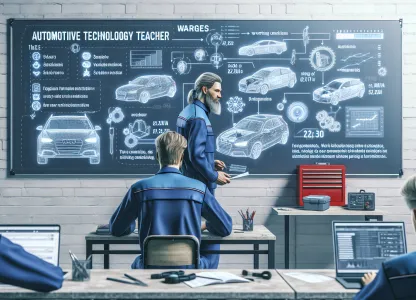
A teacher in vehicle technology is responsible for educating students at the high school level in the automotive and transport programs or equivalent adult education. Tasks include planning, conducting, and evaluating practical and theoretical lessons in areas such as car technology, engines, electrical systems, electronics, and vehicle safety. The work often takes place in specialized workshops and classrooms, where pedagogical leadership is combined with supervision of practical tasks. Collaboration with the industry, such as through internships and field trips, is common to provide students with relevant and real-world training. The work environment is characterized by technical challenges and close work with young people or adult learners, requiring both subject knowledge and pedagogical skills.
Read more ->-

Opinion Landscape: Novus February 2026 – Social Democrats Still Largest
Thu, 19 Feb 2026 - 01:35 -

Policy rate remains at 1.75% – Riksbank signals stability
Thu, 29 Jan 2026 - 14:02


A teacher in the automotive program is responsible for educating high school students in areas such as vehicle technology, repair, service, and diagnostics of passenger cars, heavy vehicles, and mobile machinery. The teaching combines theoretical components with practical exercises in a workshop environment, where students apply their knowledge to real vehicles and equipment. The work involves close collaboration with students, colleagues, and sometimes local companies to ensure the training is relevant and up-to-date with industry requirements. The work environment varies between classrooms, workshops, and sometimes work-based learning (WBL), requiring flexibility and a good ability to adapt pedagogy to different situations.
Read more ->
A teacher at a folk high school is responsible for teaching adult students across a variety of subjects, often focusing on personal development and education rather than strict subject knowledge. The work involves planning, conducting, and following up on lessons, guiding students both individually and in groups, and contributing to the school's pedagogical development. Many folk high school teachers also engage in social and cultural activities, as the educational model often emphasizes a holistic approach to learning. The work environment is typically dynamic, with smaller class groups, which allows for creativity and close contact with participants.
Read more ->
A flight technology teacher is responsible for educating future aircraft technicians and mechanics at upper secondary or post-secondary levels. Tasks include both theoretical classroom instruction and practical supervision in workshop environments, where students learn about aircraft systems, maintenance, troubleshooting, and repairs. In addition to teaching, responsibilities often include course planning, assessment of student performance, and collaboration with the aviation industry to ensure training meets current standards and requirements. The work environment is varied and can involve work in classrooms and hangars, requiring both pedagogical skills and technical expertise.
Read more ->
A teacher within the fishing industry instructs students in practical and theoretical aspects related to fishing, aquaculture, and marine industries. Tasks include planning and conducting lessons, supervising students during practical training, and developing course materials tailored to industry requirements. Teaching often takes place both in classrooms and in the field, such as at lakes, the sea, or fish farms, demanding flexibility and good knowledge of safety and environmental issues. The work environment can vary from traditional classrooms to boats and docks, where weather and natural conditions influence daily activities.
Read more ->
Teachers in aesthetic and practical subjects at high school are responsible for teaching subjects such as art, music, crafts, dance, theater, or design. Tasks include planning, conducting, and evaluating lessons, often combining theory and practical activities. These teachers work closely with students in classrooms, studios, workshops, or special rooms, and regularly collaborate with colleagues to develop teaching methods and interdisciplinary projects. The work environment is often creative and dynamic, but can also be demanding due to high demands on flexibility, pedagogical skills, and the ability to motivate students with diverse backgrounds and interests.
Read more ->
Teachers in artistic and practical subjects in primary school instruct students in areas such as visual arts, music, crafts, and home economics. These teachers are responsible for planning, delivering, and evaluating lessons, as well as adapting them to meet the diverse needs and conditions of students. Tasks also include assessing student performance, holding development discussions, and collaborating with colleagues and guardians. The work environment is characterized by creativity and variety, often involving movement between classrooms, specialized rooms, and sometimes outdoor settings depending on the subject.
Read more ->
Teachers within the energy program play a central role in educating future technicians and specialists in energy technology at vocational upper secondary schools. Their tasks include planning and delivering lessons in both theoretical and practical subjects such as electrical engineering, energy systems, installation, and environmental technology. In addition to classroom teaching, teachers often lead laboratory experiments and supervise workshops, as well as organize internships at industry companies. The work is conducted in close collaboration with colleagues and industry to ensure the education remains relevant and current. The work environment is characterized by variety, with classrooms, workshops, and sometimes external internship sites serving as the daily setting.
Read more ->
A teacher within the electrical program is responsible for educating high school students in both theoretical and practical aspects related to electrical engineering and installation. The teaching includes topics such as electrical safety, electronics, control and regulation technology, and installation of electrical systems. The work is carried out in close collaboration with students and sometimes with industry companies, providing both guidance and pedagogical elements. The work environment varies between classrooms, workshops, and laboratories, where safety routines and practical work are central parts of the daily tasks.
Read more ->