News and articles
- Home
- Articles






Latest posts

A debt collector primarily works with managing and collecting unpaid claims for companies, authorities, or individuals. The tasks include contacting debtors via phone, letter, or digital channels to discuss payment solutions, establish installment plans, and, if necessary, take legal action. Often, a large number of cases are processed simultaneously, requiring good administrative ability and accuracy. The work is usually carried out in an office, often in open-plan environments with a fast pace and clear focus on results. Contact with customers and debtors can sometimes be challenging and requires patience, attentiveness, and the ability to handle stressful situations.
Read more ->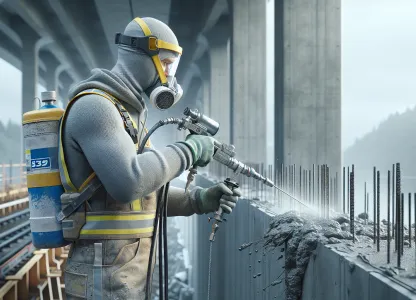
A concrete injector works to reinforce and seal concrete structures by injecting various materials, such as cement or chemical substances, into cracks and cavities. Tasks include preparing injection equipment, mixing materials, and monitoring the injection process to ensure the desired density and strength are achieved. The work is often carried out on construction sites, in tunnels, bridges, or other infrastructural environments where concrete structures require maintenance or repair. The work environment can be challenging and varied, involving work at heights, in confined spaces, and sometimes underground.
Read more ->-

Opinion Polls: Kantar-Sifo shows increased support for S, decline for SD and C
Fri, 13 Feb 2026 - 01:35 -

Policy rate remains at 1.75% – Riksbank signals stability
Thu, 29 Jan 2026 - 14:02


A geological engineer analyzes soil, rock, and groundwater to provide technical data for construction and infrastructure projects. Typical tasks include conducting geotechnical investigations, interpreting data, and providing recommendations on ground conditions for projects such as roads, tunnels, or mining. The work often involves fieldwork in diverse environments, combined with advanced data analysis and report writing at the office. Geological engineers collaborate closely with other specialists such as civil engineers, environmental experts, and project managers to ensure that structures are safe and sustainable.
Read more ->
An engineer in textiles and wood works on developing, designing, and improving products and processes within the textile and wood industries. Tasks can include everything from product development and material selection to quality control and production technology. The role often involves project management, collaboration with designers and technicians, and optimizing manufacturing processes to ensure sustainability and efficiency. The work environment varies between office-based tasks, laboratory work, and visits to factories or production facilities, depending on the company's focus and project phases.
Read more ->
An engineer in telecommunications works on developing, deploying, and maintaining technical solutions for communication via networks, telephony, and wireless systems. Tasks include everything from designing and constructing networks to troubleshooting, optimizing, and integrating new technologies. Projects may involve installing larger infrastructures for mobile networks, broadband, or data communication, as well as software solutions and security aspects. The work environment is often office-based but can also involve fieldwork such as network installations or upgrades. Telecommunications engineers regularly collaborate in teams and maintain contact with both suppliers and clients.
Read more ->
Mechanical engineers work on developing, designing, and improving machines, products, and production systems. Tasks include everything from design and drawing work to project management and quality control. Often, advanced calculations and simulations are used to ensure technical solutions meet requirements for function, durability, and cost-effectiveness. The work environment varies between offices, laboratories, and production facilities, depending on the project phase and company focus. Many mechanical engineers collaborate cross-functionally with other engineers, technicians, and production staff to drive development forward.
Read more ->
A chemical engineering engineer mainly works on developing, optimizing, and supervising processes for the production of chemicals, materials, and energy. Tasks include designing production facilities, optimizing chemical processes, quality control, and environmental analyses. Chemical engineers are often employed in industries such as pharmaceuticals, food, energy, and manufacturing. The work environment is typically laboratory- or industry-based but can also include project management and collaboration in interdisciplinary teams.
Read more ->
A hydraulic engineer works on developing, designing, and optimizing systems and components that use fluids to transfer power. Tasks often include designing hydraulic systems for machinery, vehicles, or industrial facilities, as well as troubleshooting and improving existing solutions. The role involves close collaboration with other engineers, technicians, and sometimes clients to ensure hydraulic solutions meet both technical and economic requirements. The work environment varies between office work, laboratory settings, and sometimes practical fieldwork, depending on the project and employer’s focus.
Read more ->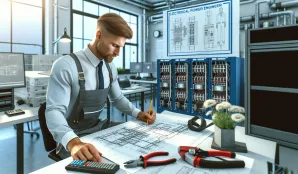
An electrical power engineer is responsible for developing, maintaining, and optimizing systems for electricity generation, distribution, and utilization. Tasks often include designing power grids, sizing power plants, and monitoring power supply in industries and infrastructure. The role requires both analytical skills and practical problem-solving, involving close collaboration with technicians, project managers, and clients. The work environment varies between office work, site visits at facilities, and sometimes fieldwork in challenging environments, especially during troubleshooting or new installations. Safety considerations are central, and many tasks require precision and adherence to strict routines and regulations.
Read more ->
An electronics engineer works on developing, designing, and improving electronic systems and components. Tasks can include everything from circuit board design and programming embedded systems to troubleshooting, testing, and quality assurance of electronic products. Typical work environments are technology-intensive companies within telecommunications, automotive, industry, or energy sectors, where projects are often team-based and require close collaboration with other engineers and specialists. The work environment is characterized by a fast pace, technological innovation, and a mix of office work and laboratory activities.
Read more ->