News and articles
- Home
- Articles





Latest posts
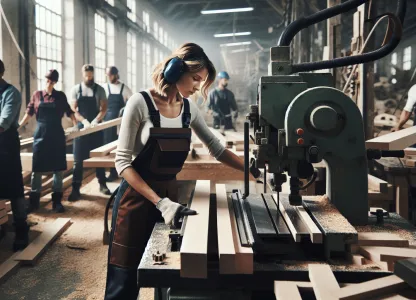
A contour saw operator in carpentry primarily works with processing and shaping wood components for furniture, interiors, or building elements. Tasks include reading and interpreting drawings, setting up and monitoring contour saws, and performing precise cuts according to specific patterns or shapes. The work often takes place in industrial environments where machine safety and precision are central. Contour saw operators collaborate closely with other machine carpenters and operators, and the work environment is characterized by machine noise, dust, and safety gear requirements. The role demands high accuracy, technical knowledge, and the ability to work efficiently both independently and in teams.
Read more ->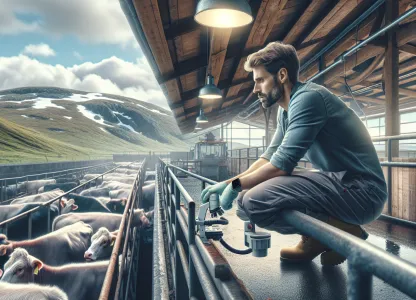
A Kontrollveterinär plays a central role in ensuring animal health, food safety, and animal welfare across various operations. Tasks include supervision, inspections, and controls at slaughterhouses, farms, and facilities handling animals. The profession also involves investigating suspected infectious outbreaks, managing disease outbreaks, and advising authorities and industry stakeholders. The work is often field-based but also includes office and laboratory environments. The Kontrollveterinär collaborates with other professionals and bears significant responsibility for compliance with laws and regulations concerning animal husbandry and food production.
Read more ->-

Opinion Landscape: Novus February 2026 – Social Democrats Still Largest
Thu, 19 Feb 2026 - 01:35 -

Policy rate remains at 1.75% – Riksbank signals stability
Thu, 29 Jan 2026 - 14:02

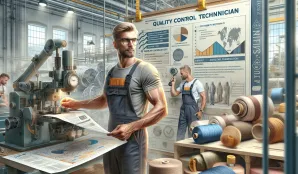
A control technician in textiles and wood is responsible for monitoring, testing, and quality assurance within textile and wood industries. Typical tasks include sampling, measurement, material analysis, and reporting deviations from set quality standards. These technicians ensure products meet the required standards for customers and legal compliance, thereby contributing to the company's competitiveness. The work environment is often production-related, involving both practical and administrative elements, where precision and analytical skills are crucial for success in the role.
Read more ->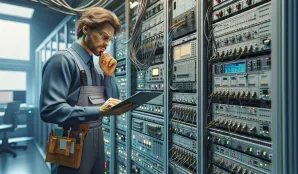
A control technician in telecommunications is responsible for monitoring, testing, and maintaining technical systems that form the foundation of modern communication. The work includes installation, troubleshooting, and repair of advanced equipment used for data transfer, telephony, and networks. Daily tasks involve ensuring operational reliability in mobile networks, fiber optic systems, and radio links. The work environment can vary from office settings and test labs to fieldwork at facilities and towers. The profession requires precision, problem-solving skills, and the ability to quickly handle technical challenges.
Read more ->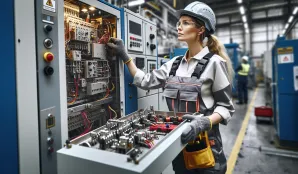
A control technician in mechanical engineering is responsible for monitoring, analyzing, and ensuring that machines and technical systems operate according to set requirements and standards. Tasks include troubleshooting, preventive maintenance, as well as installation and adjustment of advanced machine components. The work often takes place in industrial environments such as manufacturing, energy sectors, or larger workshops, where technical precision and accuracy are crucial. The role involves collaboration with engineers, production staff, and sometimes suppliers to optimize operations and minimize disruptions.
Read more ->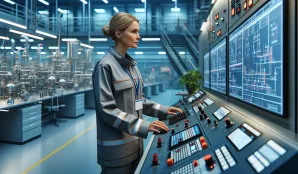
A control technician in chemical engineering is responsible for monitoring, analyzing, and optimizing various processes within the chemical industry. The tasks often focus on ensuring that chemical processes and facilities operate efficiently and comply with safety and environmental regulations. This can include calibrating and maintaining instruments, taking samples, analyzing data, and reporting deviations. The work environment features both laboratory and industrial settings, where precision and safety are crucial. Often, collaboration with engineers, production staff, and quality managers is necessary to solve technical problems and drive improvements.
Read more ->
A control technician specializing in electrical power works with monitoring, maintaining, and developing control and automation systems for power grids, power plants, and industrial electrical facilities. Tasks often include troubleshooting, programming control systems, operation monitoring, as well as inspection and testing of electrical installations. The role also involves analyzing measurement data and taking measures to optimize operational reliability and energy efficiency. The work environment varies between offices, control rooms, and on-site at facilities, requiring high safety awareness and the ability to work independently and in teams.
Read more ->
A control technician in electronics is responsible for installing, commissioning, maintaining, and troubleshooting control and regulation systems in everything from industrial facilities to buildings. Tasks often include programming control systems, calibrating measurement instruments, and monitoring automated processes. The role also involves documenting work performed, collaborating with other specialists, and sometimes leading smaller projects. The work environment varies from technical control rooms to production facilities and sometimes outdoor environments, where safety routines are often strictly regulated and precision is crucial.
Read more ->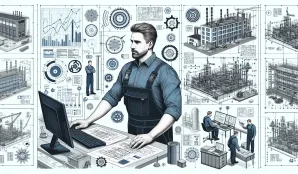
A control technician in construction is responsible for ensuring quality, safety, and technical functionality in construction projects. Tasks include conducting inspections of installations, performing measurements, documenting results, and reporting deviations to project managers or supervisors. The profession requires precision and technical knowledge, as control technicians often work with advanced instruments and follow carefully specified standards and regulations. The work environment varies between construction sites, indoor environments, and sometimes offices, depending on the project phase and scope. Collaboration with other trades within construction and civil engineering is common, making communication skills an important trait.
Read more ->
A control room operator in ore beneficiation is responsible for monitoring and controlling processes that refine ore into usable raw materials. Tasks include using computerized control systems to ensure efficient production, tracking flows, temperatures, and pressures, and quickly addressing any deviations. It often involves analyzing production data in real-time, collaborating with technicians during operational disruptions, and following quality control procedures. The work environment is typically technologically advanced, often located in a control room with high concentration, shift work, where safety routines and precision are crucial to maintaining a safe and stable operation.
Read more ->