News and articles
- Home
- Articles






Latest posts

A control operator within metal products is responsible for monitoring and quality-assuring the manufacturing process of various metal products in industry. The work involves checking machines and production lines, analyzing samples, identifying deviations, and reporting faults or improvement opportunities. The working environment is often industrial, with a mix of manual and automated tasks, where safety routines and precision are crucial. The role requires technical knowledge and the ability to quickly solve problems when they arise in production.
Read more ->
A timber control measurer in the forestry industry is responsible for measuring, inspecting, and documenting quantities, quality, and dimensions of timber during felling, transportation, or delivery. The work is usually outdoors, in direct proximity to forests, sawmills, or timber terminals. Precision and objectivity are central qualities, as measurement results form the basis for financial transactions between forest owners and buyers. The work environment can vary greatly depending on weather, season, and geographic area, and good physical condition as well as the ability to work independently are required.
Read more ->-

Opinion Landscape: Novus February 2026 – Social Democrats Still Largest
Thu, 19 Feb 2026 - 01:35 -

Policy rate remains at 1.75% – Riksbank signals stability
Thu, 29 Jan 2026 - 14:02


Control engineers in textiles and wood play a central role in ensuring quality and safety in the production of materials, products, and components. Their tasks include inspecting and testing raw materials, monitoring production processes, and evaluating finished products according to applicable standards and regulations. The profession also involves identifying and reporting deviations, suggesting improvement measures, and working closely with production technicians and product developers. The work environment is often varied, including laboratories and factory floors, where both analytical ability and practical insight are crucial for success.
Read more ->
A control engineer in mechanical engineering is responsible for ensuring that machines, components, and technical systems meet established requirements for quality, safety, and functionality. Tasks often include inspection, testing, and documentation of both new and existing machinery, as well as identifying and reporting deviations from standards or safety regulations. The role also involves close collaboration with designers, production engineers, and maintenance staff to solve technical problems and improve processes. The work environment can vary between workshop floors, field visits, and office work, which requires both practical skills and analytical thinking.
Read more ->
A control engineer in chemical engineering is responsible for monitoring, analyzing, and quality-assuring processes within chemical production and industry. Tasks include inspecting production lines, ensuring chemical processes comply with current standards and regulations, and identifying and correcting deviations. The engineer often works with advanced measurement equipment and laboratory analyses to ensure product quality. The work environment can range from laboratories and offices to production facilities, where high demands on accuracy, safety, and documentation are required.
Read more ->
A control engineer in electrical power is responsible for ensuring that power grid facilities, power plants, and related systems meet current standards, safety regulations, and technical requirements. Tasks often include planning and conducting inspections, testing electrical equipment, troubleshooting, and documenting technical processes. The role involves close collaboration with project managers, designers, and operations technicians and can include both office work and fieldwork at facilities or on-site. The work environment is varied and requires precision and the ability to handle complex technical equipment in environments with high safety standards.
Read more ->
A control engineer in electronics is responsible for planning, executing, and documenting technical inspections and checks of electronic systems and components. Tasks often include quality assurance, troubleshooting, testing, and verification of technical installations, both during production and in finished facilities. The control engineer works closely with technicians, project managers, and product developers to ensure that electronic systems meet internal and external requirements for functionality and safety. The work environment varies between laboratories, offices, and fieldwork, where inspections of industrial facilities or infrastructure projects may occur.
Read more ->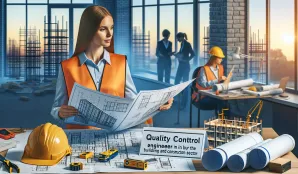
A control engineer in construction and civil engineering is responsible for ensuring that construction projects comply with applicable laws, regulations, and technical requirements. The work includes reviewing drawings and technical specifications, conducting inspections at construction sites, and reporting deviations. The control engineer often acts as a liaison between clients, contractors, and authorities, helping to uphold quality, safety, and environmental standards throughout the construction process. The work environment is diverse, involving both office tasks and field inspections at construction sites, which requires flexibility and good communication skills.
Read more ->
A Controller works with analyzing, planning, and monitoring financial processes within companies and organizations. Tasks include budgeting, reporting, forecasting, and identifying and driving improvements in financial management. The role often involves close collaboration with management and other departments to ensure financial goals are met and accurate decision-making data are provided. The work environment is typically office-based with a high pace, utilizing digital tools and advanced analytical methods daily. The Controller role demands strong analytical skills, precision, and excellent communication abilities.
Read more ->
A Kontraktsprost is a senior priest within the Church of Sweden responsible for a contract, which is a geographical area covering several congregations. The role involves acting as a link between the cathedral chapter and local congregations, as well as supporting and supervising the church's priests and deacons. Tasks include administrative duties, strategic planning, personnel management, and ensuring operations align with church guidelines. The work environment is often varied, involving office work, meetings with colleagues, and participation in services and church celebrations.
Read more ->