News and articles
- Home
- Articles






Latest posts

A laboratory technician in chemistry mainly works with performing analyses, sampling, and experiments in a laboratory setting. Tasks include preparing and analyzing chemical samples, documenting results, calibrating and maintaining laboratory equipment, and following quality and safety protocols. They are often employed at industrial laboratories, research institutes, universities, or public sector organizations. The work is typically conducted in modern laboratories where accuracy, structure, and a good understanding of chemical processes are essential. The work environment emphasizes safety and order, as handling chemicals and sensitive instruments is a central part of the profession.
Read more ->
A physics laboratory technician primarily works with preparing, conducting, and documenting experiments and analyses within physics. Tasks include handling advanced laboratory equipment, calibrating measurement instruments, collecting and processing data, and ensuring laboratory routines and safety regulations are followed. Physics technicians are often found at universities, research institutes, industrial laboratories, or within technical companies, working closely with scientists and engineers. The work environment is typically characterized by precision, methodical work, and a high safety standard, as handling sensitive equipment and sometimes hazardous substances is common.
Read more ->-

Opinion Landscape: Novus February 2026 – Social Democrats Still Largest
Thu, 19 Feb 2026 - 01:35 -

Policy rate remains at 1.75% – Riksbank signals stability
Thu, 29 Jan 2026 - 14:02


A Labelmanager works to ensure that product labeling, tags, and informational materials meet both legal requirements and brand standards within companies and organizations. The role often involves coordination between marketing, production, and legal departments to guarantee accurate and clear communication on packaging and in digital channels. The work environment is primarily office-based, but there are also tasks requiring collaboration with external partners and insight into production and logistics. Precision, analytical skills, and a good understanding of regulations and market trends are essential for success in the profession.
Read more ->
A Kyrkvaktmästare is responsible for the maintenance and upkeep of church buildings, cemeteries, and sometimes also parish halls. Tasks range from practical work such as gardening, snow shoveling, and property maintenance to preparing and assisting during services, baptisms, weddings, and funerals. The role often includes handling sound and lighting systems, as well as contact with visitors and congregation members. The work environment involves outdoor work in varying weather conditions, but also indoor work in churches and parish facilities, requiring flexibility and a service-oriented attitude.
Read more ->
A kyrkoskrivare primarily works with administration and documentation within church congregations and organizations. Tasks include maintaining registers, handling membership data, drafting protocols, and archiving important documents such as baptism and marriage certificates. The role often involves contact with the public and other authorities, requiring good customer service skills and meticulousness. The work environment is generally office-based, focusing on providing administrative support to the congregation's activities. The profession sometimes involves handling confidential information, which demands integrity and structure.
Read more ->
A church singer is responsible for singing during church services, religious holidays, and other ceremonies within the church's activities. The tasks often include both solo singing and participation in choirs, and sometimes leading smaller vocal groups or choirs. The church singer works closely with organists, cantors, and other musicians to create a moodful and musical setting for church events. The work primarily takes place in churches and community halls, where acoustics and environment place special demands on vocal technique and presence. Irregular working hours are common, as many assignments occur in the evenings, on weekends, and during holidays.
Read more ->
Church musicians are responsible for the musical activities within congregations and church contexts. Their tasks include leading and accompanying services, concerts, baptisms, weddings, and funerals, as well as organizing and directing choirs and ensembles. Additionally, they often plan music programs, collaborate with priests and other staff, and teach children, youth, and adults in singing and instruments. The work mainly takes place in churches, parish halls, and sometimes schools, resulting in a varied work environment where evening and weekend work are common.
Read more ->
A Kyrkokassör is responsible for the ongoing financial management within a congregation or church organization. Tasks include bookkeeping, invoice handling, budget follow-up, payroll administration, and reconciliations before annual reports. The role often involves close collaboration with the priest, board, and other administrators. The work environment is mainly office-based, with periods of high workload during month- and year-end. The role requires great accuracy, integrity, and understanding of both financial and church regulations.
Read more ->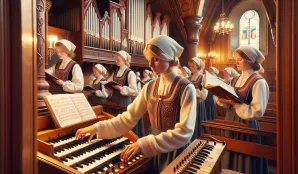
A Kyrkokantor mainly works with leading and accompanying music in church activities. Tasks include playing the organ or piano during services, baptisms, weddings, and funerals, as well as managing and leading the church choir activities. A significant part of the work involves planning and rehearsing music pieces, collaborating with priests and other staff, and sometimes teaching children and adults in singing and music. The work environment is often characterized by varied hours, including evenings and weekends, and can involve both individual work and teamwork. Kyrkokantorer are usually employed within the Church of Sweden but may also work in other congregations or as freelancers.
Read more ->
A cemetery caretaker is responsible for the maintenance and care of cemeteries and grave sites. The work includes everything from planting and pruning plants to mowing, snow removal, and maintenance of paths, fences, and buildings. The profession also involves assisting with burials, handling basic machinery and tools, and meeting relatives with great respect and empathy. The work environment is mainly outdoors, often in varying weather conditions, requiring both physical endurance and a good sense of order and aesthetics.
Read more ->