News and articles
- Home
- Articles






Latest posts
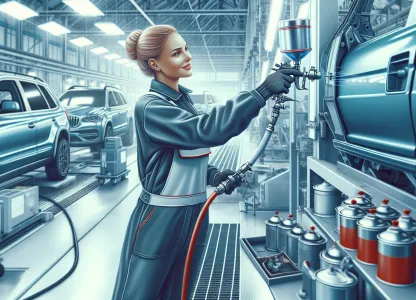
A painter in vehicle manufacturing is responsible for applying paint and surface treatments to car bodies and vehicle parts. The work requires precision and accuracy, with each step from pre-treatment and sanding to spray painting and drying performed according to high quality standards. The work environment is often industrial, with specialized ventilation systems and protective equipment to reduce exposure to chemicals and dust particles. Collaboration with colleagues in the production line is central, and the pace can be high, especially in larger factories where mass production is standard.
Read more ->
A painter within vehicle repair is responsible for restoring and improving the paint on vehicles such as cars, trucks, and other transport means. The tasks include preparing surfaces through sanding, cleaning, and masking, as well as applying primer, base coat, and clear coat. The work also involves handling modern painting systems and color-mixing equipment to achieve the most even and durable results possible. The work environment is often workshop-based, requiring precision, patience, and good knowledge of safety routines to handle chemicals and protective gear.
Read more ->-

Opinion Landscape: Novus February 2026 – Social Democrats Still Largest
Thu, 19 Feb 2026 - 01:35 -

Policy rate remains at 1.75% – Riksbank signals stability
Thu, 29 Jan 2026 - 14:02


A lack burner primarily works in the industry, curing and firing painted surfaces on various materials, usually metal or plastic. The tasks include surface preparation, paint application, and monitoring the firing process in specially designed ovens. Precision and knowledge of material properties are crucial to achieve high-quality finishes and durability. The work environment is often industrial and may involve exposure to chemicals, high temperatures, and noise, requiring protective equipment and safety routines.
Read more ->
A laboratory veterinarian mainly works to monitor, diagnose, and prevent diseases in animals within laboratory settings. Tasks often include advanced sampling, analysis of biological samples, and evaluation of research results. Laboratory veterinarians collaborate with researchers, animal caretakers, and technical staff to ensure animal welfare and adhere to ethical and legal guidelines. The work environment is characterized by high demands for precision, safety, and documentation, with both animal and personnel well-being in focus.
Read more ->
A laboratory technician in chemistry primarily works with conducting analyses, tests, and experiments on chemical substances in a laboratory setting. The work includes sampling, preparing solutions, calibrating, maintaining advanced laboratory equipment, and documenting results. The technician often collaborates with chemists, laboratory engineers, and researchers to ensure that laboratory processes meet quality standards and safety regulations. The work environment is usually indoors in specially equipped laboratories, where precision and work routines are crucial for safety and reliable results.
Read more ->
A laboratory technician in physics works with conducting and documenting experiments, analyzing samples, and assisting researchers and engineers in laboratory settings. Tasks often include handling advanced equipment, calibrating measurement instruments, and collecting and processing data. The role may also involve sampling, developing new methods, and quality assurance of results. The work environment is typically laboratory-based and requires high precision, safety, and systematic work, as many experiments demand exact conditions and strict documentation.
Read more ->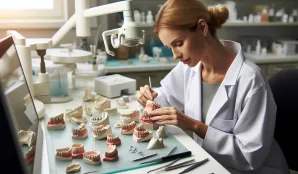
A dental technician works on producing and repairing dental prosthetics, such as crowns, bridges, dentures, and implants. The work mainly takes place in specialized laboratories where precision, accuracy, and technical skills are crucial. Dental technicians often collaborate closely with dentists and dental hygienists to ensure that patients' individual needs are met. The work environment involves both traditional craftsmanship and advanced digital technology, such as CAD/CAM systems. It is common to sit at a workbench for extended periods, handling small tools and materials, which requires good eyesight and fine motor skills.
Read more ->
A laboratory doctor is a specialist physician responsible for diagnostics, advisory work, and quality assurance within laboratory medicine. Tasks include analyzing samples, interpreting results, and providing medical reports to other doctors. Laboratory doctors often work in hospital laboratories, clinics, or research settings and play a key role in ensuring patients receive correct diagnoses and treatment. The profession is characterized by accuracy, analytical ability, and close collaboration with other medical specialists.
Read more ->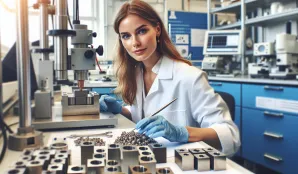
A metallurgical laboratory engineer works with analyzing, testing, and developing metals and alloys in a laboratory setting. Tasks often include sampling, material analysis, quality control, and evaluating properties such as strength, corrosion resistance, and structure. The role involves using advanced laboratory equipment and digital analysis tools, and work is usually done in close collaboration with researchers, production technicians, and other engineers. The work environment is often laboratory-based but can also include field studies or production site visits, where safety procedures and precision are central parts of the daily work.
Read more ->
A laboratory engineer in physics works with planning, conducting, and analyzing experiments and measurements within physical sciences. The tasks often include developing and maintaining advanced laboratory equipment, data collection, as well as interpreting and documenting results. The role can also involve designing new testing methods, quality assurance processes, and collaborating with researchers, engineers, or product developers. The work environment is typically laboratory-based, where precision, safety procedures, and technical competence are crucial for achieving reliable results.
Read more ->