News and articles
- Home
- Articles






Latest posts

A chicken sorter primarily works in an industrial environment with sorting, handling, and inspecting chickens within food production. Tasks include assessing chicken quality, sorting by size and weight, and ensuring hygiene and animal welfare standards are met. The pace is often high, and work is performed standing at assembly lines or production lines, where accuracy and speed are crucial. The environment can be noisy and sometimes cold, requiring protective equipment and good hygiene practices.
Read more ->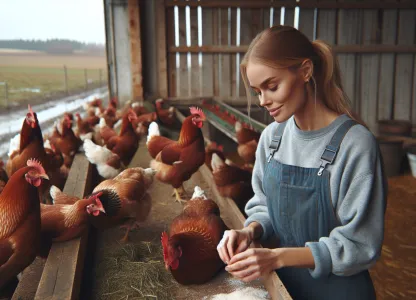
A chicken butcher is responsible for the daily care of chickens on a farm or in larger breeding facilities. The tasks include feeding, supervision, cleaning of stables, and monitoring the health and well-being of the animals. An important part of the work is to oversee growth, prevent diseases, and ensure that the animals have the right environment to grow and develop. The work environment is generally physically demanding and often involves early mornings, weekends, and sometimes adverse weather conditions, as animal needs take precedence over fixed working hours.
Read more ->-

Opinion Landscape: Novus February 2026 – Social Democrats Still Largest
Thu, 19 Feb 2026 - 01:35 -

Policy rate remains at 1.75% – Riksbank signals stability
Thu, 29 Jan 2026 - 14:02


A Kvinnojourarbetare works to provide support, counseling, and protection to women and children who have been exposed to violence or threats in close relationships. The profession often involves meeting people in crisis, offering conversations, practical help, and guidance on social and legal issues. Work is typically carried out in non-profit organizations, municipal services, or protected accommodations, where on-call duties and readiness may be included. The work environment is often varied and can be both mentally demanding and rewarding, with close contact with clients and collaboration with authorities and other actors.
Read more ->
A Quaternary Geologist analyzes and interprets soil layers, sediments, and landforms formed during the Quaternary period – the geological period covering the last 2.6 million years. The tasks involve mapping traces of ice sheets, permafrost, lakes, and rivers, as well as studying soil development and climate changes during the recent geological era. In practice, this includes fieldwork, laboratory analyses, and advanced data processing. Quaternary Geologists often work in research projects, urban planning, environmental assessments, and development projects, where their expertise is needed to assess ground conditions and risks related to construction or natural resource management. The work environment alternates between outdoor work in varied terrain and office work with analysis and report writing.
Read more ->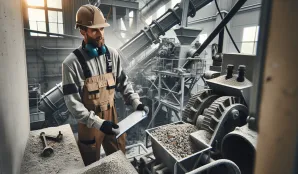
A quarry worker in a stone crusher monitors and controls the processes involved in crushing stone and ore. The profession involves handling and maintaining advanced machinery that crushes raw materials into various fractions, often for use in construction and civil engineering industries. Tasks also include controlling material flows, quality checks, troubleshooting, and taking measures during operational disruptions, as well as preventive maintenance of equipment. The work environment is often noisy, dusty, and may involve outdoor work or in large industrial facilities, requiring good physical fitness and careful safety awareness.
Read more ->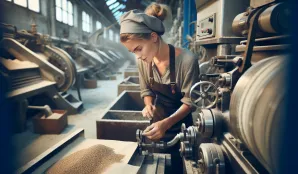
A mill operator primarily monitors, controls, and maintains machines that grind grains, sugar, cocoa, or other raw materials into flour and powder forms. Tasks include starting and stopping mills, supervising the production process, sampling and quality control, and basic maintenance of equipment. The work is often performed in larger industrial facilities where safety and hygiene are central requirements, and the environment can sometimes be noisy and dusty despite modern protective measures. Shift work is common, especially in larger plants, which requires flexibility and precision from staff.
Read more ->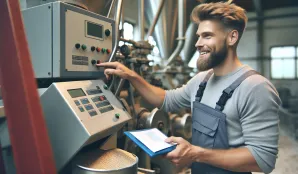
A Kvarnmaskinskötare is responsible for monitoring and operating machines in the milling industry, where raw materials such as grains are processed into flour or other products. Tasks include starting, stopping, and supervising mills and related machinery, troubleshooting, maintenance, and quality control of the produced food items. The work is often performed in a production environment with high demands on hygiene and safety, and may involve day and shift work depending on the employer’s needs. A Kvarnmaskinskötare often works in a team but is expected to take initiative during disruptions or problems in production.
Read more ->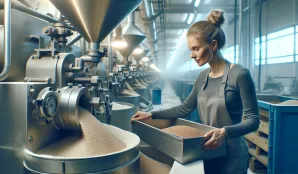
A mill worker is responsible for monitoring, operating, and maintaining machines used in grain milling and the production of flour and other grain products. Tasks often include inspecting raw materials, adjusting machine settings for optimal production, and quality control of the final product. The work mainly takes place in industrial environments, often in shifts, where precision and safety are critical. Mill workers may also need to handle minor maintenance, equipment cleaning, and report any operational disruptions.
Read more ->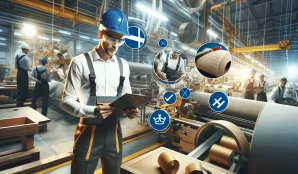
Quality technicians in textiles, wood, and related materials ensure that products meet internal and external quality and safety standards. Their tasks often include developing and monitoring quality processes, performing tests, analyzing results, and documenting deviations. The role requires close collaboration with production, development, and suppliers to continuously improve the production chain. The work environment varies between laboratories, factories, and office settings, where precision, analytical skills, and communication are central parts of daily work.
Read more ->
A Quality Technician in telecommunications is primarily responsible for ensuring and improving the quality of technical systems and networks used for communication. Tasks often include monitoring, troubleshooting, and optimizing telecommunications equipment, as well as documenting test results and corrective actions. The role involves collaboration with technical teams, suppliers, and sometimes customer contact to identify and address quality issues. The work environment is often technically advanced, involving both office work and field operations at network facilities or server rooms.
Read more ->