News and articles
- Home
- Articles






Latest posts
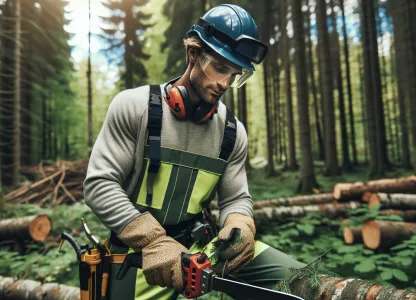
A forest clearner primarily works with clearing undergrowth, bushes, and small trees in forest areas to promote forest growth and ensure good conditions for future harvesting. Tasks also include maintenance of forest roads, planting, and some machinery use depending on the workplace's focus. The work is almost exclusively outdoors, often in varying weather conditions and terrain, which requires good physical fitness and endurance. Forest clearners usually work in teams but can also have independent tasks depending on the scope of the assignment and location.
Read more ->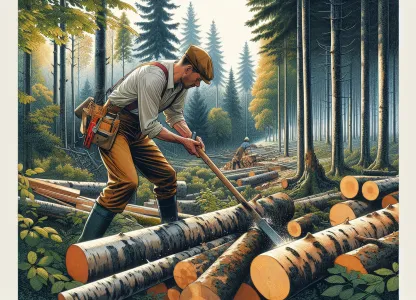
A forest rights specialist works to monitor and ensure that forestry measures are carried out in accordance with applicable laws and regulations. The profession often involves interpreting and applying forestry legislation, managing permit processes, and providing legal advice to landowners, companies, and authorities. The workday can include investigations of land rights, handling cases related to logging, and negotiations in disputes concerning the impact of forestry on the environment and property. Forest rights specialists operate both in the field and at the office, where they analyze agreements, review maps, and prepare documentation. The job requires precision, analytical skills, and an understanding of both legal and practical aspects of forestry.
Read more ->-

Opinion Landscape: Novus February 2026 – Social Democrats Still Largest
Thu, 19 Feb 2026 - 01:35 -

Policy rate remains at 1.75% – Riksbank signals stability
Thu, 29 Jan 2026 - 14:02

A forest planter primarily works on planting forest seedlings in recently harvested areas, contributing to the regeneration of Sweden's forests. The profession involves physically demanding outdoor work, often in varied terrain and under changing weather conditions. Tasks may also include site preparation, aftercare of plantings, and sometimes basic machinery operation. Forest planters usually work in teams and often follow a seasonal schedule with peak season during spring and early summer. The work environment offers a degree of independence but requires good physical fitness and endurance.
Read more ->
A Skogsplanläggare works with planning, analyzing, and optimizing various forestry processes. The role includes forest inventory, designing forest management plans, advising landowners, and monitoring harvesting and reforestation activities. Advanced technical tools such as GIS systems and remote sensing are often used to assess forest conditions and suggest measures that benefit both economy and environment. The work environment varies between fieldwork in forests and administrative tasks at offices, requiring flexibility and the ability to work independently under changing weather conditions.
Read more ->
A forest manager in advisory provides professional guidance to forest owners, companies, and authorities on forest management, nature conservation, and sustainable use of forest resources. Workdays may include site visits and inventories, analysis of forest data, and designing management plans. Contact with clients is often personal and based on long-term relationships where the advisor helps maximize the value of the forest, both economically and ecologically. The work environment varies between office work, digital meetings, and outdoor work in changing weather and terrain, requiring flexibility and good physical condition. Collaborations with other specialists such as biologists, foresters, and environmental experts are common to find sustainable solutions tailored to each landowner's needs.
Read more ->
A forest machine mechanic works with servicing, repairing, and maintaining machines used in forestry, such as harvesters, forwarders, and other heavy vehicles. The work often involves troubleshooting on-site in the forest, but workshop tasks are also common. The work environment is varied and may involve outdoor work under tough weather conditions, sometimes in inaccessible locations. Safety, precision, and technical problem-solving skills are crucial in the role, as the machines are complex and downtime can be costly for the employer.
Read more ->
A forestry consultant primarily works with advising, training, and supporting landowners, contractors, and other stakeholders in forestry. Tasks include providing guidance on sustainable forest management, conservation, forest care, and regulatory issues. Many forestry consultants also organize training sessions and information meetings, conduct inventories, and evaluate forest management measures. The work environment is varied, involving both fieldwork outdoors in forests and nature, as well as administrative tasks at the office. The role often involves extensive travel within the region or county, as contact with landowners and partners occurs both on-site and digitally.
Read more ->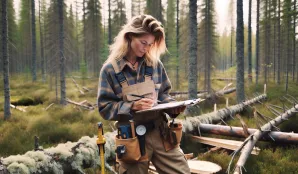
A Forest Inspector provides advice, plans, and monitors activities within forestry. The role often acts as a link between landowners and various stakeholders in the industry, such as authorities, contractors, and timber buyers. Tasks can include inventory and planning of forest management, preparing forestry plans, ensuring sustainable harvesting, and advising on certification issues. The work is largely outdoors in varying weather conditions, but also includes office work with administrative duties and reporting. Forest Inspectors often work independently and carry significant responsibility for both environmental values and economic results.
Read more ->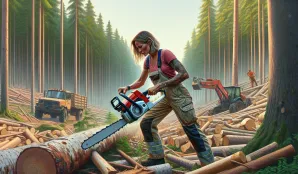
A forest worker works with felling and processing trees in a forest environment, often as part of a team. The profession also includes clearing, planting, and some machine operation, but the classic work involves manual tree felling with a chainsaw. Forest workers mainly work outdoors, sometimes under demanding weather conditions and on difficult terrain. The work environment is characterized by physically demanding tasks, high safety standards, and significant variation depending on the season and type of forest. Awareness of risks and good physical condition are essential for performing the tasks safely.
Read more ->
A forest manager is responsible for planning, developing, and managing forest resources within private companies, forest owner associations, or the public sector. Tasks include forest inventory, preparing forest management plans, advising landowners, and coordinating harvesting, planting, and forest conservation activities. A significant part of the work is outdoors in varying terrain and weather, but administrative tasks and reporting are often performed from an office. Forest managers maintain close contact with contractors, landowners, and authorities, which requires good communication skills and adaptability to different environments.
Read more ->