News and articles
- Home
- Articles






Latest posts
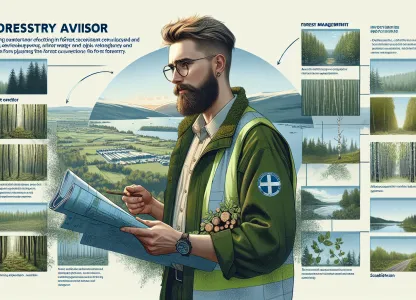
A Forest Management Advisor works to support forest owners, landowners, and companies in matters related to the economy, sustainability, and production of forestry. Tasks include advising on forest management, planning harvests, reforestation, and conservation. Contact with clients often takes place both in the field and during meetings at the office. The role also involves complying with legislation and environmental requirements, preparing forest management plans, and suggesting investments and grants. The position requires good communication skills and an interest in both economics and ecology.
Read more ->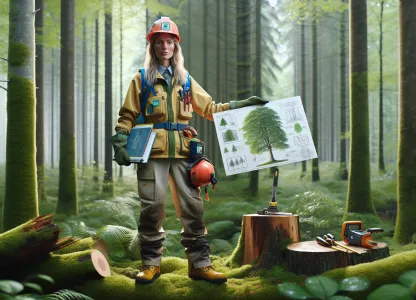
A forest management teacher instructs students in subjects related to forestry, environmental management, and nature at upper secondary school programs or adult education. The role involves planning and conducting lessons, supervising practical activities, and following up on students' progress both theoretically and practically. The work environment is often varied, combining classroom teaching, laboratory work, and outdoor lessons in forests and fields. Forest management teachers collaborate closely with colleagues, school management, and sometimes industry partners to ensure high-quality and relevant education.
Read more ->-

Opinion Landscape: Novus February 2026 – Social Democrats Still Largest
Thu, 19 Feb 2026 - 01:35 -

Policy rate remains at 1.75% – Riksbank signals stability
Thu, 29 Jan 2026 - 14:02

A Skogsbruksinstruktör plays a central role in educating and supervising students in various aspects of forestry, often at agricultural high schools or adult education. Tasks include planning and conducting teaching in both theory and practice, focusing on forest management, machinery use, environmental considerations, and safety routines. The instructor is also responsible for following up on students' progress, establishing contacts with the industry, and sometimes organizing internships. The work environment varies between classrooms, workshops, and outdoor fieldwork, requiring flexibility and good physical health.
Read more ->
A forestry researcher works on developing new knowledge about forest ecology, production, and sustainable management. Tasks include planning and conducting field studies, collecting and analyzing data, and publishing research findings in scientific journals. Forestry researchers often collaborate with universities, government agencies, and industry to contribute to sustainable development in the forestry sector. The work environment varies between laboratories, offices, and fieldwork in forests, requiring both analytical skills and practical competence.
Read more ->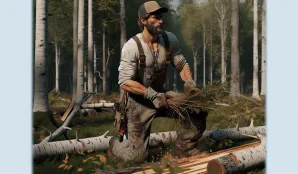
A forest worker is responsible for carrying out practical tasks within forestry, such as planting, clearing, thinning, and harvesting. The work often involves handling machinery and tools, such as chainsaws and brush cutters, as well as manual work with planting and forest care. The work environment is characterized by outdoor work in varying weather conditions, demanding both physical endurance and safety consciousness. Forest workers often work in small teams, but there are also instances of solitary work in certain tasks.
Read more ->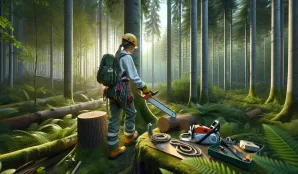
A forest worker is responsible for managing, caring for, and utilizing forests with the goal of ensuring sustainable production of timber and other forest products. Tasks include planting, clearing, thinning, harvesting, as well as maintaining forest roads and machinery. The role also involves complying with environmental laws and ensuring that forestry is conducted responsibly. The work is often outdoors in varying weather conditions, requiring physical endurance and good problem-solving skills.
Read more ->
A forest biologist works with studying, analyzing, and conserving forest ecosystems. Their tasks often include fieldwork such as inventory of plants and animals, sampling, and analysis of soil and water. Forest biologists provide expertise for environmental assessments, develop management plans, and collaborate with authorities and landowners to ensure sustainable use of forest resources. The work environment is varied and can involve periods of outdoor work in forests and on land, as well as office work with report writing, data analysis, and meetings. Flexibility and the ability to work independently and in project groups are often required.
Read more ->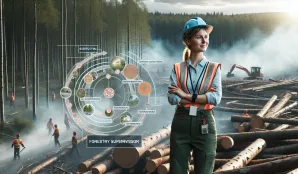
A Skogsbefäl plays a central role in leading, planning, and supervising work within forestry. Tasks often include responsibility for work teams, machinery planning, safety routines, and logistics during harvesting, planting, or forest management. The role also involves coordinating efforts, ensuring environmental requirements are met, and reporting to management on work processes and results. The work is largely outdoors in varying terrain and weather conditions, requiring endurance and flexibility. Skogsbefäl is also expected to handle technical equipment and sometimes participate practically in fieldwork.
Read more ->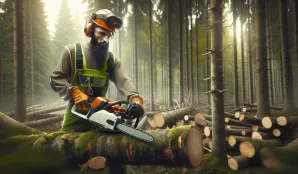
A forest cutter, often called a logger, primarily works with felling trees, clearing brush, and preparing forest land for further forestry activities. Tasks include manual tree felling with chainsaws, thinning, site preparation, and sometimes planting new trees. The work is performed outdoors in varying weather conditions and requires both physical strength and good technique. Modern forestry often involves machinery, but manual work remains common, especially in sensitive environments or where machines cannot access. The work environment can be challenging with uneven terrain, noise from equipment, and the need for precision to avoid accidents.
Read more ->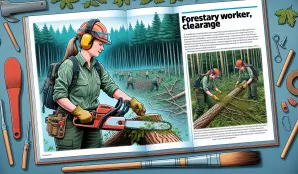
A forestry worker specializing in clearing work primarily maintains and develops forest environments by removing unwanted vegetation, thinning young forests, and creating better conditions for desired tree species to grow. Tasks include using brush saws, chainsaws, and other hand tools, often in varying weather conditions and on difficult terrain. The work is mostly outdoors and involves physical challenges and a significant safety responsibility. Clearing workers often work in small teams or independently, and the work environment can be demanding and close to nature, with long days during certain periods of the year.
Read more ->