News and articles
- Home
- Articles






Latest posts

A Small Animal Caretaker primarily works with caring for pets such as rabbits, guinea pigs, hamsters, rats, and sometimes smaller birds and reptiles. Tasks include daily care such as feeding, cleaning cages and enclosures, monitoring animal health, as well as socialization and stimulation of the animals. The role is often found at veterinary clinics, animal parks, pet stores, boarding kennels, or in breeding operations. The work environment can vary from indoor settings with controlled temperatures to outdoor environments depending on the workplace and animal needs. Physical activity and good hygiene are natural parts of the job, along with close contact with both animals and pet owners.
Read more ->
A lock keeper is responsible for monitoring and operating locks, ensuring that boat traffic can pass safely and efficiently. The role includes technical and service-oriented tasks, often outdoors and involving shift work around the clock. The lock keeper communicates with both commercial shipping and recreational boats, and an important part of the job is clear communication with crews and following safety routines. Tasks may also include basic maintenance, traffic documentation, and incident or deviation reporting.
Read more ->-

Opinion Landscape: Novus February 2026 – Social Democrats Still Largest
Thu, 19 Feb 2026 - 01:35 -

Policy rate remains at 1.75% – Riksbank signals stability
Thu, 29 Jan 2026 - 14:02


A lock operator is responsible for monitoring and operating locks on waterways, facilitating safe passage for ships and boats between water levels. Tasks include controlling mechanical equipment, communicating with vessel crews, and performing basic maintenance and inspections of the lock system. The work is often outdoors and may involve shift work during day and night, especially during peak traffic periods. The work environment is characterized by responsibility for safety of personnel and passing vessels, requiring precision and good ability to handle unexpected situations.
Read more ->
A slag remover in the metal industry primarily works with removing slag, sand, and other impurities from metallic components after casting or manufacturing. Tasks may include manual or machine handling of metal parts, where various types of blasting or sandblasting equipment are used to clean surfaces and prepare the material for further processing or assembly. The work often takes place in industrial environments such as foundries, workshops, and factories where the work environment can be noisy and dusty. Protective gear and safety routines are therefore a natural part of daily life to minimize exposure to dust and noise and to prevent accidents.
Read more ->
A Slumsyster works with social work and supportive measures for vulnerable individuals and families, often within areas characterized by social and economic challenges. Tasks may include counseling, conversation support, crisis management, and practical assistance such as guiding individuals to the right authorities or community resources. Slumsystrar often work closely with other actors within social services, healthcare, and non-profit organizations. The work environment varies and may involve home visits, work at clinics, and sometimes fieldwork in neighborhoods with high needs. The profession requires great sensitivity, empathy, and the ability to work independently under sometimes stressful conditions.
Read more ->
A Castle Guard is responsible for safety and order at royal and historic castles. Tasks include guarding entrances, monitoring visitors, patrolling the area, and handling alarms and incidents. The Castle Guard often works in uniform and must maintain high security awareness, while also providing respectful service to the public and international visitors. Working hours can vary, often scheduled during day and evening shifts, and sometimes during weekends and holidays when the castle hosts more guests.
Read more ->
A slottsväbel primarily works with surveillance and security within castles, historic buildings, or representative public environments. Tasks include monitoring premises, maintaining order, managing visitors, and preventing and responding to incidents. Slottsväblar often collaborate closely with other security functions and may also handle administrative tasks related to security routines. The work is usually shift-based and may include evening and weekend duties, requiring flexibility and high service orientation. The work environment includes formal and ceremonial elements, emphasizing professionalism and customer service.
Read more ->
A Slottsuppsyningsman is responsible for managing, maintaining, and overseeing castles and larger historic properties. The role involves daily supervision of buildings and grounds as well as planning long-term maintenance measures. Tasks include coordinating efforts with craftsmen, ensuring compliance with safety regulations, and handling contacts with authorities and tenants. The work environment combines administrative tasks at an office with practical presence on the castle grounds, where flexibility and problem-solving skills are essential.
Read more ->
A Slottsfogde works with the management and operation of castles, manor houses, and historic buildings. Responsibilities often include property maintenance, security procedures, renovation planning, and coordination of events and tours. The role requires working closely with authorities and the public, serving as a link between cultural heritage preservation and daily operations. The work environment is varied, alternating between office tasks and practical work on-site, involving both administrative and operational duties.
Read more ->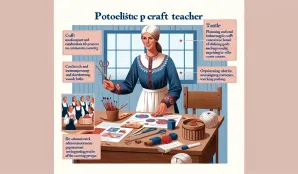
A craft teacher in course activities is responsible for planning and leading craft courses for children, youth, or adults across various materials and techniques, such as wood, textiles, or metal. The work involves creating inspiring learning environments, guiding participants individually and in groups, and adapting teaching to different skill levels. In addition to teaching, preparation of materials, maintenance of tools and machines, and administrative tasks related to the course activities are often included. The work environment varies between schools, study associations, and private education providers but is often characterized by a creative and practical atmosphere where safety and pedagogy go hand in hand.
Read more ->