News and articles
- Home
- Articles






Latest posts
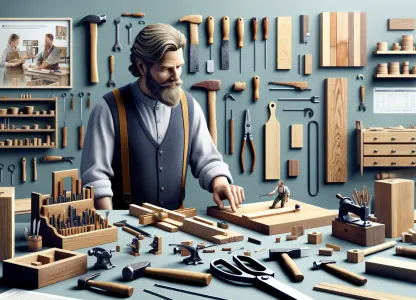
A craft teacher in upper secondary school is responsible for teaching students woodworking and metalworking, textiles, or combined craft subjects. The work involves planning and conducting lessons, guiding students in both theoretical and practical aspects, and creating a safe and inspiring learning environment in the craft room. The craft teacher assesses students’ work, provides feedback, and documents their development. The profession requires good knowledge of various materials and techniques, while safety considerations in the work environment are central, especially when using machines and tools. The role also includes collaborating with colleagues and ongoing professional development to stay updated with new teaching methods and subject advancements.
Read more ->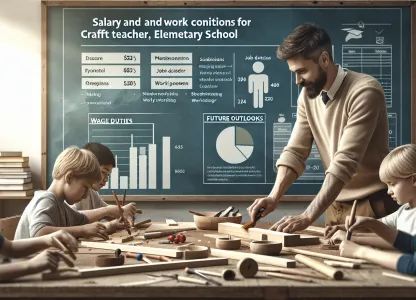
A craft teacher in primary school is responsible for teaching students woodworking, metalworking, and textile crafts, depending on the school's focus and needs. The work includes both practical and theoretical elements, where students develop creativity, problem-solving skills, and technical abilities. In addition to teaching, responsibilities include planning lessons, assessing student work, maintaining tools and machines, and ensuring a safe working environment in craft rooms. Craft teachers often work closely with colleagues and participate in the overall pedagogical work of the school. The work environment involves both physical activity and creative engagement, with an emphasis on inspiring and supporting students with diverse backgrounds and abilities.
Read more ->-

Opinion Landscape: Novus February 2026 – Social Democrats Still Largest
Thu, 19 Feb 2026 - 01:35 -

Policy rate remains at 1.75% – Riksbank signals stability
Thu, 29 Jan 2026 - 14:02

A Slöjdkonsulent works to promote, develop, and support craft activities within schools, associations, cultural institutions, and sometimes within the business sector. Tasks include organizing courses, guiding teachers and students, developing educational materials, and initiating projects and exhibitions related to crafts. The role often involves collaboration with various stakeholders to highlight the importance of crafts in society and to stimulate creativity and craftsmanship skills across different target groups. The work environment is often varied and can include everything from school settings and workshops to offices and public venues where craft activities are held.
Read more ->
A woodcraftsman works with shaping, manufacturing, and sometimes restoring wooden objects. Tasks can include creating furniture, utility items, and art pieces, as well as detailed carpentry for interior design or custom orders. The work often takes place in small workshops or studios, where machines and hand tools are used to process different types of wood. The work environment is characterized by both creative freedom and demands for precision and accuracy, as the material is living and requires understanding of its properties. Many woodcraftsmen also have customer contact to discuss design, material choices, and delivery times.
Read more ->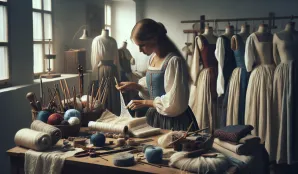
A textile craftsperson works with creating, designing, and repairing textile products using traditional and modern craft techniques. Tasks often include sewing, embroidery, weaving, pattern creation, and sometimes textile printing. Work often takes place in small studios, workshops, or educational settings where the craftsman can supervise students. The work environment is usually creative and independent but can also involve collaboration with other artisans, designers, or artists. Variety in tasks and the ability to work with both hands and mind are central to the profession.
Read more ->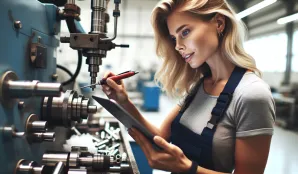
A grinding tool manufacturer works with manufacturing, maintaining, and repairing grinding tools used in industrial production. Tasks often include precision work with machines and hand tools, requiring high accuracy and technical knowledge. The role also involves reading and interpreting drawings, selecting appropriate materials, and performing quality control on finished products. The work environment is typically workshop-based, involving both individual and team-based tasks, where safety routines and ergonomic work positions are important.
Read more ->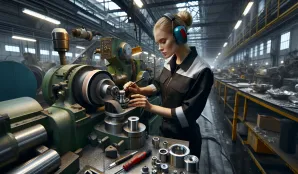
A slip tool operator monitors, controls, and adjusts machines that grind, polish, or process various materials into the desired shape and surface. Tasks often include preparing materials, setting up grinding tools and machines, and inspecting finished products to ensure quality and dimensional accuracy. The work is typically performed in an industrial environment where precision and accuracy are central. Slip tool operators may also perform basic maintenance on machines and are expected to follow safety procedures carefully, as the work environment can involve noise, dust, and the use of protective equipment.
Read more ->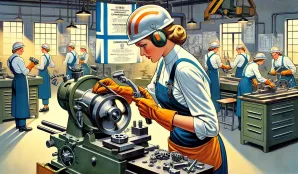
A tool grinder is responsible for manufacturing, maintenance, and sharpening of grinding tools used in industry, especially for precision processing of metal, glass, and other materials. Tasks include setting up and monitoring machines, checking the quality of grinding surfaces, and performing minor repairs and adjustments. The work is often carried out in a workshop environment with advanced machinery, where accuracy and safety are of utmost importance. Tool grinders work both independently and in teams, and the profession requires good understanding of drawings and technical specifications.
Read more ->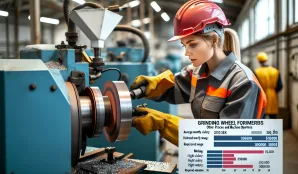
A slipskiveformare primarily works in the industry to shape and manufacture grinding wheels for various types of grinding machines and tools. Tasks include monitoring and controlling machines, mixing and processing raw materials, and checking the quality of finished products. Slipskiveformare often work in production environments where precision, accuracy, and safety are crucial. The work can be physically demanding and sometimes involves shift work, especially in larger industrial facilities where production runs around the clock.
Read more ->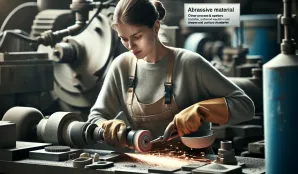
Grinding material workers are responsible for processing, grinding, and surface treatment of various materials, often within manufacturing industries. Tasks revolve around handling grinding machines and other tools to achieve the desired surface quality and dimensions on products such as metal components, glass, or ceramics. Precision and quality control are central to the work, as it often involves preparing products for further processing or final assembly. The work environment is typically industrial and can be noisy, with requirements for protective gear and adherence to safety routines.
Read more ->