News and articles
- Home
- Articles






Latest posts

A horse caretaker is responsible for the daily care of horses, including feeding, mucking out, grooming, exercising, and monitoring their health. The work may also involve assisting during veterinary visits, farrier work, and competitions. The environment is often physically demanding and takes place outdoors or in stables, with early mornings and sometimes irregular working hours depending on the operation’s needs. The tasks require good physical fitness, a sense of responsibility, and a genuine concern for animal welfare.
Read more ->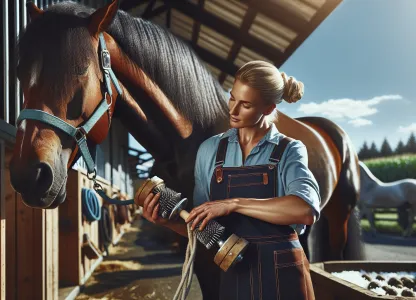
A horse massage therapist works with treating and preventing muscle tension and movement disorders in horses through various massage techniques. The profession often involves close contact with horses in stable environments, including treatment, advising horse owners, and collaborating with veterinarians or trainers. The work environment can be physically demanding and involves outdoor or stable work, requiring both physical fitness and the ability to handle animals. Horse massage therapists often work as self-employed, but there are also employment opportunities at larger riding schools, harness racing stables, or rehabilitation centers for horses.
Read more ->-

Opinion Polls: Kantar-Sifo shows increased support for S, decline for SD and C
Fri, 13 Feb 2026 - 01:35 -

Policy rate remains at 1.75% – Riksbank signals stability
Thu, 29 Jan 2026 - 14:02


A dressage rider works professionally to train and develop horses' skills for various purposes, such as competitions, shows, or work. Tasks range from basic handling and breaking-in to advanced dressage, jumping, or special assignments in film and events. The work requires a strong understanding of horse behavior and psychology, as well as the ability to adapt training methods to individual needs. The work environment is often diverse and can include stables, riding halls, competition grounds, and outdoor settings, where physical endurance and safety awareness are crucial.
Read more ->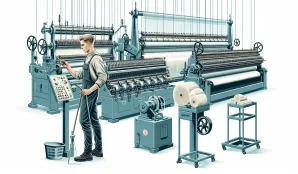
A hasplare in the textile industry primarily works with monitoring and managing machines that wind yarn or thread onto hasplar, which is a critical step in early textile production. The work involves starting, stopping, and adjusting machines, inspecting yarn quality, and fixing minor technical issues. The work environment is often production-near, with elements of noise, dust, and repetitive physical tasks. Safety routines and precision are important, as the machines require continuous supervision and maintenance to ensure smooth production.
Read more ->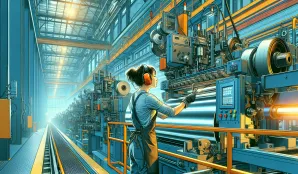
A metal drawworker primarily works with processing and shaping metal wire or strips into desired lengths, shapes, and dimensions. The profession involves monitoring and controlling machines that draw, spin, or wind the metal into coils or rolls. Other tasks may include quality control, machine maintenance, and troubleshooting. The work environment is usually industrial, meaning work in large production halls with high noise levels and sometimes varying temperatures. A good understanding of safety procedures is essential, as the work is performed near heavy machinery and moving parts.
Read more ->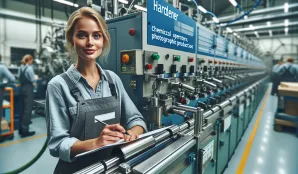
A Hartskokare primarily works within the chemical-technical industry and is responsible for the manufacturing, monitoring, and quality control of resins. Tasks include starting, overseeing, and regulating processes, as well as managing machinery and technical equipment required for producing various types of resins. The work is often physical and requires precision, especially when handling chemicals where safety procedures are of utmost importance. The work environment can be noisy and involve shift work, which demands endurance and accuracy.
Read more ->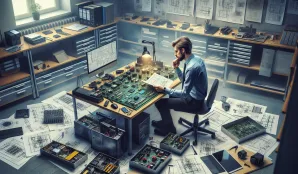
A Hardware Designer works on developing, designing, and testing electronic and technical components such as circuit boards, control systems, and embedded systems. The tasks often include creating drawings, simulating functions, and collaborating with software developers to ensure hardware functions optimally in the final product. Typically, work is project-based and involves teamwork with other engineers and technicians, often within industries like telecommunications, automotive, medical technology, and automation. The work environment is generally office-based, characterized by a fast pace, technological development, and demands for precision and problem-solving skills.
Read more ->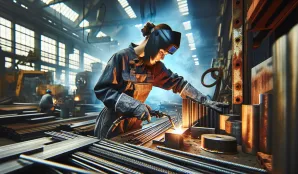
A Hardfacer works with joining metals through a process where molten metal or alloy is used to bond workpieces at high temperatures. Tasks include preparing materials, heating, applying soldering material, and quality control of the finished joints. The profession requires great precision, accuracy, and good knowledge of various metals and alloys. The work environment is often industrial, with work in workshops or manufacturing industries, where protective equipment and safety routines are a natural part of daily life. Hardfacers can work independently or in teams, depending on the scope and complexity of the project.
Read more ->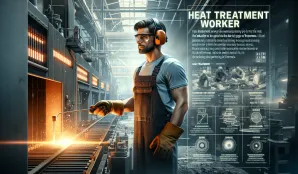
A Härderiarbetare works with heat-treating metals to improve their strength, wear resistance, and other mechanical properties. Tasks include monitoring and controlling the hardening process in industrial furnaces, checking temperatures and times, and performing quality checks on the finished material. The work is often carried out in collaboration with other operators and technicians within the steel and metal industry. The work environment is characterized by proximity to heavy machinery and high temperatures, which demands high safety and precision standards.
Read more ->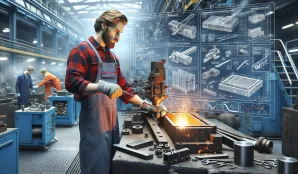
A metal hardener works with heat-treating and processing metals to improve their strength, wear resistance, and other mechanical properties. Tasks often include monitoring and controlling furnaces and other hardening equipment, checking temperatures and process parameters, and performing quality checks on the finished material. The work typically takes place in industrial environments, often at steel and metal plants where high temperatures and noise are common. Safety routines and precision are central to daily work, as handling hot materials and chemicals involves risks.
Read more ->