- Salary statistics
- Hard solder salary
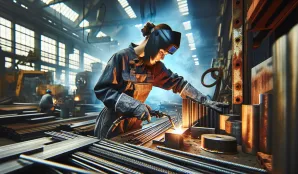
Hard solder salary
Latest available salary statistics are for 2025. Compare average pay, salary range and related job listings.
33 900 - 41 500 SEK / month
Women earn 93% of what men do.
Industriell tillverkning
Related tools
Salary progression Hard solder
What does a Hardfacer do? – Tasks and Work Environment
A Hardfacer works with joining metals through a process where molten metal or alloy is used to bond workpieces at high temperatures. Tasks include preparing materials, heating, applying soldering material, and quality control of the finished joints. The profession requires great precision, accuracy, and good knowledge of various metals and alloys. The work environment is often industrial, with work in workshops or manufacturing industries, where protective equipment and safety routines are a natural part of daily life. Hardfacers can work independently or in teams, depending on the scope and complexity of the project.
Salary development over time
The salary for Hardfacers has been steadily positive over the past three years. In 2022, the average salary was 32,600 SEK per month, which increased to 35 900 SEK in 2023 and further to 36 800 SEK in 2024. This represents a total increase of about 10.1% during the period. This development can partly be explained by increased demand for qualified metalworkers in industry and a generally higher salary level in the manufacturing sector. Despite relatively high unemployment within the profession, recruitment difficulties are reported, which drives up wages. Expectations are that salary levels will continue to be stable, even though demand for labor within the profession is expected to remain unchanged over the next five years.
Hardfacer salary – comprehensive overview
- Average salary: 36 800 SEK/month
- Lowest salary: 32,500 SEK/month (male, public sector)
- Highest salary: 38,200 SEK/month (male, private sector employee, post-secondary education < 3 years)
- Hourly wage: 216 SEK/hour
- Gender differences: Men 36 900 SEK/month, women 32,800 SEK/month (women earn 93% of men's salary)
- Regional differences: Information on regional differences is not available
Education and qualifications
The path to becoming a Hardfacer typically goes via the industrial technology program at high school or equivalent adult education, which includes welding and metalworking. Many employers prefer candidates with practical experience from industry, and certification in welding and soldering techniques may also be required. To succeed as a Hardfacer, it is important to be technically inclined, detail-oriented, and to prioritize safety in the work environment.
- High school education: Industrial technology program, 3 years
- Adult education / Vocational adult education: Welding and metalworking training, 1–2 years
- Certification: Welding and soldering certificates may be required depending on the employer
- Internship: On-the-job training during education
- Prerequisites: Technical interest and passing grades in core subjects
Working as a Hardfacer often involves participating in projects where many different skills meet. Communication and the ability to collaborate with other professionals, such as welders, assemblers, and engineers, are therefore crucial for a successful final result.
Common benefits and compensations
Hardfacers often have access to benefits such as work clothing, wellness allowances, and opportunities for further training. Other common compensations include shift premiums for night or shift work, additional insurance, and sometimes bonuses upon project completion. Collective agreement conditions often regulate vacation, pension, and overtime pay, contributing to a secure employment within the profession.
Competition and challenges
The competition within the profession of Hardfacer is characterized by the paradox that there are both recruitment difficulties and high unemployment within the profession. This may be due to a high demand for qualified and certified workers, while the supply of persons with the right skills and experience is limited. A challenge in the profession is to stay updated on new materials and techniques, as the industry is constantly evolving. The work environment can also be physically demanding and involve exposure to heat and chemicals, which requires high safety awareness. For those wishing to advance their careers, further education or specialization in welding and soldering techniques is often necessary.
Tips for aspiring Hardfacers
To succeed as a Hardfacer, it is good to have a technical interest and a desire to learn about new materials and methods. Precision and patience are important qualities, as the work requires accuracy and attention to detail. Being cooperative facilitates teamwork and larger projects. It is also advantageous to seek internships or summer jobs in the industry early on to gather practical experience. Safety awareness is crucial, so always follow routines and use proper protective equipment. Last but not least, an open mind for further education and certifications is key to long-term development in the profession.
Key facts about Hardfacers
- Education level: High school or vocational adult education, often supplemented with certification
- Work environment: Industrial workshop environment with a focus on safety
- Typical employment: Full-time, often shift work
- Demand: Great opportunities for employment, but high skill requirements
- Special skills: Welding and soldering certificates, material knowledge
Career paths and future prospects
After three to five years in the profession as a Hardfacer, there are opportunities to advance to leadership roles such as supervisor, production manager, or quality technician. Some choose to specialize in advanced welding and soldering techniques or to further educate as a welding inspector. Forecasts from the Employment Service indicate that job opportunities within the professions of welders and gas cutters are considered large nationwide. Demand is expected to remain unchanged over five years, even though recruitment difficulties exist for employers. At the same time, competition may increase if the number of trained individuals rises, but those with certificates and current experience have good prospects in the job market. The profession reports over 1400 job openings, indicating high mobility and significant employment opportunities.
Frequently asked questions about Hardfacers
- What is the average salary for a Hardfacer?
- A Hardfacer has an average monthly salary of 36 800 SEK. - What do salary differences between men and women look like?
- Men earn on average 36 900 SEK while women earn 32,800 SEK, which means women earn approximately 93% of men's salaries. - What education is required to become a Hardfacer?
- Most commonly, the industrial technology program at high school, supplemented with certification in welding and soldering. - Are there good job opportunities for Hardfacers?
- Yes, opportunities are considered plentiful and many vacancies exist within the profession. - How has the salary for Hardfacers developed in recent years?
- It has increased from 32,600 SEK in 2022 to 36 800 SEK in 2024, a rise of just over 10%. - What is the highest and lowest salary for a Hardfacer?
- The highest salary is 38,200 SEK and the lowest 32,500 SEK per month.

Salary distributed by age and sector
| Age | Base salary | Monthly salary | |
|---|---|---|---|
| 18-24 | 31100 kr | 32300 kr | |
| 25-34 | 88% | 34800 kr | 36600 kr |
| 35-44 | 36100 kr | 37400 kr | |
| 45-54 | 36700 kr | 38000 kr | |
| 55-64 | 36400 kr | 37700 kr | |
| Snitt | 93% | 35400 kr | 36800 kr |
| Age | Base salary | Monthly salary | |
|---|---|---|---|
| 55-64 | 33800 kr | 34200 kr | |
| Snitt | 33700 kr | 33900 kr |
| Age | Base salary | Monthly salary | |
|---|---|---|---|
| 55-64 | 33800 kr | 34200 kr | |
| Snitt | 33700 kr | 33900 kr |
| Age | Base salary | Monthly salary | |
|---|---|---|---|
| 18-24 | 31100 kr | 32300 kr | |
| 25-34 | 88% | 34800 kr | 36600 kr |
| 35-44 | 36100 kr | 37400 kr | |
| 45-54 | 36700 kr | 38000 kr | |
| 55-64 | 36400 kr | 37700 kr | |
| Snitt | 93% | 35400 kr | 36800 kr |
| Age | Base salary | Monthly salary | |
|---|---|---|---|
| 18-24 | 31100 kr | 32300 kr | |
| 25-34 | 88% | 34800 kr | 36600 kr |
| 35-44 | 36100 kr | 37400 kr | |
| 45-54 | 36700 kr | 38000 kr | |
| 55-64 | 36400 kr | 37700 kr | |
| Snitt | 93% | 35400 kr | 36800 kr |
| Age | Base salary | Monthly salary | |
|---|---|---|---|
| 18-24 | 31000 kr | 32100 kr | |
| 25-34 | 88% | 35300 kr | 37100 kr |
| 35-44 | 36100 kr | 37500 kr | |
| 45-54 | 36700 kr | 38100 kr | |
| 55-64 | 36400 kr | 37800 kr | |
| Snitt | 93% | 35500 kr | 36900 kr |
| Age | Base salary | Monthly salary | |
|---|---|---|---|
| 55-64 | 33800 kr | 34200 kr | |
| Snitt | 33700 kr | 33900 kr |
| Age | Base salary | Monthly salary | |
|---|---|---|---|
| 55-64 | 33800 kr | 34200 kr | |
| Snitt | 33700 kr | 33900 kr |
| Age | Base salary | Monthly salary | |
|---|---|---|---|
| 18-24 | 31000 kr | 32100 kr | |
| 25-34 | 88% | 35300 kr | 37100 kr |
| 35-44 | 36100 kr | 37500 kr | |
| 45-54 | 36700 kr | 38100 kr | |
| 55-64 | 36400 kr | 37800 kr | |
| Snitt | 93% | 35500 kr | 36900 kr |
| Age | Base salary | Monthly salary | |
|---|---|---|---|
| 18-24 | 31000 kr | 32100 kr | |
| 25-34 | 88% | 35300 kr | 37100 kr |
| 35-44 | 36100 kr | 37500 kr | |
| 45-54 | 36700 kr | 38100 kr | |
| 55-64 | 36400 kr | 37800 kr | |
| Snitt | 93% | 35500 kr | 36900 kr |
| Age | Base salary | Monthly salary | |
|---|---|---|---|
| 25-34 | 88% | 32000 kr | 32800 kr |
| Snitt | 93% | 33300 kr | 34300 kr |
| Age | Base salary | Monthly salary | |
|---|---|---|---|
| 25-34 | 88% | 32000 kr | 32800 kr |
| Snitt | 93% | 33300 kr | 34300 kr |
| Age | Base salary | Monthly salary | |
|---|---|---|---|
| 25-34 | 88% | 32000 kr | 32800 kr |
| Snitt | 93% | 33300 kr | 34300 kr |

About the data
All information displayed on this page is based on data from the Swedish Central Bureau of Statistics (SCB), the Swedish Tax Agency and the Swedish employment agency. Learn more about our data and data sources here.
All figures are gross salaries, meaning salaries before tax. The average salary, or mean salary, is calculated by adding up the total salary for all individuals within the profession and dividing it by the number of individuals. For specific job categories, we have also considered various criteria such as experience and education.
Profession Hard solder has the SSYK code 7212, which we use to match against the SCB database to obtain the latest salary statistics.
-

TIG Welder for Varied Production with Focus on Quality
Welders and gas cutters
Mon, 13 Jul 2026 - 20:43




Compare salary, work tasks and job outlook in adjacent occupations to find roles with similar skills or pay levels.
-

Artificial stone casters salary
Average salary: 37 800 SEK/month • Industriell tillverkning
Machine operators, cement, stone and concrete products
Compare with Hard solder
Tue, 14 Jul 2026 - 21:19 -

Average salary: 36 300 SEK/month • Industriell tillverkning
Machine setters and machine operators, metal work
Compare with Hard solder
Tue, 14 Jul 2026 - 10:55 -

Average salary: 31 900 SEK/month • Industriell tillverkning
Hand packers and other factory workers
Compare with Hard solder
Tue, 14 Jul 2026 - 20:05 -

Average salary: 35 300 SEK/month • Industriell tillverkning
Prepress technicians
Compare with Hard solder
Tue, 14 Jul 2026 - 17:14 -

Dragist, pharmaceutical industry salary
Average salary: 39 900 SEK/month • Industriell tillverkning
Machine operators, pharmaceutical products
Compare with Hard solder
Tue, 14 Jul 2026 - 20:29 -

Average salary: 36 300 SEK/month • Industriell tillverkning
Machine setters and machine operators, metal work
Compare with Hard solder
Tue, 14 Jul 2026 - 17:13


