News and articles
- Home
- Articles






Latest posts

An instructor driver primarily works to supervise and train future locomotive drivers or colleagues within the railway sector. Tasks include practical instruction driving, safety training, theoretical teaching, and assessment of driving ability and safety routines. Instructor drivers are responsible for ensuring new drivers follow current rules and safety regulations while acting as mentors and role models during training. The work environment is varied and can include early mornings, late evenings, and work at different geographic locations, often onboard trains or in training facilities. The role requires precision, pedagogical skill, and the ability to handle stressful situations.
Read more ->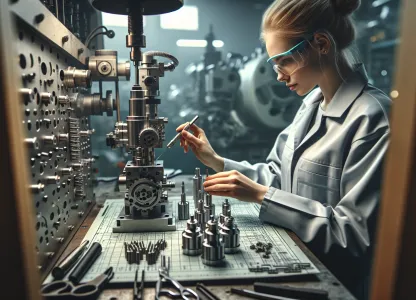
An institution technician specializing in precision mechanics primarily works with operation, maintenance, and repair of advanced laboratory equipment and instruments within, for example, universities, research institutes, or hospital environments. The tasks often include troubleshooting, calibration, installation, and modification of precision mechanical systems. The environment is characterized by high demands for accuracy and quality, as even small deviations can have significant consequences for measurement results or research data. The work is carried out in close collaboration with researchers, technicians, and other specialists, often with responsibility for developing and customizing technical solutions according to operational needs.
Read more ->-

Opinion Landscape: Novus February 2026 – Social Democrats Still Largest
Thu, 19 Feb 2026 - 01:35 -

Policy rate remains at 1.75% – Riksbank signals stability
Thu, 29 Jan 2026 - 14:02


An Institutionssekreterare mainly works with administrative and coordinating tasks within government, municipal, or private institutions. The duties include everything from filing, document handling, and meeting planning to providing support to the institution's management and other staff. The role requires managing both internal and external contacts, often at a fast pace, with demands for accuracy and confidentiality. The work environment is typically office-based, with access to modern digital tools and systems, and the work is carried out in close collaboration with colleagues in administration and operational management.
Read more ->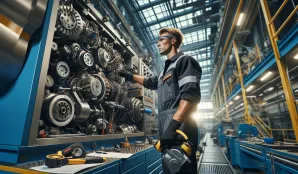
An installation technician in machinery and mechanical equipment is responsible for assembling, installing, and commissioning various types of machines, production facilities, and mechanical systems. Tasks often include interpreting technical drawings, preparing work sites, checking the quality of installations, and performing test runs and troubleshooting. It may also involve coordinating work with other trades, such as electricians or programmers, depending on the complexity of the facility. The work environment varies between factories, workshops, and fieldwork, where safety regulations and precision are central to daily tasks.
Read more ->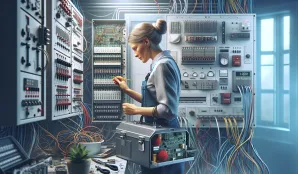
A security alarm installation technician is responsible for assembling, commissioning, and maintaining various security systems such as intruder alarms, fire alarms, and access control systems, in everything from private homes to commercial properties. The work often involves planning installations, wiring, configuring electronics, and ensuring systems meet current safety standards. Collaboration with other trades, such as electricians and construction personnel, is common to ensure seamless integration into building infrastructure. The work environment can vary between indoor and outdoor settings and may require working at heights or in confined spaces. Customer contact is frequent, especially during troubleshooting, service, and user training.
Read more ->
Broadband installation technicians are responsible for installing, maintaining, and troubleshooting broadband networks and communication systems for both private individuals and companies. Tasks include laying fiber and copper cables, installing network equipment, configuring routers and switches, and ensuring systems operate optimally. Much of the work is performed on-site with customers, which means the work environment can vary from offices and homes to outdoor environments and technical centers. The profession requires both technical skills and good customer service, as interaction with clients and partners is a natural part of daily work.
Read more ->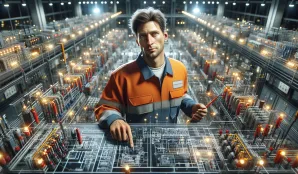
An installation engineer is responsible for planning, designing, and commissioning technical installations such as electrical, ventilation, plumbing, or automation systems. Tasks often include technical design, coordination with other trades, and follow-up at construction sites or industrial environments. Many installation engineers work closely with project managers, contractors, and clients to ensure installations meet applicable standards and customer requirements. The work is varied and can involve both office tasks like drawings and calculations, as well as site visits to inspect execution. Success in the role often requires a combination of technical knowledge, problem-solving skills, and good communication.
Read more ->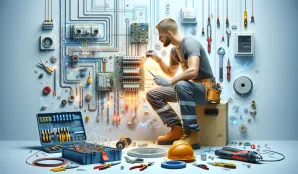
An installation electrician works with installing, maintaining, and repairing electrical systems in everything from homes to industries and office buildings. Common tasks include wiring, installing electrical panels, connecting lighting, and ensuring electrical systems meet current safety standards. The work is often team-based, but independent assignments also occur. The work environment can vary greatly – from new construction and renovation projects to urgent troubleshooting on-site with customers, requiring both physical endurance and precision.
Read more ->
An inspicient is responsible for coordinating and leading the practical work behind the scenes at theaters, opera houses, TV productions, and other performing arts contexts. The role involves planning and overseeing rehearsals, performances, and recordings, ensuring that all technical and artistic elements operate according to schedule. The inspicient acts as a link between the director, technical staff, and performers, requiring both organizational skill and the ability to handle quick changes. The work environment is often characterized by a fast pace, varying working hours, and high demands for flexibility, especially during intense production periods.
Read more ->
A recording technician primarily works with managing and optimizing sound recording, processing, and transmission in various productions such as music, radio, TV, and film. The role includes responsibility for technical equipment in recording studios or during live broadcasts, where high demands are placed on accuracy and technical expertise. The work is often carried out in close collaboration with producers, artists, and other technicians, involving both independent and team-based efforts. The work environment varies between controlled studios and more flexible field settings, depending on the project's nature and scope. Flexibility and the ability to quickly resolve technical issues are key qualities for success in the profession.
Read more ->