News and articles
- Home
- Articles






Latest posts
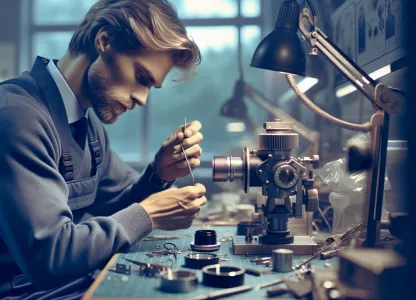
Instrument technicians work with manufacturing, assembling, and adjusting optical instruments such as microscopes, binoculars, and various precision devices for medical and technical use. Tasks include fine mechanical craftsmanship and advanced technology, focusing on ensuring the highest optical quality and precision. The role often involves reading drawings, using specialized tools, and performing precise measurements and tests. The work environment is typically laboratory or workshop-based, characterized by high demands for accuracy, concentration, and patience.
Read more ->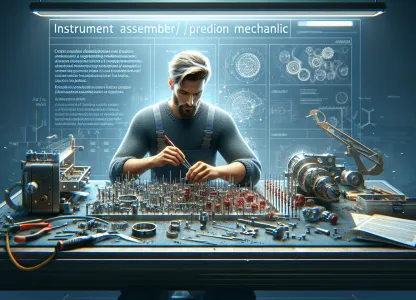
An instrument fitter works with assembling, adjusting, and maintaining precision instruments and measurement equipment used in industry, laboratories, and technical environments. The job involves interpreting drawings and technical specifications, selecting the right components, as well as installing and testing the instruments' functionality. Instrument fitters often work in manufacturing settings but can also be found in research, medical technology, and process industries. The work environment demands accuracy, dexterity, and a systematic approach, as it is crucial for the instruments to operate flawlessly to ensure quality and safety in operations.
Read more ->-

Opinion Landscape: Novus February 2026 – Social Democrats Still Largest
Thu, 19 Feb 2026 - 01:35 -

Policy rate remains at 1.75% – Riksbank signals stability
Thu, 29 Jan 2026 - 14:02

An instrument technician mainly works with the installation, maintenance, and repair of measurement instruments and control systems within industry, energy, and process plants. Tasks include troubleshooting, calibration, and adjustment of technical equipment that regulates, for example, temperature, pressure, and flow. Practical problem-solving skills and accuracy are often required, as small deviations can have significant consequences in industrial processes. The work environment varies – many instrument technicians work in production facilities, workshops, or on-site, sometimes in noisy or dusty environments, collaborating with engineers and operational staff to ensure systems function optimally.
Read more ->
An instrument maker in precision mechanics works with manufacturing, assembly, and repair of precision instruments used in medical technology, research, electronics, and industry. Tasks often involve careful work with small components, where high precision and attention to detail are crucial. Daily work involves using advanced tools and machines to produce and adjust instruments, and collaboration with engineers or researchers is common. The work environment can range from specialized workshops to laboratories and production facilities, where cleanliness and order are essential to ensure high quality of the final products.
Read more ->
An instrumentation engineer in a chemical laboratory is responsible for monitoring, maintaining, and developing advanced measurement equipment and analysis instruments used in chemical laboratories. Tasks include calibration, troubleshooting, and repairing instruments, as well as ensuring that equipment meets quality and safety standards. The instrumentation engineer often collaborates with researchers, laboratory staff, and technicians to optimize analysis methods and implement new technical solutions. The work environment is characterized by high demands for accuracy and safety, often in laboratories handling chemicals and sensitive samples daily.
Read more ->
An instrumentation engineer in a physical laboratory works with development, maintenance, and calibration of advanced measurement equipment and instruments. Tasks often include installing new instruments, troubleshooting and repairs, as well as supporting experiments and research in physics and related fields. It also involves documenting measurement results, preparing reports, and sometimes mentoring other laboratory staff in instrument handling. The work environment is usually technically advanced, with high priority on accuracy and safety procedures. The work often takes place in research laboratories, industry, or universities and colleges, where collaboration with researchers and engineers is common.
Read more ->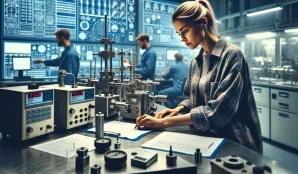
An instrumentation engineer in physics develops, installs, and maintains advanced measurement and analysis equipment used in research, production, and technological development. Tasks include calibrating instruments, troubleshooting, quality assurance, and often programming or customizing software connected to the instruments. The role requires precision, analytical ability, and an interest in technical solutions. Instrumentation engineers typically work in laboratory environments, industrial facilities, or technical research settings where safety and quality standards are high.
Read more ->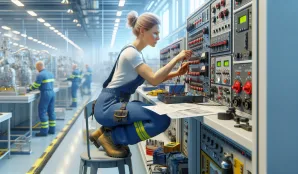
Instrument electricians work with installation, service, and maintenance of instrument and control systems within industry, process plants, and the energy sector. Tasks may include troubleshooting automated production lines, calibrating measuring instruments, as well as programming and customizing control systems. The work often takes place in production environments where safety and precision are crucial, and the job can be physically and technically demanding. The instrument electrician often collaborates with engineers, operators, and other technicians to ensure that advanced processes operate efficiently and safely.
Read more ->
An instructor in the Agricultural Board works to educate, guide, and support farmers and other stakeholders in the agricultural sector. Tasks include planning and conducting courses and advising, as well as communicating current research findings and legislation related to agriculture. The instructor's role can involve both theoretical teaching and practical supervision in the field, where contact with farmers and authorities is central. The work environment varies between offices, training facilities, and outdoor environments on farms, requiring flexibility and good communication skills.
Read more ->
An instructor in sports is responsible for leading, planning, and conducting training sessions, courses, or competition preparations for individuals and groups across various sports disciplines. Tasks include instructing technique and tactics, motivating participants, and following up on their development. Administrative duties such as scheduling, reporting, and sometimes marketing or member contact are often included. The work environment can vary greatly depending on the sport, employer, and season – from sports halls, gyms, and outdoor facilities to schools or club premises. Flexible working hours, evening, and weekend work are common.
Read more ->