News and articles
- Home
- Articles






Latest posts

A local coordinator is responsible for coordinating and optimizing the use of properties and facilities within companies, organizations, or the public sector. Tasks often include scheduling, booking spaces, handling maintenance issues, and communicating with both internal and external suppliers. The role requires good multitasking skills and often involves close collaboration with property caretakers, technical staff, and tenants. The work environment is usually office-based but may also include site visits to inspect premises or attend meetings. Flexibility and problem-solving skills are important qualities, as the workday is often characterized by rapid changes and varied challenges.
Read more ->
A speech therapist assistant works closely with licensed speech therapists and contributes to treatment and support for individuals with speech, language, or communication difficulties. Tasks may include assisting with language training exercises, conducting simpler exercises according to the speech therapist’s instructions, and supporting patients in their rehabilitation. Speech therapist assistants can also help with administrative tasks, documentation, and some contact with relatives. The work environment varies but is often located within health centers, schools, habilitation centers, or other healthcare facilities where communication is a focus. The profession involves close collaboration with other healthcare professionals and requires a good understanding of people's diverse needs.
Read more ->-

Opinion Landscape: Novus February 2026 – Social Democrats Still Largest
Thu, 19 Feb 2026 - 01:35 -

Policy rate remains at 1.75% – Riksbank signals stability
Thu, 29 Jan 2026 - 14:02


Speech therapists work to investigate, diagnose, and treat various speech, language, voice, and swallowing difficulties. The work often involves close collaboration with other health care professionals, such as doctors, nurses, and special educators. Speech therapists meet patients of all ages—from young children with speech delays to elderly individuals with swallowing issues after illness or injury. The work environment varies depending on the workplace and can include hospitals, health centers, habilitation centers, schools, or private practices. The profession requires great sensitivity, good communication skills, and the ability to tailor treatments to the individual.
Read more ->
A logistics planner within transportation planning is responsible for streamlining and coordinating transports so that goods and materials reach their destinations on time and at the right location. Tasks include route planning, load utilization optimization, contact with carriers, as well as follow-up and analysis of deliveries. Advanced IT systems are often used to manage flows and solve logistical challenges in real time. The work environment is mainly office-based but can also involve visits to warehouses, terminals, or at clients and suppliers. The role requires good teamwork skills and the ability to make quick decisions under pressure.
Read more ->
Logisticians and purchasers are responsible for securing the supply chain within companies and organizations. Their tasks revolve around planning, purchasing, delivery monitoring, and negotiations with suppliers to ensure that the right products or services are available at the right time and cost. The role often involves close collaboration with warehousing, production, and finance, as well as analyzing and optimizing logistics flows. The work environment is usually office-based but may also include visits to suppliers, logistics centers, or production facilities.
Read more ->
A logistics assistant primarily works with receiving, storing, picking, and shipping goods within warehouse and terminal operations. The tasks often involve both manual and digital work, where logistics systems are used to register and track the flow of goods. The work environment includes heavy lifting, forklift driving, and collaboration with colleagues in a fast-paced setting. Logistics assistants operate in everything from larger distribution centers to smaller warehouses, and the work environment demands accuracy, safety, and efficiency.
Read more ->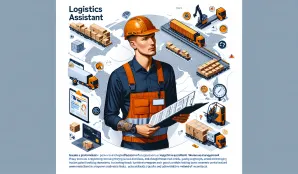
A logistics assistant works to ensure that the flow of goods and deliveries functions smoothly within companies and organizations. Tasks include receiving, registering, and distributing goods, handling shipping documents, order picking, and warehouse administration. The role often involves contact with transporters, suppliers, and internal departments, requiring good communication skills and administrative ability. The work environment is typically located in warehouses, terminals, or logistics centers, where the pace can be high and tasks vary between physical work and administrative duties.
Read more ->
Metal welders mainly work on joining metal components using various welding techniques, often within manufacturing and workshop industries. Tasks include preparing materials, selecting the appropriate welding method, and using tools such as soldering irons, gas torches, and protective equipment. The work requires high precision and accuracy, as even small errors can affect the strength and functionality of the product. Welders typically work in production environments where manual and automated processes are common, and the work environment often involves noise, heat, and the need for protective gear.
Read more ->
A solderer within circuit boards primarily works on assembling and soldering components onto electronic circuit boards, both manually and with machines. Tasks include following technical drawings, checking component placement, performing quality control, and troubleshooting and fixing soldering errors. The environment is often industrial and may involve working at soldering stations, in production lines, or in cleanrooms depending on production requirements. High precision, patience, and the ability to work with small details are crucial in the profession, as well as following safety regulations regarding handling electronics and chemicals.
Read more ->
A lobbyist within an organization works to influence political decisions, legislation, and public policies in favor of the organization or interest group they represent. Tasks include analyzing political proposals, developing strategies for opinion shaping, drafting consultation responses, participating in meetings with decision-makers, and coordinating campaigns and information efforts. Contact points are broad – from authorities and politicians to media and other stakeholders. The work environment is mainly office-based, often in urban areas, but may also involve travel to Almedalen Week, seminars, or meetings with representatives from business and civil society. The pace is high, and working days can be irregular depending on political cycles and deadlines.
Read more ->