- Salary statistics
- Solder, metal salary
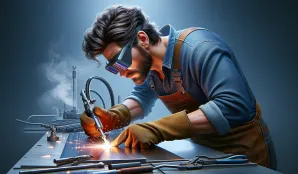
Solder, metal salary
Latest available salary statistics are for 2025. Compare average pay, salary range and related job listings.
33 900 - 41 500 SEK / month
Women earn 93% of what men do.
Industriell tillverkning
Related tools
Salary progression Solder, metal
What does a Metal Welder do in the metal industry? – Tasks and work environment
Metal welders mainly work on joining metal components using various welding techniques, often within manufacturing and workshop industries. Tasks include preparing materials, selecting the appropriate welding method, and using tools such as soldering irons, gas torches, and protective equipment. The work requires high precision and accuracy, as even small errors can affect the strength and functionality of the product. Welders typically work in production environments where manual and automated processes are common, and the work environment often involves noise, heat, and the need for protective gear.
Salary development over time
The profession of Metal Welder has shown a stable and positive salary growth in recent years. In 2022, the average salary was 32,600 SEK per month, increasing to 35 900 SEK in 2023. In 2024, the salary continued to rise to 36 800 SEK, representing a total increase of just over 10 percent over three years. This growth can be attributed to increased demand for skilled welders and general wage improvements within the industry sector. Despite good employment opportunities and high demand, some salary differences between genders persist, and the market is influenced by economic cycles and technological changes.
Metal Welder salary – comprehensive overview
- Average salary: 36 800 SEK/month
- Lowest salary: 32,500 SEK/month (male, public sector), 32,800 SEK/month (female)
- Highest salary: 38,200 SEK/month (male, private sector), 33,200 SEK/month (female)
- Hourly wage: 216 SEK
- Gender differences: Men 36 900 SEK, women 32,800 SEK (women earn 93% of men's salary)
- Regional differences: Not specified
Education and qualifications
To work as a Metal Welder, a high school education in industrial technology or equivalent is generally required, often with specialization in welding and metalworking. Many employers also value practical experience, and new hires often undergo internal training or internships. Certifications in welding or specific welding techniques can be advantageous and sometimes mandatory for certain tasks.
- High school education: Industrial technology programs, 3 years
- Certifications: Welding or welding certifications may be required
- Internships: Often part of the education or through trainee programs
- Prerequisites: Basic knowledge of technology and mathematics
- Courses/further education: Possible via vocational colleges or labor market training
Many welders in the metal industry work closely in teams, where communication and collaboration are crucial for achieving high quality and safety in production. The ability to read and interpret technical drawings is often an important skill highly valued by employers.
Common benefits and compensations
Metal welders are often covered by collective agreements and are offered benefits such as occupational pension, insurance, and wellness allowances. Shift work may include additional allowances, and some employers provide extra paid leave, training opportunities, or bonuses linked to production targets. Ergonomic aids and workwear are almost always included as standard.
Competition and challenges
Despite high demand on the job market, the profession faces some competition, especially during economic downturns or industry shifts. Technological development and increased automation require welders to continuously upgrade their skills and adapt to new methods. The work environment can be strenuous with heavy lifting, noise, and precision demands. Gender differences in pay and representation remain a challenge, with women being fewer and earning less than their male colleagues. Additionally, job availability can vary regionally, although national prospects remain good.
Tips for those who want to become a Metal Welder
To succeed as a Metal Welder, it’s beneficial to combine technical interest with high precision and patience. Developing good teamwork skills facilitates daily work, especially in teams where communication and shared responsibility are central. Practical problem-solving skills are important, as unexpected situations can occur that require quick decisions. Being able to handle stress is also valuable, as production speeds can be high and deadlines tight. Continuously furthering your education in new welding methods and techniques enhances career opportunities. Good physical endurance is also important, as the work often involves standing and can be physically demanding.
Key facts about Metal Welders
- Education level: High school education in industrial or welding technology
- Work environment: Industrial setting requiring protective gear
- Demand: Excellent job opportunities nationwide
- Work form: Commonly shift work with collective agreements
- Special skills: Certification in welding or welding techniques is often advantageous
Career paths and future prospects
After three to five years as a Metal Welder, opportunities open up to advance to more qualified roles such as supervisor, production technician, or specialist in advanced welding and soldering. Within larger industrial companies, experienced welders can also move into roles within quality control or training new employees. According to the Swedish Public Employment Service’s forecast, job opportunities remain strong, but competition can be influenced by economic cycles and technological development. The profession belongs to the category of welders and gas cutters, where demand is expected to stay unchanged over the next five years, with many job openings. Regional variations may occur, but overall, the outlook is stable at the national level.
Frequently asked questions about Metal Welders
- What is the average salary for a Metal Welder?
- The average salary is 36 800 SEK per month. - What is the hourly wage for a Metal Welder?
- The hourly wage averages 216 SEK. - Are there salary differences between men and women?
- Yes, women earn on average 32,800 SEK while men earn 36 900 SEK. - What education is required to become a Metal Welder?
- High school education in industry or welding, often with supplementary certifications. - What are the future prospects for the profession?
- Demand is high and the outlook is stable over the next five years. - What are the occupational health and safety risks?
- Exposure to heat, noise, and chemicals requires protective gear and carefulness. - Are there opportunities for career development?
- Yes, experienced welders can advance to supervisory or technical specialist roles.

Salary distributed by age and sector
| Age | Base salary | Monthly salary | |
|---|---|---|---|
| 18-24 | 31100 kr | 32300 kr | |
| 25-34 | 88% | 34800 kr | 36600 kr |
| 35-44 | 36100 kr | 37400 kr | |
| 45-54 | 36700 kr | 38000 kr | |
| 55-64 | 36400 kr | 37700 kr | |
| Snitt | 93% | 35400 kr | 36800 kr |
| Age | Base salary | Monthly salary | |
|---|---|---|---|
| 55-64 | 33800 kr | 34200 kr | |
| Snitt | 33700 kr | 33900 kr |
| Age | Base salary | Monthly salary | |
|---|---|---|---|
| 55-64 | 33800 kr | 34200 kr | |
| Snitt | 33700 kr | 33900 kr |
| Age | Base salary | Monthly salary | |
|---|---|---|---|
| 18-24 | 31100 kr | 32300 kr | |
| 25-34 | 88% | 34800 kr | 36600 kr |
| 35-44 | 36100 kr | 37400 kr | |
| 45-54 | 36700 kr | 38000 kr | |
| 55-64 | 36400 kr | 37700 kr | |
| Snitt | 93% | 35400 kr | 36800 kr |
| Age | Base salary | Monthly salary | |
|---|---|---|---|
| 18-24 | 31100 kr | 32300 kr | |
| 25-34 | 88% | 34800 kr | 36600 kr |
| 35-44 | 36100 kr | 37400 kr | |
| 45-54 | 36700 kr | 38000 kr | |
| 55-64 | 36400 kr | 37700 kr | |
| Snitt | 93% | 35400 kr | 36800 kr |
| Age | Base salary | Monthly salary | |
|---|---|---|---|
| 18-24 | 31000 kr | 32100 kr | |
| 25-34 | 88% | 35300 kr | 37100 kr |
| 35-44 | 36100 kr | 37500 kr | |
| 45-54 | 36700 kr | 38100 kr | |
| 55-64 | 36400 kr | 37800 kr | |
| Snitt | 93% | 35500 kr | 36900 kr |
| Age | Base salary | Monthly salary | |
|---|---|---|---|
| 55-64 | 33800 kr | 34200 kr | |
| Snitt | 33700 kr | 33900 kr |
| Age | Base salary | Monthly salary | |
|---|---|---|---|
| 55-64 | 33800 kr | 34200 kr | |
| Snitt | 33700 kr | 33900 kr |
| Age | Base salary | Monthly salary | |
|---|---|---|---|
| 18-24 | 31000 kr | 32100 kr | |
| 25-34 | 88% | 35300 kr | 37100 kr |
| 35-44 | 36100 kr | 37500 kr | |
| 45-54 | 36700 kr | 38100 kr | |
| 55-64 | 36400 kr | 37800 kr | |
| Snitt | 93% | 35500 kr | 36900 kr |
| Age | Base salary | Monthly salary | |
|---|---|---|---|
| 18-24 | 31000 kr | 32100 kr | |
| 25-34 | 88% | 35300 kr | 37100 kr |
| 35-44 | 36100 kr | 37500 kr | |
| 45-54 | 36700 kr | 38100 kr | |
| 55-64 | 36400 kr | 37800 kr | |
| Snitt | 93% | 35500 kr | 36900 kr |
| Age | Base salary | Monthly salary | |
|---|---|---|---|
| 25-34 | 88% | 32000 kr | 32800 kr |
| Snitt | 93% | 33300 kr | 34300 kr |
| Age | Base salary | Monthly salary | |
|---|---|---|---|
| 25-34 | 88% | 32000 kr | 32800 kr |
| Snitt | 93% | 33300 kr | 34300 kr |
| Age | Base salary | Monthly salary | |
|---|---|---|---|
| 25-34 | 88% | 32000 kr | 32800 kr |
| Snitt | 93% | 33300 kr | 34300 kr |

About the data
All information displayed on this page is based on data from the Swedish Central Bureau of Statistics (SCB), the Swedish Tax Agency and the Swedish employment agency. Learn more about our data and data sources here.
All figures are gross salaries, meaning salaries before tax. The average salary, or mean salary, is calculated by adding up the total salary for all individuals within the profession and dividing it by the number of individuals. For specific job categories, we have also considered various criteria such as experience and education.
Profession Solder, metal has the SSYK code 7212, which we use to match against the SCB database to obtain the latest salary statistics.
-

TIG Welder for Varied Production with Focus on Quality
Welders and gas cutters
Mon, 13 Jul 2026 - 20:43




Compare salary, work tasks and job outlook in adjacent occupations to find roles with similar skills or pay levels.
-

Average salary: 35 700 SEK/month • Industriell tillverkning
Grinders etc.
Compare with Solder, metal
Tue, 14 Jul 2026 - 10:55 -

Sheet metal straightener salary
Average salary: 40 100 SEK/month • Industriell tillverkning
Other machine and process operators, steel and metal
Compare with Solder, metal
Tue, 14 Jul 2026 - 07:11 -

Machine fitters, wood industry salary
Average salary: 34 700 SEK/month • Industriell tillverkning
Machine carpenters and machine operators, wood industry
Compare with Solder, metal
Tue, 14 Jul 2026 - 10:28 -

Average salary: 36 800 SEK/month • Industriell tillverkning
Welders and gas cutters
Compare with Solder, metal
Mon, 13 Jul 2026 - 19:09 -

Average salary: 38 300 SEK/month • Industriell tillverkning
Operators in sawmills, planing mills and plywood etc.
Compare with Solder, metal
Tue, 14 Jul 2026 - 11:56 -

Veneer presses, veneer manufacturing salary
Average salary: 38 300 SEK/month • Industriell tillverkning
Operators in sawmills, planing mills and plywood etc.
Compare with Solder, metal
Tue, 14 Jul 2026 - 11:57


