- Salary statistics
- Battery attendant, electrochemistry salary
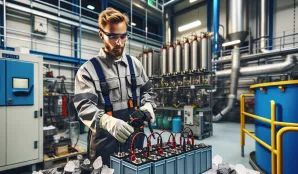
Battery attendant, electrochemistry salary
Latest available salary statistics are for 2025. Compare average pay, salary range and related job listings.
41 400 - 45 700 SEK / month
Women earn 98% of what men do.
Industriell tillverkning
Related tools
Salary progression Battery attendant, electrochemistry
What does a battery technician within electrochemistry do? – Tasks and work environment
A battery technician within electrochemistry is responsible for monitoring, maintenance, and quality assurance of batteries and battery systems in industrial environments. Tasks include charging, discharging, troubleshooting, and replacing battery cells, as well as measuring chemical parameters to ensure safe and efficient operation. The role requires accuracy and a good understanding of chemical processes, as handling electrolytes and other chemicals is common. The work environment is often characterized by work in production facilities or laboratories, where protective equipment and safety routines are central to minimizing the risk of accidents.
Salary development over time
The salary for a battery technician within electrochemistry has shown a clear positive trend over the past three years. In 2022, the average salary was 32,600 SEK, which increased to 38 100 SEK in 2023, corresponding to an increase of about 3%. In 2024, the average salary has risen sharply to 42 600 SEK, representing an almost 13% increase from the previous year. This development reflects an increased demand for technical competence in electrochemical processes and a growing focus on electrification and battery technology within industry. The salary increase can also be explained by skill requirements, technological development, and a greater need for qualified labor in the field.
Battery technician within electrochemistry salary – comprehensive overview
- Average salary: 42 600 SEK/month
- Lowest salary: 36,000 SEK/month
- Highest salary: 39,800 SEK/month
- Hourly wage (average): 229 SEK
- Men's average salary: 38,500 SEK
- Women's average salary: 36,900 SEK
- Women earn: 98% of men's salary
- Regional differences: Data unavailable
Education and qualifications
The pathway to working as a battery technician focused on electrochemistry usually involves a technical high school education with a focus on chemistry or electrical engineering, supplemented with work experience or post-secondary courses. Employers often require practical experience in process industry and knowledge of safety routines related to chemical handling. Certifications in occupational safety and electrical engineering, as well as good knowledge of Swedish and English, are advantageous.
- High school education: Technology, chemistry, or electrical engineering, 3 years
- Post-secondary courses: YH-education in electrochemistry or process industry
- Certifications: Occupational health and safety, chemical handling
- Internship: Meritorious in industrial production or laboratory
- Prerequisites: Good knowledge of chemistry and electrical engineering
Automation and digital monitoring are becoming increasingly common in battery management, which raises demands on technical understanding and system familiarity. Those who learn to handle digital control systems early can gain a quick advantage in the job market.
Common benefits and compensations
Battery technicians focused on electrochemistry are often offered benefits such as shift and overtime pay, wellness allowances, and sometimes bonuses linked to production or safety. In addition to salary, pension contributions according to collective agreements and opportunities for further training and skill development within the company are common.
Competition and challenges
Competition for jobs as a battery technician within electrochemistry is influenced by technological developments and the industry's increasing need for sustainable energy solutions. At the same time, the supply of qualified labor is limited, making demand for individuals with the right skills high. Challenges in the profession include handling hazardous chemicals, demands for precision, and continuous updating of knowledge about new technology. The rapid technological development in the battery industry also requires ongoing retraining. The work environment can be physically demanding, and safety considerations are always prioritized.
Tips for those who want to become a battery technician within electrochemistry
To succeed as a battery technician within electrochemistry, it is good to combine technical interest with a careful and analytical approach. Being organized facilitates troubleshooting and quality control, while teamwork skills are essential for working effectively in a team. Aim to gain practical experience in process industry or laboratory environments early, preferably through internships or summer jobs. A genuine interest in safety issues and the ability to quickly adopt new work routines are highly valued traits. Furthermore, staying updated on the latest technology and digital tools used in the industry is advantageous. Showing initiative and willingness to further educate oneself often provides a competitive edge. Patience and perseverance also help manage periods of monotonous tasks or high work pace.
Key facts about Battery Technicians, Electrochemistry
- Education level: High school or post-secondary shorter than 3 years
- Work environment: Industrial production and laboratory
- Common work pattern: Shift work and scheduled hours
- Demand: High, with 1,437 job openings in the occupational group
- Special skills: Chemical handling and digital monitoring
Career paths and future prospects
After three to five years as a battery technician within electrochemistry, opportunities exist to advance to supervisory roles, technical specialists, or process developers within the battery and energy sector. Further education can also open doors to roles such as laboratory technician or quality manager. Forecasts from the Employment Service show a generally high demand for machine operators in chemical-technical products, although no specific future assessment exists for just battery technicians. The large number of job openings indicates good career opportunities for those with the right skills and willingness to develop with technological advances in the industry.
Common questions about Battery Technicians, Electrochemistry
- What does a battery technician within electrochemistry earn?
- The average salary is 42 600 SEK per month, with variation depending on experience, education, and sector. - Are there salary differences between men and women?
- Yes, women earn on average 98% of men's salaries in the profession. - What education is required to work as a battery technician within electrochemistry?
- High school education with a focus on technology or chemistry, supplemented with practical experience or post-secondary courses, is most common. - What does the work environment look like for a battery technician?
- The work environment is often industrial or laboratory-based and demands high safety and accuracy standards. - What development opportunities are available within the profession?
- Career paths include technical specialist competence, supervisory roles, and process development. - What are the future prospects for the profession?
- Demand is high within the occupational group, but no specific forecast exists for just battery technicians. - Which employers hire battery technicians within electrochemistry?
- Larger industrial companies, energy companies, and laboratories are common employers.

Salary distributed by age and sector
| Age | Base salary | Monthly salary | |
|---|---|---|---|
| 25-34 | 36100 kr | 41900 kr | |
| 35-44 | 37300 kr | 42900 kr | |
| 45-54 | 37800 kr | 43400 kr | |
| 55-64 | 37900 kr | 44000 kr | |
| Snitt | 98% | 36900 kr | 42600 kr |
| Age | Base salary | Monthly salary | |
|---|---|---|---|
| 25-34 | 36100 kr | 41900 kr | |
| 35-44 | 37300 kr | 42900 kr | |
| 45-54 | 37800 kr | 43400 kr | |
| 55-64 | 37900 kr | 44000 kr | |
| Snitt | 98% | 36900 kr | 42600 kr |
| Age | Base salary | Monthly salary | |
|---|---|---|---|
| 25-34 | 36100 kr | 41900 kr | |
| 35-44 | 37300 kr | 42900 kr | |
| 45-54 | 37800 kr | 43400 kr | |
| 55-64 | 37900 kr | 44000 kr | |
| Snitt | 98% | 36900 kr | 42600 kr |
| Age | Base salary | Monthly salary | |
|---|---|---|---|
| 25-34 | 36300 kr | 42300 kr | |
| 35-44 | 37400 kr | 42800 kr | |
| 45-54 | 38000 kr | 43500 kr | |
| 55-64 | 38000 kr | 44300 kr | |
| Snitt | 98% | 37100 kr | 42700 kr |
| Age | Base salary | Monthly salary | |
|---|---|---|---|
| 25-34 | 36300 kr | 42300 kr | |
| 35-44 | 37400 kr | 42800 kr | |
| 45-54 | 38000 kr | 43500 kr | |
| 55-64 | 38000 kr | 44300 kr | |
| Snitt | 98% | 37100 kr | 42700 kr |
| Age | Base salary | Monthly salary | |
|---|---|---|---|
| 25-34 | 36300 kr | 42300 kr | |
| 35-44 | 37400 kr | 42800 kr | |
| 45-54 | 38000 kr | 43500 kr | |
| 55-64 | 38000 kr | 44300 kr | |
| Snitt | 98% | 37100 kr | 42700 kr |
| Age | Base salary | Monthly salary | |
|---|---|---|---|
| Snitt | 98% | 36200 kr | 42000 kr |
| Age | Base salary | Monthly salary | |
|---|---|---|---|
| Snitt | 98% | 36200 kr | 42000 kr |
| Age | Base salary | Monthly salary | |
|---|---|---|---|
| Snitt | 98% | 36200 kr | 42000 kr |

About the data
All information displayed on this page is based on data from the Swedish Central Bureau of Statistics (SCB), the Swedish Tax Agency and the Swedish employment agency. Learn more about our data and data sources here.
All figures are gross salaries, meaning salaries before tax. The average salary, or mean salary, is calculated by adding up the total salary for all individuals within the profession and dividing it by the number of individuals. For specific job categories, we have also considered various criteria such as experience and education.
Profession Battery attendant, electrochemistry has the SSYK code 8132, which we use to match against the SCB database to obtain the latest salary statistics.
-
Production Operator at Vanadis Energy in Rosersberg
Machine operators, chemical technology and photographic products
Fri, 10 Jul 2026 - 22:01 -

Operator – Optical Thin Film Coatings
Machine operators, chemical technology and photographic products
Wed, 1 Jul 2026 - 09:04 -
Operator – Optical Thin Film Coatings
Machine operators, chemical technology and photographic products
Wed, 1 Jul 2026 - 06:29 -

Summer Production and Packing Job in Höganäs
Machine operators, chemical technology and photographic products
Tue, 23 Jun 2026 - 22:06 -

Production Technician for Shift Work in Järfalla – 30h/week with Full-Time Pay
Machine operators, chemical technology and photographic products
Fri, 19 Jun 2026 - 00:27
Compare salary, work tasks and job outlook in adjacent occupations to find roles with similar skills or pay levels.
-
Textile printers, stencil prints salary
Average salary: 34 600 SEK/month • Industriell tillverkning
Printers
Compare with Battery attendant, electrochemistry
Tue, 14 Jul 2026 - 08:14 -

Average salary: 42 600 SEK/month • Industriell tillverkning
Machine operators, chemical technology and photographic products
Compare with Battery attendant, electrochemistry
Thu, 9 Jul 2026 - 21:13 -

Average salary: 37 800 SEK/month • Industriell tillverkning
Machine operators, cement, stone and concrete products
Compare with Battery attendant, electrochemistry
Tue, 14 Jul 2026 - 02:59 -

Average salary: 44 700 SEK/month • Industriell tillverkning
Process operators, pulp
Compare with Battery attendant, electrochemistry
Mon, 13 Jul 2026 - 04:48 -

Average salary: 34 800 SEK/month • Industriell tillverkning
Machine operators, filling, packing and labeling
Compare with Battery attendant, electrochemistry
Tue, 14 Jul 2026 - 08:17 -

Average salary: 38 300 SEK/month • Industriell tillverkning
Operators in sawmills, planing mills and plywood etc.
Compare with Battery attendant, electrochemistry
Tue, 14 Jul 2026 - 03:41


