- Salary statistics
- Clamps salary
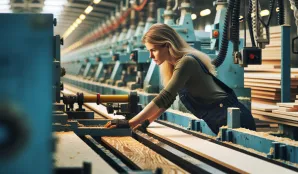
Clamps salary
Latest available salary statistics are for 2025. Compare average pay, salary range and related job listings.
36 700 - 39 200 SEK / month
Women earn 95% of what men do.
Industriell tillverkning
Related tools
Salary progression Clamps
What does a Klampare do? – Tasks and Work Environment
A Klampare primarily works within the timber industry, often at sawmills, planing mills, or plywood factories. The role involves responsibility for measuring, sorting, and marking timber logs, requiring both precision and good physical condition. The work takes place in production environments where safety regulations must be followed, and effective teamwork with other operators is essential. Klampare may also be responsible for reporting on production and quality, as well as maintaining order at the workplace. The work environment is characterized by high tempo, noise, and occasionally heavy lifting, which demands both physical endurance and strong collaboration skills.
Salary development over time
The salary for a Klampare has shown steady growth over the past three years. In 2022, the average salary was 33,600 SEK per month, increasing to 36 800 in 2023. In 2024, the average salary has reached 38 300, representing an increase of approximately 9.5% over the period. This positive salary trend reflects increased demand for skills in the timber industry, as well as general wage growth in operator professions. Gender differences persist, with women earning 95% of men's salaries. The development is also driven by employers seeking more qualified labor and improved working conditions within the industry.
Klampare salary – complete overview
- Average salary: 38 300 SEK/month
- Lowest salary: 35,400 SEK/month (woman)
- Highest salary: 37,400 SEK/month (man, regional sector, high school education up to 2 years)
- Hourly wage: 221 SEK
- Women's average salary: 35,400 SEK/month (95% of men's salary)
- Men's average salary: 38 600 SEK/month
- Regional differences: Salary variations occur, especially within the regional sector
Education and qualifications
To work as a Klampare, a high school vocational education in industry, technology, or wood technology is usually required. Many employers also value practical experience from similar environments. In some cases, internal training or introductory programs are offered at the workplace. Success in the profession requires basic knowledge of material handling, safety routines, and production technology.
- High school education: Vocational programs in industry, wood, or technology (3 years)
- Internal training: Often introductory courses at the workplace
- Practical experience: Meritorious, especially from sawmills or similar environments
- Certifications: Forklift licenses and safety courses may be required
- Prerequisites: Good physical condition, accuracy, and teamwork skills
Klampare often have the opportunity to work in scenic environments where proximity to raw materials is tangible. Many describe the camaraderie within the work team as one of the profession's greatest advantages, especially at smaller sawmills where tasks can vary and the workday rarely becomes monotonous.
Common benefits and compensations
Klampare are often offered additional pay for unsociable hours, overtime compensation, and sometimes performance-based bonuses. Other common benefits include wellness allowances, work clothing, subsidized lunches, and opportunities for skill development through internal courses.
Competition and challenges
The job market for Klampare is influenced by economic cycles and demand for timber products. Competition for jobs can vary depending on region and season, but overall, there is relatively stable demand due to the industry's need for experienced operators. Challenges in the profession often involve physically demanding tasks, noise, and the need for precision under time pressure. Digitalization and automation are also affecting job tasks, which requires new skills in technology and flexibility. Safety awareness and adaptability are crucial for success in the role.
Tips for aspiring Klampare
To succeed as a Klampare, it is beneficial to have a positive attitude toward physical work and to be able to work methodically even at high speed. Precision is important, as tasks often require exact measurement and quality control of timber. Responsibility facilitates handling machinery and materials, especially when safety regulations must be followed. Teamwork skills are also key, as the work is performed in teams and communication needs to be smooth. Flexibility and willingness to learn new skills are appreciated by employers, especially given the continuous technological development in the industry. Showing engagement through participating in internal training and taking initiatives for improvements can lead to career progression. Finally, having basic technical knowledge and being solution-oriented when faced with unexpected challenges is advantageous.
Key facts about Klampare
- Education level: High school vocational education (industry/technology/wood)
- Work environment: Industrial production environment, often noisy and physical
- Work form: Shift work and team-based work are common
- Demand: 1,437 job openings within the profession (May 2024)
- Gender distribution: Women earn 95% of men's salaries
Career paths and future prospects
After three to five years as a Klampare, there are good opportunities to advance to supervisory roles, such as team leader or production planner. Some choose to further their education in industrial technology or production management, which can lead to roles as process operators or quality managers. According to the Swedish Public Employment Service, no exact assessment is available for the profession, but there are a total of 1,437 job vacancies, indicating continued stable demand. Future prospects are affected by economic cycles, technological development, and investments in the timber industry. With proper further education and experience, Klampare can also transition into other operator roles or specialize in machinery handling and maintenance.
Frequently asked questions about Klampare
- What is the average salary of a Klampare?
- A Klampare has an average salary of 38 300 SEK/month according to current statistics. - What education is required to become a Klampare?
- High school vocational education in industry, technology, or wood technology is most common. - Are there salary differences between men and women?
- Yes, women earn on average 95% of what men do in the profession. - What does the job market look like for Klampare?
- There are 1,437 job openings within the profession, indicating strong demand. - What personal qualities are important for a Klampare?
- Accuracy, responsibility, teamwork skills, and good physical condition are highly valued. - What does the work practically involve?
- Tasks include sorting, measuring, and marking timber logs, as well as machine handling. - Are there opportunities for further education?
- Yes, many employers offer internal training and there are opportunities to advance to leadership roles.

Salary distributed by age and sector
| Age | Base salary | Monthly salary | |
|---|---|---|---|
| 18-24 | 96% | 32000 kr | 36600 kr |
| 25-34 | 97% | 33700 kr | 38400 kr |
| 35-44 | 95% | 33900 kr | 38100 kr |
| 45-54 | 34400 kr | 38700 kr | |
| 55-64 | 34800 kr | 39000 kr | |
| Snitt | 95% | 33900 kr | 38300 kr |
| Age | Base salary | Monthly salary | |
|---|---|---|---|
| 18-24 | 96% | 32000 kr | 36600 kr |
| 25-34 | 97% | 33700 kr | 38400 kr |
| 35-44 | 95% | 33900 kr | 38100 kr |
| 45-54 | 34400 kr | 38700 kr | |
| 55-64 | 34800 kr | 39000 kr | |
| Snitt | 95% | 33900 kr | 38300 kr |
| Age | Base salary | Monthly salary | |
|---|---|---|---|
| 18-24 | 96% | 32000 kr | 36600 kr |
| 25-34 | 97% | 33700 kr | 38400 kr |
| 35-44 | 95% | 33900 kr | 38100 kr |
| 45-54 | 34400 kr | 38700 kr | |
| 55-64 | 34800 kr | 39000 kr | |
| Snitt | 95% | 33900 kr | 38300 kr |
| Age | Base salary | Monthly salary | |
|---|---|---|---|
| 18-24 | 96% | 32200 kr | 37000 kr |
| 25-34 | 97% | 33800 kr | 38600 kr |
| 35-44 | 95% | 34100 kr | 38400 kr |
| 45-54 | 34500 kr | 38900 kr | |
| 55-64 | 34900 kr | 39200 kr | |
| Snitt | 95% | 34100 kr | 38600 kr |
| Age | Base salary | Monthly salary | |
|---|---|---|---|
| 18-24 | 96% | 32200 kr | 37000 kr |
| 25-34 | 97% | 33800 kr | 38600 kr |
| 35-44 | 95% | 34100 kr | 38400 kr |
| 45-54 | 34500 kr | 38900 kr | |
| 55-64 | 34900 kr | 39200 kr | |
| Snitt | 95% | 34100 kr | 38600 kr |
| Age | Base salary | Monthly salary | |
|---|---|---|---|
| 18-24 | 96% | 32200 kr | 37000 kr |
| 25-34 | 97% | 33800 kr | 38600 kr |
| 35-44 | 95% | 34100 kr | 38400 kr |
| 45-54 | 34500 kr | 38900 kr | |
| 55-64 | 34900 kr | 39200 kr | |
| Snitt | 95% | 34100 kr | 38600 kr |
| Age | Base salary | Monthly salary | |
|---|---|---|---|
| 18-24 | 96% | 31000 kr | 35600 kr |
| 25-34 | 97% | 33100 kr | 37300 kr |
| 35-44 | 95% | 33300 kr | 36600 kr |
| Snitt | 95% | 32900 kr | 36800 kr |
| Age | Base salary | Monthly salary | |
|---|---|---|---|
| 18-24 | 96% | 31000 kr | 35600 kr |
| 25-34 | 97% | 33100 kr | 37300 kr |
| 35-44 | 95% | 33300 kr | 36600 kr |
| Snitt | 95% | 32900 kr | 36800 kr |
| Age | Base salary | Monthly salary | |
|---|---|---|---|
| 18-24 | 96% | 31000 kr | 35600 kr |
| 25-34 | 97% | 33100 kr | 37300 kr |
| 35-44 | 95% | 33300 kr | 36600 kr |
| Snitt | 95% | 32900 kr | 36800 kr |

About the data
All information displayed on this page is based on data from the Swedish Central Bureau of Statistics (SCB), the Swedish Tax Agency and the Swedish employment agency. Learn more about our data and data sources here.
All figures are gross salaries, meaning salaries before tax. The average salary, or mean salary, is calculated by adding up the total salary for all individuals within the profession and dividing it by the number of individuals. For specific job categories, we have also considered various criteria such as experience and education.
Profession Clamps has the SSYK code 8173, which we use to match against the SCB database to obtain the latest salary statistics.
-

Production Technician in Gnosjö – Start Week 34
Operators in sawmills, planing mills and plywood etc.
Mon, 6 Jul 2026 - 22:52 -

Boiler and Drying Operator at Sävar Sawmill
Operators in sawmills, planing mills and plywood etc.
Thu, 2 Jul 2026 - 09:12 -

Sawmill Operator at Södra Wood in Ivaberg
Operators in sawmills, planing mills and plywood etc.
Tue, 30 Jun 2026 - 21:21 -

Operators in sawmills, planing mills and plywood etc.
Mon, 29 Jun 2026 - 22:30 -

Operator with Maintenance Experience for Pellet Plant in Ruda
Operators in sawmills, planing mills and plywood etc.
Mon, 29 Jun 2026 - 22:29
Compare salary, work tasks and job outlook in adjacent occupations to find roles with similar skills or pay levels.
-

Average salary: 47 800 SEK/month • Industriell tillverkning
Production supervisors
Compare with Clamps
Thu, 9 Jul 2026 - 13:10 -

Average salary: 34 700 SEK/month • Industriell tillverkning
Machine carpenters and machine operators, wood industry
Compare with Clamps
Thu, 9 Jul 2026 - 22:44 -

Burners, glass, ceramics, bricks salary
Average salary: 36 900 SEK/month • Industriell tillverkning
Other process and machine operators
Compare with Clamps
Tue, 14 Jul 2026 - 02:41 -

Average salary: 34 600 SEK/month • Industriell tillverkning
Printers
Compare with Clamps
Mon, 13 Jul 2026 - 23:43 -

Mixer attendant, medicine salary
Average salary: 39 900 SEK/month • Industriell tillverkning
Machine operators, pharmaceutical products
Compare with Clamps
Sun, 12 Jul 2026 - 22:17 -

Aircraft sheet metal worker salary
Average salary: 37 500 SEK/month • Industriell tillverkning
Sheet metal workers
Compare with Clamps
Sat, 11 Jul 2026 - 06:56


