- Salary statistics
- Glove seamstress salary
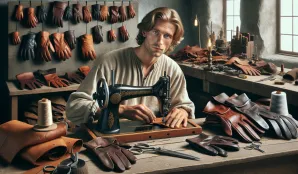
Glove seamstress salary
Latest available salary statistics are for 2025. Compare average pay, salary range and related job listings.
31 300 - 34 400 SEK / month
Women earn 94% of what men do.
Industriell tillverkning
Related tools
Salary progression Glove seamstress
What does a glove tailor do? – Tasks and work environment
A glove tailor works with manufacturing, sewing, and sometimes repairing gloves made from various materials such as leather, textiles, or synthetic fibers. Tasks can include everything from drawing patterns and cutting materials to sewing parts together by hand or with machines. The environment is often workshop-based and can range from small craft studios to larger industries within the textile and leather sectors. Precision, attention to detail, and accuracy are essential in the profession, especially since gloves often require advanced sewing and a high-quality finish.
Salary development over time
Over the past three years, salary development for glove tailors has shown steady growth. In 2022, the average salary was 27,700 SEK, increasing to 30 400 SEK in 2023 and further to 32 200 SEK in 2024. This represents a total salary increase of about 10% during the period, with a particularly clear rise between 2022 and 2023. Causes for this positive trend include increased demand for specialized sewing skills and general salary adjustments within the textile industry to attract and retain qualified workers. Gender differences persist, with men earning slightly more on average than women in the profession.
Glove tailor salary – comprehensive overview
- Average salary: 32 200 SEK/month
- Lowest salary: 29,400 SEK/month (female, private sector employee, 3-year secondary education)
- Highest salary: 32,200 SEK/month (male, regional sector, up to 2-year secondary education)
- Hourly wage (average): 183 SEK
- Gender differences: Women earn 94% of what men do (men: 33 200 SEK, women: 31 300 SEK)
- Regional differences: Regional sector shows some higher salaries, especially for men
Education and qualifications
The path to becoming a glove tailor often involves secondary education in textiles or sewing, sometimes supplemented with specialized courses in leather craftsmanship or industrial sewing. Practical experience is highly valuable, and many learn the trade through apprenticeships or on-the-job training. The ability to work carefully and with a feeling for materials is central, as well as an interest in craftsmanship and detailed work.
- Secondary education: Textile and fashion, sewing specialization (2–3 years)
- Specialized courses: Leather craftsmanship, glove sewing, industrial sewing
- Internship: Apprenticeship or practical training in textile and leather workshops
- Prerequisites: Basic textile knowledge and interest in craftsmanship
- Further education: Courses via folk high schools or vocational colleges can be advantageous
The craft of glove sewing has a long tradition and requires great finger dexterity. Many glove tailors develop their own techniques and signature styles, making each pair of gloves a unique work of art. The work can therefore be as much artistic as it is technical.
Common benefits and compensations
Glove tailors are often offered benefits such as collective agreement-based occupational pension, wellness contributions, and opportunities for skill development through courses or internal training. In some cases, staff discounts on products may also be available, especially at smaller companies or craft studios. Working hours are generally during daytime, but some flexibility may exist during peak seasons or for special orders.
Challenges and competition
The competition in the profession of glove tailoring is relatively limited, as the number of trained individuals is small, and demand for traditional craftsmanship remains stable but not growing. A challenge is that machine production and import of cheaper gloves reduce the number of workplaces within genuine craftsmanship. At the same time, customers demand high quality and unique products, which favors skilled glove tailors. The profession is also affected by economic fluctuations in the textile and fashion industries, as well as changing consumer behavior towards sustainability and locally produced goods.
Tips for aspiring glove tailors
To succeed as a glove tailor, it is good to combine accuracy with creativity and patience. A first tip is to practice various sewing techniques and become familiar with both machine and hand sewing, which improves technical skills. Being curious about materials and constantly developing your sense for leather or textiles is also central. Good collaboration skills facilitate work in a workshop environment, especially when handling larger orders. Networking within the industry and seeking internships can provide valuable insights and contacts. Finally, perseverance is important, as it can take time to build the experience and reputation often required to get the most interesting assignments.
Key facts about glove tailors
- Education level: Secondary education in textiles/sewing
- Typical work environment: Workshop or small industry
- Demand: 1,437 job openings within the profession (May 2024)
- Gender distribution: Women earn 94% of men's salaries
- Special skills: Hand and machine sewing, material knowledge
Career paths and future prospects
After three to five years in the profession, a glove tailor can advance to supervisor, craft trainer, or specialize in exclusive orders and design. Some choose to start their own workshop or work in product development within the textile and leather industries. According to the latest forecast from the Employment Service, there is no specific assessment for glove tailors due to limited data, but the profession as a whole shows opportunities through a number of job openings. Future prospects are influenced by interest in sustainable, handcrafted products and the increasing focus on quality and local production. The industry can thus continue to offer opportunities for skilled and adaptable individuals.
Frequently asked questions about glove tailors
- What does a glove tailor earn?
- A glove tailor has an average salary of 32 200 SEK per month, with an hourly wage of 183 SEK. - What education is required to become a glove tailor?
- Secondary education in textiles, sewing, or equivalent practical experience is usually necessary. - Are there gender differences in salary?
- Yes, women earn approximately 94% of what men do within the profession. - What are the future prospects?
- The prognosis is uncertain due to limited data, but there are available jobs within the profession. - What personal qualities are important?
- Accuracy, patience, and creativity are essential for success as a glove tailor. - Where do glove tailors usually work?
- Most often in workshops, smaller industries, or craft studios within the textile and leather sectors.

Salary distributed by age and sector
| Age | Base salary | Monthly salary | |
|---|---|---|---|
| 25-34 | 29100 kr | 31500 kr | |
| 35-44 | 95% | 29900 kr | 31800 kr |
| 45-54 | 92% | 30900 kr | 32600 kr |
| 55-64 | 93% | 31200 kr | 33000 kr |
| Snitt | 94% | 30300 kr | 32200 kr |
| Age | Base salary | Monthly salary | |
|---|---|---|---|
| 25-34 | 29100 kr | 31500 kr | |
| 35-44 | 95% | 29900 kr | 31800 kr |
| 45-54 | 92% | 30900 kr | 32600 kr |
| 55-64 | 93% | 31200 kr | 33000 kr |
| Snitt | 94% | 30300 kr | 32200 kr |
| Age | Base salary | Monthly salary | |
|---|---|---|---|
| 25-34 | 29100 kr | 31500 kr | |
| 35-44 | 95% | 29900 kr | 31800 kr |
| 45-54 | 92% | 30900 kr | 32600 kr |
| 55-64 | 93% | 31200 kr | 33000 kr |
| Snitt | 94% | 30300 kr | 32200 kr |
| Age | Base salary | Monthly salary | |
|---|---|---|---|
| 25-34 | 29600 kr | 32500 kr | |
| 35-44 | 95% | 29800 kr | 32500 kr |
| 45-54 | 92% | 31800 kr | 34000 kr |
| 55-64 | 93% | 31700 kr | 34500 kr |
| Snitt | 94% | 30500 kr | 33200 kr |
| Age | Base salary | Monthly salary | |
|---|---|---|---|
| 25-34 | 29600 kr | 32500 kr | |
| 35-44 | 95% | 29800 kr | 32500 kr |
| 45-54 | 92% | 31800 kr | 34000 kr |
| 55-64 | 93% | 31700 kr | 34500 kr |
| Snitt | 94% | 30500 kr | 33200 kr |
| Age | Base salary | Monthly salary | |
|---|---|---|---|
| 25-34 | 29600 kr | 32500 kr | |
| 35-44 | 95% | 29800 kr | 32500 kr |
| 45-54 | 92% | 31800 kr | 34000 kr |
| 55-64 | 93% | 31700 kr | 34500 kr |
| Snitt | 94% | 30500 kr | 33200 kr |
| Age | Base salary | Monthly salary | |
|---|---|---|---|
| 35-44 | 95% | 30000 kr | 30900 kr |
| 45-54 | 92% | 30200 kr | 31400 kr |
| 55-64 | 93% | 30900 kr | 32000 kr |
| Snitt | 94% | 30000 kr | 31300 kr |
| Age | Base salary | Monthly salary | |
|---|---|---|---|
| 35-44 | 95% | 30000 kr | 30900 kr |
| 45-54 | 92% | 30200 kr | 31400 kr |
| 55-64 | 93% | 30900 kr | 32000 kr |
| Snitt | 94% | 30000 kr | 31300 kr |
| Age | Base salary | Monthly salary | |
|---|---|---|---|
| 35-44 | 95% | 30000 kr | 30900 kr |
| 45-54 | 92% | 30200 kr | 31400 kr |
| 55-64 | 93% | 30900 kr | 32000 kr |
| Snitt | 94% | 30000 kr | 31300 kr |

About the data
All information displayed on this page is based on data from the Swedish Central Bureau of Statistics (SCB), the Swedish Tax Agency and the Swedish employment agency. Learn more about our data and data sources here.
All figures are gross salaries, meaning salaries before tax. The average salary, or mean salary, is calculated by adding up the total salary for all individuals within the profession and dividing it by the number of individuals. For specific job categories, we have also considered various criteria such as experience and education.
Profession Glove seamstress has the SSYK code 8159, which we use to match against the SCB database to obtain the latest salary statistics.
-

Machine Operator at Nordifa in Halmstad
Other machine operators, textile, leather and leather industry
Wed, 8 Jul 2026 - 06:22 -

Industrial Seamstress for Germa in Kristianstad
Other machine operators, textile, leather and leather industry
Tue, 7 Jul 2026 - 21:42 -

Sewer/Seamstress for NHC in Umeå
Other machine operators, textile, leather and leather industry
Mon, 6 Jul 2026 - 21:26 -
Sewer/Seamstress for NHC in Timrå
Other machine operators, textile, leather and leather industry
Mon, 6 Jul 2026 - 17:06 -
Process Operator at TreeToTextile – Develop the Next Generation of Sustainable Textile Fiber
Other machine operators, textile, leather and leather industry
Thu, 2 Jul 2026 - 00:37
Compare salary, work tasks and job outlook in adjacent occupations to find roles with similar skills or pay levels.
-

Average salary: 36 800 SEK/month • Industriell tillverkning
Welders and gas cutters
Compare with Glove seamstress
Tue, 14 Jul 2026 - 17:55 -

Average salary: 36 000 SEK/month • Industriell tillverkning
Machine operators, surface treatment
Compare with Glove seamstress
Tue, 14 Jul 2026 - 13:54 -

Machine operator, textile industry, sewing salary
Average salary: 32 200 SEK/month • Industriell tillverkning
Other machine operators, textile, leather and leather industry
Compare with Glove seamstress
Tue, 14 Jul 2026 - 17:57 -

Average salary: 36 900 SEK/month • Industriell tillverkning
Machine operators, dairy
Compare with Glove seamstress
Tue, 14 Jul 2026 - 13:55 -

Charcuterie worker, manufacturing salary
Average salary: 33 000 SEK/month • Industriell tillverkning
Machine operators, meat and fish processing industry
Compare with Glove seamstress
Tue, 14 Jul 2026 - 13:08 -

Average salary: 35 700 SEK/month • Industriell tillverkning
Grinders etc.
Compare with Glove seamstress
Tue, 14 Jul 2026 - 18:51


