- Salary statistics
- Organist salary
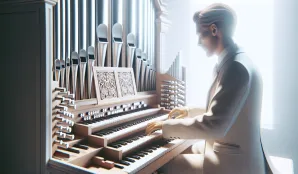
Organist salary
Latest available salary statistics are for 2025. Compare average pay, salary range and related job listings.
44 400 - 46 400 SEK / month
Kultur, media, design
Related tools
Salary progression Organist
What does an organist do? – Tasks and work environment
An organist is responsible for playing the organ during church services, holidays, and other religious ceremonies, but may also perform at concerts and events outside the church environment. Duties often include leading choirs, collaborating with priests and other musicians, as well as arranging and sometimes composing music. The role requires musical leadership, improvisation skills, and the ability to adapt the repertoire to different contexts. The work environment is usually churches or other larger gathering places where the organ is central, and working hours may include evenings, weekends, and holidays depending on the activity schedule.
Salary development over time
Salary development for organists has been relatively stable over the past three years, with a clear increase between 2023 and 2024. In 2022, the average salary was 45,200 SEK per month, which slightly decreased to 48 300 SEK in 2023. However, in 2024, the average salary rose sharply to 47 400 SEK, representing an increase of about 9% compared to the previous year. This salary increase can be explained by a higher demand for qualified organists, especially within larger congregations and institutions, as well as general salary improvements in the cultural sector. The profession shows clear gender differences, with men tending to have higher salaries than women, and salary variation can be influenced by employers, experience, and education level.
Organist salary – comprehensive overview
- Average salary: 47 400 SEK/month
- Lowest salary: 42,200 SEK/month (female, post-secondary education shorter than 3 years)
- Highest salary: 51,900 SEK/month (male, private sector employee)
- Hourly wage: 290 SEK
- Women: 44,200 SEK/month
- Men: 51,900 SEK/month
- Women’s salary as a percentage of men’s: 0%
Education and qualifications
To work as an organist, a higher music education focusing on the organ and church music is usually required. Many organists have completed a church musician degree at a music university, which includes both practical and theoretical components. Practical experience and the ability to lead choirs are often crucial, and employers prefer candidates with documented experience in leading musical activities within denominations or congregations.
- Formal degree: Church musician degree or equivalent music education (3–5 years)
- Certifications: Additional courses in liturgy, choir conducting, improvisation
- Internship: Often mandatory practical training in a congregation during education
- Prerequisites: Good piano skills, sight-reading, and music theory
- Advice for choosing: Select education with a strong focus on both organ playing and choir conducting
Many organists have the opportunity to create their own musical projects and concerts alongside their regular duties, offering great opportunities for artistic development and variety in work.
Common benefits and compensations
Organists are often covered by collective agreements that include occupational pension, insurance, and holiday pay. Other benefits may include flexible working hours, paid further education, opportunities for mentorship, and sometimes access to instruments for personal practice. Some employers also offer wellness allowances and support for participation in musical training and conferences.
Competition and challenges
The profession of organist is characterized by a paradoxical labor market where there is a shortage of qualified personnel, yet unemployment and part-time work are relatively common. Recruitment difficulties often arise due to high requirements for education and musical breadth, making many positions difficult to fill. Challenges also include irregular working hours, especially around holidays, and the need to constantly renew the repertoire and adapt to different musical contexts. Regional differences may occur, with metropolitan areas sometimes offering more opportunities but also more intense competition for the most attractive positions.
Tips for aspiring organists
To succeed as an organist, it is good to combine musical skill with the ability to collaborate and lead others. Precision and discipline are important when practicing new repertoire and handling various musical styles. Flexibility and adaptability to different ceremonies and events facilitate the work, especially since working hours often vary. Good communication skills help in collaborating with choirs, priests, and other musicians. Creativity is an asset, especially in improvisation and creating own musical arrangements. Patience and organizational skills are crucial, especially during busy periods. Finally, an interest in both traditional and modern church music is beneficial to meet the diverse needs of congregations.
Key facts about Organist
- Education level: Church musician degree or equivalent music education
- Work environment: Churches and larger gathering venues
- Employment type: Permanent or fixed-term employment, sometimes hourly
- Demand: Large opportunities for work nationwide
- Experience requirements: Practical experience in organ playing and choir conducting is highly valued
Career paths and future prospects
After three to five years in the profession, an organist can develop into leading roles within larger congregations, take responsibility for major music projects, or work as a music educator within institutions and schools. There are also opportunities to specialize further in areas such as choir conducting, composition, or arrangement. According to the Swedish Public Employment Service’s forecast, the job prospects for organists are good nationwide, despite a somewhat complex recruitment situation. Over five years, demand is expected to remain unchanged, but there are many available positions – a total of 620 jobs within the profession. Regional variations exist, but overall, the outlook is positive for those with the right education and experience.
Frequently asked questions about Organist
- What does an Organist earn?
- An organist has an average salary of 47 400 SEK per month. - What education is required to become an Organist?
- Typically, a church musician degree or equivalent music education, often at university level. - What does the job market look like for Organists?
- Opportunities for employment are abundant nationwide, with many available positions. - Are there salary differences between men and women?
- Yes, women earn 0% of what men do within the profession. - Who are the most common employers?
- The Church of Sweden and other denominations are the largest employers, but concert halls and schools also hire organists. - What personal qualities are important for an Organist?
- Musical skill, leadership, flexibility, and teamwork ability are key qualities. - How large is the salary variation within the profession?
- The lowest salary is 42,200 SEK and the highest is 51,900 SEK per month, depending on experience, gender, and employer.

Salary distributed by age and sector
| Age | Base salary | Monthly salary | |
|---|---|---|---|
| 25-34 | 42200 kr | 43000 kr | |
| 45-54 | 104% | 43700 kr | 44400 kr |
| 55-64 | 102% | 44600 kr | 46000 kr |
| Snitt | 46400 kr | 47400 kr |
| Age | Base salary | Monthly salary | |
|---|---|---|---|
| 25-34 | 42200 kr | 43000 kr | |
| 45-54 | 104% | 43700 kr | 44400 kr |
| 55-64 | 102% | 44600 kr | 46000 kr |
| Snitt | 46400 kr | 47400 kr |
| Age | Base salary | Monthly salary | |
|---|---|---|---|
| 25-34 | 42200 kr | 43000 kr | |
| 45-54 | 104% | 43700 kr | 44400 kr |
| 55-64 | 102% | 44600 kr | 46000 kr |
| Snitt | 46400 kr | 47400 kr |
| Age | Base salary | Monthly salary | |
|---|---|---|---|
| 45-54 | 104% | 42800 kr | 43500 kr |
| 55-64 | 102% | 44400 kr | 45500 kr |
| Age | Base salary | Monthly salary | |
|---|---|---|---|
| 45-54 | 104% | 42800 kr | 43500 kr |
| 55-64 | 102% | 44400 kr | 45500 kr |
| Age | Base salary | Monthly salary | |
|---|---|---|---|
| 45-54 | 104% | 42800 kr | 43500 kr |
| 55-64 | 102% | 44400 kr | 45500 kr |
| Age | Base salary | Monthly salary | |
|---|---|---|---|
| 25-34 | 43000 kr | 44100 kr | |
| 35-44 | 45800 kr | 46900 kr | |
| 45-54 | 104% | 44300 kr | 45100 kr |
| 55-64 | 102% | 44700 kr | 46300 kr |
| Snitt | 44300 kr | 45500 kr |
| Age | Base salary | Monthly salary | |
|---|---|---|---|
| 25-34 | 43000 kr | 44100 kr | |
| 35-44 | 45800 kr | 46900 kr | |
| 45-54 | 104% | 44300 kr | 45100 kr |
| 55-64 | 102% | 44700 kr | 46300 kr |
| Snitt | 44300 kr | 45500 kr |
| Age | Base salary | Monthly salary | |
|---|---|---|---|
| 25-34 | 43000 kr | 44100 kr | |
| 35-44 | 45800 kr | 46900 kr | |
| 45-54 | 104% | 44300 kr | 45100 kr |
| 55-64 | 102% | 44700 kr | 46300 kr |
| Snitt | 44300 kr | 45500 kr |

About the data
All information displayed on this page is based on data from the Swedish Central Bureau of Statistics (SCB), the Swedish Tax Agency and the Swedish employment agency. Learn more about our data and data sources here.
All figures are gross salaries, meaning salaries before tax. The average salary, or mean salary, is calculated by adding up the total salary for all individuals within the profession and dividing it by the number of individuals. For specific job categories, we have also considered various criteria such as experience and education.
Profession Organist has the SSYK code 2652, which we use to match against the SCB database to obtain the latest salary statistics.
-

English Horn with Oboe Duty – Malmö Symphony Orchestra
Musicians, singers and composers
Wed, 8 Jul 2026 - 06:25 -
Tutti Flutist with Piccolo Duty at Malmö Symphony Orchestra
Musicians, singers and composers
Wed, 8 Jul 2026 - 00:47 -

Vacancy: Alternating Principal Oboe – Royal Stockholm Philharmonic Orchestra
Musicians, singers and composers
Thu, 2 Jul 2026 - 21:10 -

Church Musician (Kantor) Wanted for Eskilstuna Parish Area
Musicians, singers and composers
Wed, 1 Jul 2026 - 09:40 -

Music Director Alan Gilbert Seeks Violin 1 Tutti – The Royal Swedish Opera Orchestra
Musicians, singers and composers
Mon, 29 Jun 2026 - 22:00
Compare salary, work tasks and job outlook in adjacent occupations to find roles with similar skills or pay levels.
-

Average salary: 35 600 SEK/month • Kultur, media, design
Other professions in culture and entertainment
Compare with Organist
Sun, 12 Jul 2026 - 20:43 -

Model designer, textile salary
Average salary: 51 700 SEK/month • Kultur, media, design
Other designers and creators
Compare with Organist
Tue, 14 Jul 2026 - 04:45 -

Average salary: 40 600 SEK/month • Kultur, media, design
Translators, interpreters and linguists etc.
Compare with Organist
Tue, 14 Jul 2026 - 04:03 -

Average salary: 35 600 SEK/month • Kultur, media, design
Other professions in culture and entertainment
Compare with Organist
Mon, 13 Jul 2026 - 01:19 -

Average salary: 39 900 SEK/month • Kultur, media, design
Interior designers, decorators and scenographers etc.
Compare with Organist
Mon, 13 Jul 2026 - 17:59 -

Average salary: 41 986 SEK/month • Kultur, media, design
Choreographers and dancers
Compare with Organist
Mon, 13 Jul 2026 - 19:11


