News and articles
- Home
- Articles






Latest posts

A Malmanrikningsarbetare primarily works with refining and beneficiation of ore in industrial processing plants, often within the mining and mineral industry. Tasks include monitoring and controlling machines that crush, grind, and separate minerals from raw ore. The work is performed in close collaboration with technicians and process operators to ensure high-quality production that meets environmental standards. The work environment can be noisy and dusty, requiring precision and a good understanding of safety regulations. Shift work is common, and the workplace is often located in or near mining areas.
Read more ->
A malmanrikare mainly works with monitoring and controlling processes for extracting and refining ore in the mining and mineral industry. Tasks often involve handling machines and technical equipment that crush, separate, and enrich ore for further processing or sale. Precision and understanding of complex process flows are required, with quality and safety always in focus. The work environment is usually industrial and may involve shift work, noise, and working near heavy machinery. Safety routines are a natural part of everyday life, and collaboration with other professional groups is important to maintain efficient and safe production.
Read more ->-

Opinion Landscape: Novus February 2026 – Social Democrats Still Largest
Thu, 19 Feb 2026 - 01:35 -

Policy rate remains at 1.75% – Riksbank signals stability
Thu, 29 Jan 2026 - 14:02


Painters, often called decorators, are responsible for preparing and painting surfaces in new constructions as well as during renovations of homes, commercial spaces, and industrial buildings. Tasks include filling, sanding, wallpapering, and painting walls, ceilings, and woodwork, but may also include decorative painting and treating materials to protect against wear and moisture. The work is performed both indoors and outdoors, meaning the work environment varies with weather conditions and seasons. Painters often work in teams and collaborate closely with other trades in the construction sector, while the work requires precision, good physical condition, and the ability to work at heights or in confined spaces.
Read more ->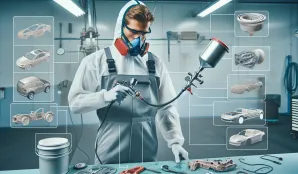
Industrial painters with a focus on surface treatment mainly work with varnishing, painting, and finishing various types of industrial products and components. Tasks often include preparing surfaces through grinding, cleaning, and priming, as well as applying paint or lacquer using spray guns or other specialized tools. Work is typically carried out in dedicated painting workshops or directly in factories, where the work environment emphasizes accuracy, protective equipment, and handling chemicals. Industrial painters often work in teams and follow strict routines for quality, safety, and work environment.
Read more ->
A painter or lacquerer in the craft sector mainly works with preparing, treating, and painting surfaces on buildings, vehicles, industrial parts, or various interior objects. The work often involves sanding, filling, priming, and applying different types of paints and varnishes to achieve the desired result and protection against wear. The working environment can vary between workshops, construction sites, and industrial settings where both physical effort and precision are required. Protective equipment is common as the work can involve exposure to dust, solvents, and other chemicals. The work is often performed in teams, but independent tasks are also common.
Read more ->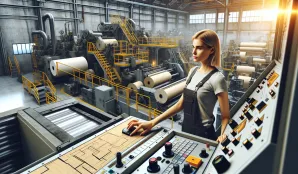
Mäldberedare work within the paper industry and are responsible for preparing the pulp, which is the mixture of cellulose and water used in paper manufacturing. Tasks include monitoring and controlling machines for pulp preparation, inspecting raw materials and additives, and ensuring the pulp maintains the correct quality for the subsequent manufacturing process. The work is often performed in shifts, in a production environment with high demands on accuracy, safety, and collaboration with other roles within the factory.
Read more ->
A painting master is responsible for planning, leading, and executing advanced painting tasks within construction and property management. The duties often include preparatory work, surface treatment, decorative painting, color schemes, as well as quality control of the finished work. The role also involves supervising apprentices and less experienced painters, coordinating work teams, and ensuring that work is performed according to current industry standards and safety regulations. The work environment can vary between indoor and outdoor settings, often on construction sites, in residential buildings, or commercial properties where both physical labor and leadership responsibilities are involved.
Read more ->
Paintors in construction are responsible for preparing, treating, and finishing surfaces in both new construction and renovation projects. Tasks include filling, sanding, wallpapering, and painting walls, ceilings, facades, and other building components. Different techniques and materials are often used depending on the substrate and client requirements. Work takes place both indoors and outdoors, requiring precision, physical stamina, and good safety awareness. Painters often work in teams but also independently, and safety is a key aspect as work at heights and with chemicals occurs.
Read more ->
A macro analyst works with analyzing economic trends and macroeconomic factors at the national and global levels. Tasks include interpreting statistics, monitoring economic fluctuations, evaluating monetary and fiscal policies, and creating forecasts and recommendations for clients such as banks, authorities, or large companies. The work is often team-based in office settings, requiring high accuracy and the ability to process complex information under time pressure. The role also involves close collaboration with other economists and analysts, where communication skills are essential for presenting results to decision-makers and the public.
Read more ->
A broker assistant within insurance plays a central role in supporting insurance brokers and advisors with administrative and customer-related tasks. The work often involves managing contracts, registering customer information, following up on cases, and communicating with both clients and insurance companies. A significant part of the workday is spent at a computer with documentation, quote preparation, and record-keeping. The work environment is generally office-based, often in open-plan offices or small teams, where the pace can be high and tasks vary depending on season and customer flow. Quality assurance and accuracy are crucial, as is the ability to handle multiple cases simultaneously and switch quickly between different tasks.
Read more ->