News and articles
- Home
- Articles






Latest posts
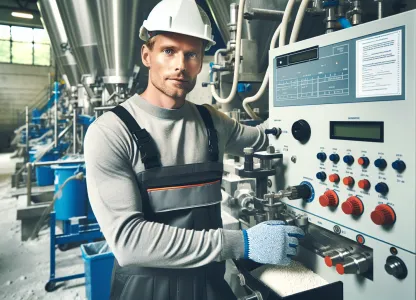
A quantity surveyor primarily works with preparing, analyzing, and documenting quantities of materials, resources, or components needed in industrial processes, construction projects, or manufacturing chains. The role often involves carefully reading drawings, following technical specifications, and ensuring the correct quantities are ordered and used at each stage of production. Quantity surveyors typically collaborate closely with project managers, purchasers, and production teams to minimize material waste and ensure efficient resource utilization. The work environment is often office-based but can also include visits to production or construction sites where practical inspections are conducted.
Read more ->
A Manager, advisor often works to lead and guide organizations or teams through change processes, strategy development, and decision-making. Tasks may include analyzing business needs, developing action plans, advising on business development, and implementing new work methods or systems. The role involves close collaboration with management teams and other key personnel within the organization, where communication and analytical skills are crucial. The work environment is mainly office-based with elements of travel and meetings, and the pace is often high with demands for flexibility and problem-solving ability.
Read more ->-

Opinion Landscape: Novus February 2026 – Social Democrats Still Largest
Thu, 19 Feb 2026 - 01:35 -

Policy rate remains at 1.75% – Riksbank signals stability
Thu, 29 Jan 2026 - 14:02


A management consultant works to help organizations develop and optimize their operations. Tasks can include analyzing business processes, developing strategies, change management, project management, and advising on organizational structure. Assignments vary across industries and may involve internal efficiency, digitalization, or internationalization. Work is often project-based, with close collaboration with leadership teams and key personnel at the client. The work environment is generally office-based, but travel to client companies and periods of high workload are common.
Read more ->
A meal supervisor primarily works in schools, preschools, and other public environments where food is served to children and youth. Responsibilities include supervising order in the dining hall, ensuring that meals are conducted calmly and safely, and assisting children with their food. The meal supervisor also has a social responsibility to create a pleasant atmosphere and promote good eating habits, while working closely with kitchen staff and teachers. The work environment is characterized by a fast pace and large groups of children, requiring patience and good communication skills.
Read more ->
A maltster mainly works within the food industry, focusing on producing malt from grains, primarily for beer and whisky production. Tasks include monitoring soaking, germination, and drying of grains, as well as quality control and machine maintenance. The role requires precision and an understanding of chemical and biological processes, as the maltster is responsible for ensuring the final product meets high-quality standards. The work is often carried out in production facilities with a mix of manual and automated processes, with a varied work environment.
Read more ->
A Malmvägare mainly works within the industrial manufacturing sector and is responsible for weighing, measuring, and recording the amount of ore handled at various process stages. Tasks include precise weighing using advanced scales and measurement instruments, documenting results, and monitoring that the correct amount of ore is moved forward in the production chain. The environment is often industrial, possibly involving work near heavy machinery, sometimes in shifts, with high demands for accuracy to ensure quality and traceability. Safety routines are central as the workplace can involve noise, dust, and physically demanding tasks.
Read more ->
A Malmskrädare works with refining and separating ore from unwanted rocks and other materials in the mining and mineral industry. Tasks include supervising machinery, controlling processes for crushing, grinding, and sorting, as well as quality checks of the finished material. The work often takes place in an industrial environment, where safety routines and precision are crucial to maintaining efficiency and safety. A Malmskrädare collaborates closely with other process operators and technicians, and the work may involve shift work or night shifts depending on the plant's operation.
Read more ->
A Malmletare works with identifying, analyzing, and mapping mineral deposits, often for mining companies or consulting firms in mineral exploration. Tasks include collecting and interpreting geological data, field sampling, analyzing rocks, and report writing and documentation. Malmletare use advanced equipment and computer-based analysis tools to assess the potential of deposits. The profession often involves outdoor work in varied and sometimes demanding environments, but also periods of office work for data processing and reporting. Safety and accuracy are crucial, as well as the ability to collaborate with geologists, engineers, and other technical specialists.
Read more ->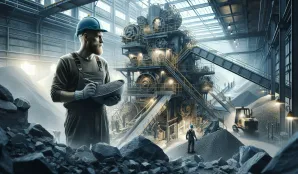
A Malmkrosskötare works with monitoring and operating machines that crush ore and rock material in mining or quarry environments. Tasks include starting, stopping, and adjusting crushing equipment, monitoring process flows, and ensuring material quality and size. The profession also involves troubleshooting and basic maintenance of machines, as well as reporting any deviations or operational disruptions. Malmkrosskötare often work in shifts, and the environment can be noisy and dusty, demanding high safety awareness and adherence to occupational health regulations.
Read more ->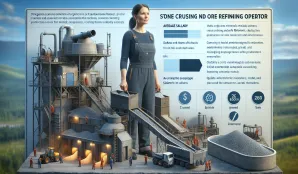
A Malmförädlingsarbetare is responsible for monitoring and controlling processes where raw ore is transformed into useful materials within the mining industry. Tasks include handling machinery and technical equipment for crushing, sorting, and ore enrichment, as well as checking the quality of the finished material. The work is often performed in shifts and in industrial environments that can be noisy and dusty, requiring precision, safety awareness, and technical knowledge. Safety routines are central, and collaboration with other roles in production is an important part of daily work.
Read more ->