- Salary statistics
- Drum maker salary
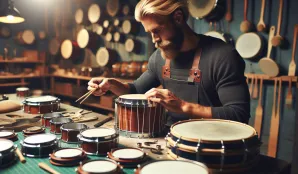
Drum maker salary
Latest available salary statistics are for 2025. Compare average pay, salary range and related job listings.
33 800 - 34 000 SEK / month
Hantverksyrken
Related tools
Salary progression Drum maker
What does a drum maker do? – Tasks and work environment
A drum maker works with manufacturing, repairing, and maintaining drums and percussion instruments. Tasks include selecting and processing materials such as wood, metal, and plastic, as well as assembling, tuning, and finishing the instruments. Precision and attention to detail are crucial to ensure each drum has the right sound and durability. The work often takes place in a workshop environment, utilizing both traditional hand tools and modern machinery. Many drum makers operate in small companies or as sole proprietors, which results in a wide variety of tasks and responsibilities.
Salary development over time
Over the past three years, drum makers have experienced fluctuating salary development. In 2022, the average salary was 34,382 SEK per month, while in 2023 it increased slightly to 30 900. In 2024, the average salary has been adjusted downward to 34 000, which corresponds to a decrease of approximately 10.8% compared to the previous year. This decline may be due to changes in demand, competition from foreign manufacturers, and a higher proportion of self-employed individuals in the field. Salary trends also reflect the industry's cyclical nature and the fact that handcrafted musical instruments are often niche products with variable market value. Overall, the salary level for drum makers remains relatively stable over time, with some fluctuations depending on market needs and supply.
Drum maker salary – comprehensive overview
- Average salary: 34 000 SEK/month
- Lowest/Highest salary: Data unavailable
- Hourly wage: 186 SEK/hour
- Gender differences: Data unavailable
- Regional differences: Data unavailable
Education and qualifications
To work as a drum maker, a combination of craftsmanship training and a strong interest in musical instruments and material science is usually required. Formal educational pathways are limited, but several vocational colleges and craft programs can provide the necessary foundation. Practical experience and apprenticeships are common, along with self-study and specialized courses in instrument making. Technical understanding and a sense of acoustics are valuable traits in this profession.
- Craftsmanship education: 1–3 years at vocational or folk high schools
- Practice/apprenticeship: Commonly with experienced practitioners
- Specialized courses: Focused on musical instruments or wood/metalworking
- Prerequisites: Interest in music, materials, and technical craftsmanship
- Self-study: Common through online resources and personal projects
Many drum makers work closely with professional musicians to customize instruments according to individual preferences. This gives the profession a unique blend of creativity and technical skill, where each drum can become a personal work of art.
Common benefits and compensations
Typical benefits for drum makers include wellness allowances, flexible working hours, and discounts on musical equipment and materials. In smaller companies, profit sharing or bonuses linked to sales are also common. Self-employed individuals have significant influence over their working conditions and environment but are rarely covered by collective agreements.
Competition and challenges
The competition in the profession of drum making is intense, especially in a global market where mass-produced instruments often drive prices down. Establishing oneself requires both technical skill and the ability to build a good reputation among musicians and retailers. Job availability is limited, and many choose to start their own business to market their products. Challenges such as material costs, access to specialized tools, and staying updated with new techniques and trends in the music industry are common. However, the creative and artisanal aspects of the work provide great satisfaction for those passionate about the profession.
Tips for aspiring drum makers
To succeed as a drum maker, it is beneficial to combine curiosity and technical precision with a strong sense of music and craftsmanship. Actively seeking internships with established makers increases the chances of gaining experience and building a network quickly. Creativity is a key trait, especially when developing new models or solving technical challenges in the workshop. Patience and perseverance are necessary to handle the many tasks requiring precision and careful thought. It is also wise to deepen knowledge of materials and acoustics to tailor instruments to different customer preferences. Being service-minded and attentive facilitates collaboration with musicians and retailers, which can lead to more commissions and a solid reputation in the industry.
Key facts about Drum Makers
- Average salary: 34 000 SEK/month
- Hourly wage: 186 SEK/hour
- Education level: Craftsmanship training or apprenticeship
- Work environment: Workshop, often small-scale or self-employed
- Job openings: 341 within the profession of musical instrument makers and craft workers
Career paths and future prospects
After three to five years as a drum maker, there are opportunities to develop into more advanced craft roles, such as a specialist in historical instruments or workshop manager. Many choose to start their own business or specialize in restoring older instruments. According to the Swedish Public Employment Service, demand for skilled craftsmen in musical instrument making remains stable, though competition for available positions is high. Further education in music production or design can broaden career options. With the right network and reputation, there is also potential for collaboration with larger music companies or theater institutions.
Frequently asked questions about Drum Makers
- What does a drum maker earn?
- The average salary for a drum maker is 34 000 SEK/month. - What is the working environment like for drum makers?
- The working environment is often workshop-based, focusing on craftsmanship and material processing. - What education is required to become a drum maker?
- Craftsmanship training, apprenticeships, or specialized courses in instrument making are recommended. - Are there many job openings for drum makers?
- There are 341 job openings within the profession of musical instrument makers and craft workers. - What are the future prospects for the profession?
- The outlook is stable but competition is high, especially for self-employed individuals and specialists. - What is the hourly wage for a drum maker?
- The hourly wage is 186 SEK.

Salary distributed by age and sector
| Age | Base salary | Monthly salary | |
|---|---|---|---|
| Snitt | 33800 kr | 34000 kr |
| Age | Base salary | Monthly salary | |
|---|---|---|---|
| Snitt | 33800 kr | 34000 kr |
| Age | Base salary | Monthly salary | |
|---|---|---|---|
| Snitt | 33800 kr | 34000 kr |

About the data
All information displayed on this page is based on data from the Swedish Central Bureau of Statistics (SCB), the Swedish Tax Agency and the Swedish employment agency. Learn more about our data and data sources here.
All figures are gross salaries, meaning salaries before tax. The average salary, or mean salary, is calculated by adding up the total salary for all individuals within the profession and dividing it by the number of individuals. For specific job categories, we have also considered various criteria such as experience and education.
Profession Drum maker has the SSYK code 7319, which we use to match against the SCB database to obtain the latest salary statistics.
-

Production Staff Wanted at Svebab – Svenska Brandslangsfabriken AB
Musical instrument makers and other artisans
Fri, 10 Jul 2026 - 21:23 -

Engraver and Customer Receptionist at Vasaboden – Full-Time Temporary Position
Musical instrument makers and other artisans
Tue, 7 Jul 2026 - 09:01 -

Screen Printer for Sign Production in Tumba
Musical instrument makers and other artisans
Mon, 29 Jun 2026 - 23:45 -

Machine Operator for Glass Manufacturing in Limmared
Musical instrument makers and other artisans
Thu, 25 Jun 2026 - 22:17 -

Teacher in Wood and Metal Craft at Vasaskolan in Hedemora
Musical instrument makers and other artisans
Thu, 25 Jun 2026 - 21:44
Compare salary, work tasks and job outlook in adjacent occupations to find roles with similar skills or pay levels.
-

Average salary: 33 100 SEK/month • Hantverksyrken
Tailors and atelier seamstresses etc.
Compare with Drum maker
Tue, 14 Jul 2026 - 18:03 -

Average salary: 34 000 SEK/month • Hantverksyrken
Musical instrument makers and other artisans
Compare with Drum maker
Tue, 14 Jul 2026 - 18:23 -

Average salary: 38 800 SEK/month • Hantverksyrken
Blacksmiths
Compare with Drum maker
Tue, 14 Jul 2026 - 13:30 -

Average salary: 34 000 SEK/month • Hantverksyrken
Musical instrument makers and other artisans
Compare with Drum maker
Tue, 14 Jul 2026 - 17:55 -

Average salary: 32 802 SEK/month • Hantverksyrken
Seamstresses
Compare with Drum maker
Tue, 14 Jul 2026 - 11:56 -

Average salary: 33 100 SEK/month • Hantverksyrken
Tailors and atelier seamstresses etc.
Compare with Drum maker
Tue, 14 Jul 2026 - 16:17


