- Salary statistics
- Piston blower salary
Piston blower salary
Latest available salary statistics are for 2025. Compare average pay, salary range and related job listings.
33 800 - 34 000 SEK / month
Hantverksyrken
Related tools
Salary progression Piston blower
What does a piston valve player do? – Tasks and work environment
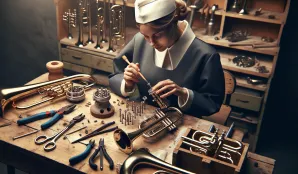
A piston valve player is a skilled craftsman within the musical instrument making trade, specialized in the manufacture, repair, and maintenance of wind instruments with piston mechanisms, such as trumpets, cornets, and certain types of horns. The tasks include shaping and assembling metal components, adjusting pistons for optimal playability, and fine-tuning the instrument’s tone and mechanics. The work is often carried out in small workshops or specialized ateliers, where precision, patience, and a trained eye for detail are essential. The environment is characterized by close collaboration with musicians and other craftsmen, requiring both technical competence and good communication skills.
Salary development over time
Over the past three years, piston valve players have experienced varying salary trends. In 2022, the average salary was 34,382 SEK per month, which increased slightly to 30 900 in 2023. However, in 2024, there was a decline to 34 000 per month, corresponding to a decrease of approximately 10.9% compared to the previous year. This trend can be explained by several factors, including changing demand for craftsmanship in musical instruments, economic fluctuations in the cultural sector, and increased competition from automated manufacturing processes. Salary variations also reflect the seasonal and project-based nature of the industry, where workload can fluctuate throughout the year. Despite the recent decline, the profession remains attractive for those who value craftsmanship and a close connection to the music scene.
Piston valve player salary – comprehensive overview
- Average salary: 34 000 SEK/month
- Lowest/Highest salary: Data unavailable
- Hourly wage: 186 SEK/hour
- Gender differences: Data unavailable
- Regional differences: Data unavailable
Education and qualifications
The path to becoming a piston valve player often involves specialized training in musical instrument making, where practical experience and technical knowledge are central. Formal education is often complemented by apprenticeships or internships with established masters, as the craft requires both theoretical understanding and long-term practice. Prior knowledge of metalworking, music, and fine mechanics is highly valuable and can facilitate learning. Many also choose to pursue further training through short courses or self-study to stay updated on new techniques and materials.
- Formal education: High school programs focused on craft or musical instrument making
- Internships/apprenticeships: Extended practical training with experienced piston valve players
- Courses and certifications: Specialized courses in metalworking and instrument technology recommended
- Prerequisites: Good manual skills and interest in music and mechanics
- Self-study: Possible through online courses and professional literature
It is not uncommon for piston valve players to collaborate directly with professional musicians to customize instruments according to individual preferences. This creates a unique link between craftsmanship and artistic expression – something that attracts many with a passion for both music and technology.
Common benefits and compensation
Piston valve players are generally offered collective agreement benefits such as occupational pension, health insurance, and holiday pay. Many employers in the cultural sector also provide wellness allowances and opportunities for skill development, such as participation in industry fairs or specialized courses. The profession often involves flexible working hours, especially for those running their own workshops or working as consultants.
Competition and challenges
The job market for piston valve players is relatively narrow, which means competition for permanent positions and larger assignments can be intense. One of the main challenges is the low turnover of services, as many professionals stay in the industry for a long time. Technological advances in instrument manufacturing and increased imports of factory-produced instruments can also pressure demand for traditional craftsmanship. At the same time, there is a stable niche market for high-quality, handcrafted instruments and advanced repairs, where specialized expertise provides a competitive advantage. Success requires continuous further education and the ability to build a good reputation within musical circles.
Tips for those wanting to become a piston valve player
To succeed as a piston valve player, it is beneficial to combine accuracy and patience with a genuine interest in both music and craftsmanship. Developing a trained eye for details and fine adjustments is crucial, especially when working with sensitive instrument parts. Practical experience through internships or apprenticeships not only develops technical skills but also provides insight into the daily work and customer relations. Good communication skills facilitate collaboration with musicians and colleagues, potentially leading to more assignments. Creativity and problem-solving skills are needed when unexpected challenges arise during repairs or custom orders. Continual professional development and staying updated on new materials and techniques make it easier to remain competitive. Persistence is also important, as it takes time to develop skills and a strong professional reputation.
Key facts about piston valve players
- Education level: High school or vocational training in craft or musical instrument making
- Work environment: Workshop, often small-scale and craft-oriented
- Typical employment: Self-employed or employed in a specialized workshop
- Demand: 341 available jobs according to latest statistics
- Special skills: Metalworking and instrument technology
Career paths and future outlook
After three to five years in the profession, a piston valve player can advance to roles such as workshop manager, specialist in restoring antique wind instruments, or consultant in instrument development. Many choose to start their own workshop to work independently and build a client base. Forecasts from the Swedish Public Employment Service indicate that demand for skilled musical instrument makers, including piston valve players, remains stable – especially in the segment for handcrafted and custom-made instruments. The niche market for high-quality craftsmanship is growing, although competition from mass production affects certain parts of the industry. Those who stay updated and build strong industry contacts have good prospects for a long and varied career.
Frequently asked questions about piston valve players
- What does a piston valve player earn?
- The average salary for a piston valve player is 34 000 SEK per month according to the latest statistics. - How to become a piston valve player?
- Most commonly, by completing a high school or vocational education in musical instrument making and then apprenticing with an experienced piston valve player. - What are the job responsibilities of a piston valve player?
- A piston valve player manufactures, repairs, and maintains wind instruments with piston mechanisms, often in close collaboration with musicians. - Are there many job opportunities for piston valve players?
- There are 341 available jobs in the profession according to current statistics. - What is needed to succeed as a piston valve player?
- Precision, patience, technical skills, and an interest in music are key qualities for success. - What are the future prospects for piston valve players?
- The outlook is stable, especially for those specializing in handcrafted instruments and advanced repairs.

Salary distributed by age and sector
| Age | Base salary | Monthly salary | |
|---|---|---|---|
| Snitt | 33800 kr | 34000 kr |
| Age | Base salary | Monthly salary | |
|---|---|---|---|
| Snitt | 33800 kr | 34000 kr |
| Age | Base salary | Monthly salary | |
|---|---|---|---|
| Snitt | 33800 kr | 34000 kr |

About the data
All information displayed on this page is based on data from the Swedish Central Bureau of Statistics (SCB), the Swedish Tax Agency and the Swedish employment agency. Learn more about our data and data sources here.
All figures are gross salaries, meaning salaries before tax. The average salary, or mean salary, is calculated by adding up the total salary for all individuals within the profession and dividing it by the number of individuals. For specific job categories, we have also considered various criteria such as experience and education.
Profession Piston blower has the SSYK code 7319, which we use to match against the SCB database to obtain the latest salary statistics.
-

Production Staff Wanted at Svebab – Svenska Brandslangsfabriken AB
Musical instrument makers and other artisans
Fri, 10 Jul 2026 - 21:23 -

Engraver and Customer Receptionist at Vasaboden – Full-Time Temporary Position
Musical instrument makers and other artisans
Tue, 7 Jul 2026 - 09:01 -

Screen Printer for Sign Production in Tumba
Musical instrument makers and other artisans
Mon, 29 Jun 2026 - 23:45 -

Machine Operator for Glass Manufacturing in Limmared
Musical instrument makers and other artisans
Thu, 25 Jun 2026 - 22:17 -

Teacher in Wood and Metal Craft at Vasaskolan in Hedemora
Musical instrument makers and other artisans
Thu, 25 Jun 2026 - 21:44
Compare salary, work tasks and job outlook in adjacent occupations to find roles with similar skills or pay levels.
-
Upholsterer, seamstress salary
Average salary: 32 200 SEK/month • Hantverksyrken
Upholsterers
Compare with Piston blower
Mon, 13 Jul 2026 - 19:41 -

Average salary: 40 900 SEK/month • Hantverksyrken
Precision mechanics
Compare with Piston blower
Mon, 13 Jul 2026 - 13:51 -

Average salary: 34 200 SEK/month • Hantverksyrken
Fine, interior and furniture carpenters
Compare with Piston blower
Wed, 8 Jul 2026 - 18:06 -

Average salary: 34 000 SEK/month • Hantverksyrken
Musical instrument makers and other artisans
Compare with Piston blower
Tue, 14 Jul 2026 - 07:11 -

Average salary: 38 800 SEK/month • Hantverksyrken
Blacksmiths
Compare with Piston blower
Tue, 14 Jul 2026 - 07:13 -

Average salary: 34 000 SEK/month • Hantverksyrken
Musical instrument makers and other artisans
Compare with Piston blower
Tue, 14 Jul 2026 - 07:16


