- Salary statistics
- Test drill salary
Test drill salary
Latest available salary statistics are for 2025. Compare average pay, salary range and related job listings.
42 400 - 46 800 SEK / month
Bygg & anläggning
Related tools
Salary progression Test drill
What does a probe driller do? – Tasks and work environment
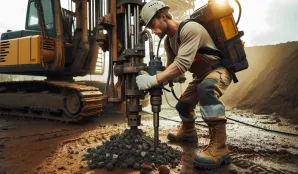
A probe driller performs drilling to investigate ground conditions and collect samples of soil, rock, and groundwater. Tasks include handling drilling equipment, analyzing core samples, and documenting results for geotechnical assessment. The work environment is often outdoors and can be physically demanding with varying weather conditions. Safety and precision are central aspects of the profession, as the work impacts construction and civil engineering projects.
Salary development over time
Probe drillers have shown clear salary growth over the past three years. In 2022, the average salary was 40,399 SEK per month, which slightly increased to 47 200 SEK in 2023. Over the last year, the salary increased significantly to 46 800 SEK, corresponding to an increase of almost 16% from the previous year. This salary increase can be explained by increased demand for skilled drilling specialists in construction and civil engineering, as well as a tighter labor market. The level of education and specialized technical knowledge also contribute to raising the salary level for probe drillers. Overall, the trend indicates that the profession is becoming more attractive and that salaries are keeping pace with increased professionalism.
Probe drillers often work in varied terrain and weather conditions, requiring good physical condition and adaptability to perform their work safely and efficiently.
Probe driller salary – complete overview
- Average salary: 46 800 SEK/month
- Minimum/Maximum salary: Exact data is lacking, but variation exists depending on experience and workplace
- Hourly wage: 284 SEK (based on 166 working hours/month)
- Gender differences: Men earn an average of 47 000 SEK, specific data for women is lacking
- Regional differences: Not available, but salary may vary depending on geographic area and demand
Education and qualifications
To become a probe driller, a technical education in construction, civil engineering, or geotechnics is often required. Practical experience in drilling and ground investigations is valuable, and certifications in safety and machinery handling can be advantageous. The profession demands accuracy and technical understanding.
- Formal qualifications: Vocational or university education in relevant engineering, typically 1–3 years
- Certifications/courses: Safety training and machinery handling
- Internship/trainee: Commonly includes internships within construction and civil engineering companies
- Prerequisites: Basic technical knowledge and experience from similar work
- Tips for choosing: Opt for education focused on geotechnics or construction for the best career opportunities
Common benefits and compensations
Typical benefits for probe drillers include collective agreement-based compensations such as holiday pay, pension contributions, and sometimes travel allowances or per diems for work at different locations. Employers may also offer wellness subsidies and insurance related to work-related risks.
Competition and challenges
The profession as a probe driller can be characterized by competition for the most attractive positions, especially in regions with high construction activity. Challenges include physically demanding work environments and the need to stay updated with technological advances and safety regulations. The job also requires flexibility regarding working hours and location, which can be strenuous for some. At the same time, the demand for qualified probe drillers remains stable, providing good opportunities for those with the right skills.
Tips for aspiring probe drillers
To succeed as a probe driller, it is good to have a strong technical understanding and to be precise in your work. Developing patience is important, as the drilling process often requires accuracy and can take time. Being physically resilient makes the work easier, as it often takes place in challenging environments. Flexibility and adaptability are also valuable qualities, as workplaces can vary and unforeseen situations require quick solutions. Finally, it is recommended to pursue education and internships that provide practical experience, which is crucial for building a successful career in the profession.
Key facts about probe drillers
- Education level: Vocational or university education in construction or engineering
- Salary range: Approximately 40,399–46 800 SEK/month
- Work environment: Physically demanding outdoor work
- Work form: Project-based with varying workplaces
- Demand: Stable with about 379 available jobs in the profession
Career paths and future prospects
After 3–5 years as a probe driller, there are opportunities to advance to specialist roles in geotechnics or supervisory positions within construction and civil engineering companies. Some choose to further their education in related technical fields to broaden their skills. The employment agency’s forecasts for the professions of well drillers and others show that due to limited data, an exact assessment of recruitment and future prospects cannot be made. However, there are about 379 available jobs in the profession, indicating a relatively good demand in the job market.
Common questions about probe drillers
- What is the average salary of a probe driller?
- The average salary for a probe driller is approximately 46 800 SEK per month. - What education is required to become a probe driller?
- A vocational or university education in construction, civil engineering, or geotechnics is recommended. - Are there gender differences in probe drillers' salaries?
- Men earn an average of 47 000 SEK, but specific data for women is lacking. - What is the work environment like for a probe driller?
- The work is mostly outdoors in varying and sometimes demanding conditions. - What personal qualities are important in this profession?
- Accuracy, physical endurance, and flexibility are important qualities for a probe driller. - How have probe drillers' salaries developed in recent years?
- Salaries have increased from approximately 40,400 SEK in 2022 to 46 800 SEK in 2024, showing strong growth.

Salary distributed by age and sector
| Age | Base salary | Monthly salary | |
|---|---|---|---|
| Snitt | 42400 kr | 46800 kr |
| Age | Base salary | Monthly salary | |
|---|---|---|---|
| Snitt | 42400 kr | 46800 kr |
| Age | Base salary | Monthly salary | |
|---|---|---|---|
| Snitt | 42400 kr | 46800 kr |
| Age | Base salary | Monthly salary | |
|---|---|---|---|
| Snitt | 42600 kr | 47000 kr |
| Age | Base salary | Monthly salary | |
|---|---|---|---|
| Snitt | 42600 kr | 47000 kr |
| Age | Base salary | Monthly salary | |
|---|---|---|---|
| Snitt | 42600 kr | 47000 kr |

About the data
All information displayed on this page is based on data from the Swedish Central Bureau of Statistics (SCB), the Swedish Tax Agency and the Swedish employment agency. Learn more about our data and data sources here.
All figures are gross salaries, meaning salaries before tax. The average salary, or mean salary, is calculated by adding up the total salary for all individuals within the profession and dividing it by the number of individuals. For specific job categories, we have also considered various criteria such as experience and education.
Profession Test drill has the SSYK code 8113, which we use to match against the SCB database to obtain the latest salary statistics.
-

Well Driller at Malmberg – Independent Work with Sustainable Energy
Well drillers etc.
Mon, 6 Jul 2026 - 17:46


Compare salary, work tasks and job outlook in adjacent occupations to find roles with similar skills or pay levels.
-

Average salary: 45 800 SEK/month • Bygg & anläggning
Miners and quarry workers
Compare with Test drill
Tue, 14 Jul 2026 - 04:26 -

Average salary: 39 200 SEK/month • Bygg & anläggning
Crane operators etc.
Compare with Test drill
Mon, 13 Jul 2026 - 07:27 -

Rationalization techniques, construction and civil engineering salary
Average salary: 50 800 SEK/month • Bygg & anläggning
Engineers and technicians in construction and engineering
Compare with Test drill
Mon, 13 Jul 2026 - 07:23 -

Computational engineer (construction), university engineer salary
Average salary: 50 800 SEK/month • Bygg & anläggning
Engineers and technicians in construction and engineering
Compare with Test drill
Mon, 13 Jul 2026 - 19:42 -

Control technician, construction salary
Average salary: 50 800 SEK/month • Bygg & anläggning
Engineers and technicians in construction and engineering
Compare with Test drill
Mon, 13 Jul 2026 - 18:20 -

Average salary: 39 200 SEK/month • Bygg & anläggning
Crane operators etc.
Compare with Test drill
Mon, 13 Jul 2026 - 14:12


