- Salary statistics
- Ore loader, mine salary
Ore loader, mine salary
Latest available salary statistics are for 2025. Compare average pay, salary range and related job listings.
38 800 - 52 500 SEK / month
Women earn 84% of what men do.
Bygg & anläggning
Related tools
Salary progression Ore loader, mine
What does a mine loader do? – Tasks and work environment
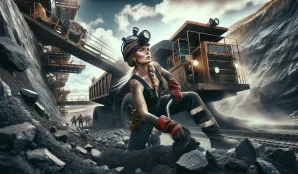
A mine loader in a mine is responsible for loading and transporting ore within the mine environment, often using heavy machinery and vehicles. Tasks include operating loaders, wheel loaders, and other specialized vehicles to move ore from the extraction site to crushers or conveyor belts. The work requires great precision and safety awareness, as the environment is noisy and often dark, with risks of dust and vibrations. Mine loaders typically work in shifts and spend periods underground, where collaboration with other professionals and communication are crucial for a safe working day.
Salary development over time
The salary for a mine loader in a mine has varied over the past three years. In 2022, the average salary was 42,900 SEK per month, rising to 47 500 SEK in 2023 – an increase of nearly 18%. In 2024, the average salary decreased to 45 800 SEK, corresponding to a drop of about 6% from the previous year. This salary trend can be explained by fluctuations in demand for labor in the mining sector, negotiated agreements, and potential restructuring within the industry. Despite the decline last year, salaries remain high compared to many other professions without university education. Regional differences and the availability of large mining projects can also influence salary levels from year to year.
Mine loader, mine salary – comprehensive overview
- Average salary: 45 800 SEK/month
- Lowest/highest salary: Data unavailable
- Hourly wage (average): 286 SEK
- Gender differences: Men earn 46 200 SEK, data on women is unavailable
- Regional differences: Limited information available
Education and qualifications
To work as a mine loader, a high school education in industry, vehicles, or technology is usually required, often supplemented with internal company training. Practical experience and a machine operator certificate are highly meritorious, and some employers also require specific certifications for underground work. Safety training and good physical condition are important factors for success and enjoyment in the profession.
- High school education: Industrial or vehicle technology programs (3 years)
- Machine operator certificate: For wheel loaders and other heavy machinery
- Internal training: Often provided by the employer
- Safety training: Required for work in the mine
- Practical experience: Meritorious for employment
Many mine loaders develop a unique sense for machine movements in tight spaces and become experts at working efficiently despite limited visibility and noisy environments. This tactile skill is difficult to replace with technology and makes the profession especially valuable in complex mines.
Common benefits and compensations
Mine loaders in mines are often covered by collective agreements that provide access to overtime pay, shift allowances, wellness contributions, and sometimes extra vacation. Insurance and pension contributions are usually included, and employers may also offer work clothing and subsidized meals.
Competition and challenges
The competition for positions as a mine loader in a mine is moderate, but job availability can vary depending on the region and the economic situation in the mining industry. A challenge is the work environment, where high safety standards are required, and handling heavy machinery in tight, sometimes risky spaces. Physical work and shift work can be strenuous, and constant attention to safety routines is necessary. Further training and specialization in machine handling can provide advantages in the job market and reduce the risk of injuries.
Tips for those who want to become a mine loader in a mine
To succeed as a mine loader, it’s good to be precise, resilient, and have good teamwork skills. Obtaining a driver’s license and machine operator certificate early provides a clear advantage in employment. A practical disposition and technical interest make it easier to understand and maintain the machines used daily. Being attentive and safety-conscious is crucial to avoid accidents and create a safe workplace, especially underground. Physical endurance is also important, as the work is often physically demanding and occurs in shifts. Showing willingness to learn new things and take initiative can open doors to further training and more advanced roles within the mine. Finally, good communication and effective collaboration with colleagues are big advantages, as safety and workflow often depend on good team spirit.
Key facts about Mine loaders
- Education level: High school diploma in industry or vehicles
- Work environment: Underground and noisy with shift work
- Employment type: Often full-time, sometimes hourly
- Demand: 379 job openings in the profession (2024)
- Special skills: Machine operator certificate and safety training
Career paths and future prospects
After a few years as a mine loader, there are opportunities to develop into a supervisor, instructor, or specialist in machine maintenance. Some choose to further their education in other mining-related professions, such as blasting or process technology. According to data from the Swedish Employment Service, no precise forecast is made for mine loaders, but there is a stable number of job openings in the profession, and the industry is expected to continue needing experienced machine operators. Investments in new technology and digitalization may influence job tasks, but practical experience and safety skills will continue to be valuable assets for those wanting to advance in the mining industry.
Common questions about Mine loaders
- What does a mine loader earn in a mine?
- The average salary is 45 800 SEK/month, with variation depending on experience and region. - What education is required to become a mine loader?
- High school education in industry or vehicles and a machine operator certificate are usually required. - What is the work environment like for a mine loader?
- The work often takes place underground in noisy and dusty environments, with shift work common. - Are there many job openings for mine loaders?
- Yes, there are 379 job openings in the profession according to the latest data. - What benefits do mine loaders have?
- Common benefits include shift allowances, wellness contributions, insurance, and collective agreement benefits. - Are there salary differences between men and women?
- Men earn on average 46 200 SEK, but specific data on women is unavailable. - What are the future prospects for the profession?
- The forecast is uncertain, but demand is considered stable within the profession.

Salary distributed by age and sector
| Age | Base salary | Monthly salary | |
|---|---|---|---|
| 18-24 | 36900 kr | 41600 kr | |
| 25-34 | 39200 kr | 44900 kr | |
| 35-44 | 43000 kr | 50000 kr | |
| 45-54 | 42900 kr | 47500 kr | |
| 55-64 | 42400 kr | 44200 kr | |
| Snitt | 84% | 40600 kr | 45800 kr |
| Age | Base salary | Monthly salary | |
|---|---|---|---|
| 18-24 | 36900 kr | 41600 kr | |
| 25-34 | 39200 kr | 44900 kr | |
| 35-44 | 43000 kr | 50000 kr | |
| 45-54 | 42900 kr | 47500 kr | |
| 55-64 | 42400 kr | 44200 kr | |
| Snitt | 84% | 40600 kr | 45800 kr |
| Age | Base salary | Monthly salary | |
|---|---|---|---|
| 18-24 | 36900 kr | 41600 kr | |
| 25-34 | 39200 kr | 44900 kr | |
| 35-44 | 43000 kr | 50000 kr | |
| 45-54 | 42900 kr | 47500 kr | |
| 55-64 | 42400 kr | 44200 kr | |
| Snitt | 84% | 40600 kr | 45800 kr |
| Age | Base salary | Monthly salary | |
|---|---|---|---|
| 18-24 | 36900 kr | 41800 kr | |
| 25-34 | 39600 kr | 45700 kr | |
| 35-44 | 43200 kr | 50300 kr | |
| 45-54 | 42900 kr | 47500 kr | |
| 55-64 | 42300 kr | 44100 kr | |
| Snitt | 84% | 40900 kr | 46200 kr |
| Age | Base salary | Monthly salary | |
|---|---|---|---|
| 18-24 | 36900 kr | 41800 kr | |
| 25-34 | 39600 kr | 45700 kr | |
| 35-44 | 43200 kr | 50300 kr | |
| 45-54 | 42900 kr | 47500 kr | |
| 55-64 | 42300 kr | 44100 kr | |
| Snitt | 84% | 40900 kr | 46200 kr |
| Age | Base salary | Monthly salary | |
|---|---|---|---|
| 18-24 | 36900 kr | 41800 kr | |
| 25-34 | 39600 kr | 45700 kr | |
| 35-44 | 43200 kr | 50300 kr | |
| 45-54 | 42900 kr | 47500 kr | |
| 55-64 | 42300 kr | 44100 kr | |
| Snitt | 84% | 40900 kr | 46200 kr |
| Age | Base salary | Monthly salary | |
|---|---|---|---|
| Snitt | 84% | 36400 kr | 38800 kr |
| Age | Base salary | Monthly salary | |
|---|---|---|---|
| Snitt | 84% | 36400 kr | 38800 kr |
| Age | Base salary | Monthly salary | |
|---|---|---|---|
| Snitt | 84% | 36400 kr | 38800 kr |

About the data
All information displayed on this page is based on data from the Swedish Central Bureau of Statistics (SCB), the Swedish Tax Agency and the Swedish employment agency. Learn more about our data and data sources here.
All figures are gross salaries, meaning salaries before tax. The average salary, or mean salary, is calculated by adding up the total salary for all individuals within the profession and dividing it by the number of individuals. For specific job categories, we have also considered various criteria such as experience and education.
Profession Ore loader, mine has the SSYK code 8111, which we use to match against the SCB database to obtain the latest salary statistics.
-
Heat Treatment Operator – Rock Drilling Tools, Fagersta
Miners and quarry workers
Fri, 10 Jul 2026 - 20:53 -
Seeking Young and Driven Person for Rock Technology and Climbing in Dalsland
Miners and quarry workers
Sat, 4 Jul 2026 - 01:36


Compare salary, work tasks and job outlook in adjacent occupations to find roles with similar skills or pay levels.
-

Average salary: 45 800 SEK/month • Bygg & anläggning
Miners and quarry workers
Compare with Ore loader, mine
Tue, 14 Jul 2026 - 04:26 -

Average salary: 39 200 SEK/month • Bygg & anläggning
Crane operators etc.
Compare with Ore loader, mine
Mon, 13 Jul 2026 - 07:27 -

Rationalization techniques, construction and civil engineering salary
Average salary: 50 800 SEK/month • Bygg & anläggning
Engineers and technicians in construction and engineering
Compare with Ore loader, mine
Mon, 13 Jul 2026 - 07:23 -

Computational engineer (construction), university engineer salary
Average salary: 50 800 SEK/month • Bygg & anläggning
Engineers and technicians in construction and engineering
Compare with Ore loader, mine
Mon, 13 Jul 2026 - 19:42 -

Control technician, construction salary
Average salary: 50 800 SEK/month • Bygg & anläggning
Engineers and technicians in construction and engineering
Compare with Ore loader, mine
Mon, 13 Jul 2026 - 18:20 -

Average salary: 39 200 SEK/month • Bygg & anläggning
Crane operators etc.
Compare with Ore loader, mine
Mon, 13 Jul 2026 - 14:12


