- Salary statistics
- Drill, mine salary
Drill, mine salary
Latest available salary statistics are for 2025. Compare average pay, salary range and related job listings.
38 800 - 52 500 SEK / month
Women earn 84% of what men do.
Bygg & anläggning
Related tools
Salary progression Drill, mine
What does a miner do in a mine? – Tasks and working environment
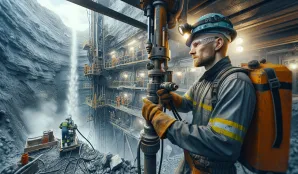
A miner's main task is to drill holes in the rock for blasting, ventilation, or water drainage. The work is often performed with advanced drilling machines and other technical tools, both above and underground. The work usually involves shifts and can include long hours in a physically demanding and noisy environment. Safety procedures are central, requiring precision and attention when handling equipment and explosives. The working environment is characterized by heavy lifting, dust, and occasional underground work, demanding high physical endurance and stress resilience.
Salary development over time
Over the past three years, the salary for miners in a mine has shown a fluctuating trend. In 2022, the average salary was 42,900 SEK per month. The following year, 2023, the salary increased significantly to 47 500 SEK, which is about an 18% rise. Between 2023 and 2024, however, the average salary decreased to 45 800 SEK, a decline of over 6%. This variation may be due to a combination of market factors, changing demand within the mining industry, and the availability of qualified labor. The salary trend also reflects temporary changes in project volumes and regional demand differences. Overall, the profession remains at a high level compared to other industrial occupations.
Miner salary – complete overview
- Average salary: 45 800 SEK/month
- Lowest/Highest salary: Data unavailable (the profession has high variation depending on experience and region)
- Hourly wage: 286 SEK/hour
- Gender differences: Men earn 46 200 SEK, data for women is missing
- Regional differences: Salary levels are affected by the mine's geographical location and project scope
Education and qualifications
To work as a miner in a mine, a high school education in mining and civil engineering, technology, or similar fields is usually required. Many employers also demand specific certifications for operating drilling machines and explosives. Practical experience and approved safety training are often prerequisites, as the work environment demands precision and responsibility.
- High school education: Construction and civil engineering program, specialization in rock technology (3 years)
- Certificates: Blasting license and machine operator certification
- Internship: On-the-job training or trainee programs are common
- Prerequisites: Good physical condition, technical interest, and safety awareness
- Courses: Continuing education in machinery safety and work environment are recommended
Drilling in a mining environment requires not only technical skill but also the ability to collaborate well in a team – tasks are rarely performed alone, and communication underground is crucial for safety.
Common benefits and compensations
Miners in a mine are often offered benefits such as shift allowances, overtime pay, wellness contributions, and sometimes additional pension contributions. Many employers provide work clothing, protective gear, and subsidized meals or accommodation at remote sites. Additional benefits may include bonuses upon project completion and opportunities for further training.
Competition and challenges
The profession of a miner in a mine is characterized by limited competition, as the number of trained professionals is relatively low and the industry requires specific qualifications. At the same time, job availability heavily depends on the economic cycle of the mining sector and project volumes. Challenges include physically demanding work environments, safety risks, and sometimes long shifts far from home. Technological changes and automation require ongoing skills development. Variations in commodity demand can also lead to periods of job insecurity and salary fluctuations.
Tips for those wanting to become a miner in a mine
To succeed as a miner, having a technical interest and a desire to continually learn new machines and methods is beneficial. Precision is crucial, especially when handling equipment and explosives, to ensure safety standards are always met. Physical endurance is needed to handle the heavy work in often challenging environments, while teamwork skills facilitate communication with colleagues underground. Flexibility and readiness to work shifts or in different locations are also important, as tasks can vary greatly. Being solution-oriented and able to quickly adapt to changing conditions makes daily work easier. Finally, a sense of responsibility is essential, as the profession involves working with advanced equipment and potential risks.
Key facts about miners in a mine
- Educational level: High school diploma with specialization in rock technology
- Work environment: Underground and noisy with high safety demands
- Work arrangement: Shift work, often in teams
- Demand: 379 available jobs in the profession last year
- Special skills: Blasting license and machine operator certification required
Career paths and future prospects
After three to five years as a miner in a mine, there are opportunities to advance to supervisory roles, such as foreman or project leader within mining operations. With additional education and experience, transitioning to planning or project design roles within larger mining companies is also possible. According to the Swedish Public Employment Service, it is difficult to give an exact forecast for future prospects as the profession is a subset of a larger occupational group, but the number of available jobs indicates ongoing demand. The industry is heavily influenced by the economic cycle of raw material extraction, which means the job market can fluctuate over time. Skills in new technology and digitalization of mining processes can open new career paths and increase job security.
Frequently asked questions about miners in a mine
- What does a miner earn in a mine?
- The average salary is 45 800 SEK per month, with an hourly wage of 286 SEK according to current statistics. - What education is required to become a miner in a mine?
- High school education in construction and civil engineering, as well as certifications for blasting and machine operation. - What is the working environment like?
- Work is usually underground, in noisy and physically demanding environments with high safety standards. - Are there salary differences between men and women?
- Salary statistics for men are 46 200 SEK, but data for women is missing. - What are the career opportunities in the long term?
- After a few years, opportunities for supervisory roles or further education within the mining and construction industry exist. - What is the demand like on the job market?
- There are 379 available jobs in the profession, but demand may vary depending on economic conditions. - What personal qualities are important?
- Attention to detail, responsibility, technical interest, and good teamwork skills are essential qualities.

Salary distributed by age and sector
| Age | Base salary | Monthly salary | |
|---|---|---|---|
| 18-24 | 36900 kr | 41600 kr | |
| 25-34 | 39200 kr | 44900 kr | |
| 35-44 | 43000 kr | 50000 kr | |
| 45-54 | 42900 kr | 47500 kr | |
| 55-64 | 42400 kr | 44200 kr | |
| Snitt | 84% | 40600 kr | 45800 kr |
| Age | Base salary | Monthly salary | |
|---|---|---|---|
| 18-24 | 36900 kr | 41600 kr | |
| 25-34 | 39200 kr | 44900 kr | |
| 35-44 | 43000 kr | 50000 kr | |
| 45-54 | 42900 kr | 47500 kr | |
| 55-64 | 42400 kr | 44200 kr | |
| Snitt | 84% | 40600 kr | 45800 kr |
| Age | Base salary | Monthly salary | |
|---|---|---|---|
| 18-24 | 36900 kr | 41600 kr | |
| 25-34 | 39200 kr | 44900 kr | |
| 35-44 | 43000 kr | 50000 kr | |
| 45-54 | 42900 kr | 47500 kr | |
| 55-64 | 42400 kr | 44200 kr | |
| Snitt | 84% | 40600 kr | 45800 kr |
| Age | Base salary | Monthly salary | |
|---|---|---|---|
| 18-24 | 36900 kr | 41800 kr | |
| 25-34 | 39600 kr | 45700 kr | |
| 35-44 | 43200 kr | 50300 kr | |
| 45-54 | 42900 kr | 47500 kr | |
| 55-64 | 42300 kr | 44100 kr | |
| Snitt | 84% | 40900 kr | 46200 kr |
| Age | Base salary | Monthly salary | |
|---|---|---|---|
| 18-24 | 36900 kr | 41800 kr | |
| 25-34 | 39600 kr | 45700 kr | |
| 35-44 | 43200 kr | 50300 kr | |
| 45-54 | 42900 kr | 47500 kr | |
| 55-64 | 42300 kr | 44100 kr | |
| Snitt | 84% | 40900 kr | 46200 kr |
| Age | Base salary | Monthly salary | |
|---|---|---|---|
| 18-24 | 36900 kr | 41800 kr | |
| 25-34 | 39600 kr | 45700 kr | |
| 35-44 | 43200 kr | 50300 kr | |
| 45-54 | 42900 kr | 47500 kr | |
| 55-64 | 42300 kr | 44100 kr | |
| Snitt | 84% | 40900 kr | 46200 kr |
| Age | Base salary | Monthly salary | |
|---|---|---|---|
| Snitt | 84% | 36400 kr | 38800 kr |
| Age | Base salary | Monthly salary | |
|---|---|---|---|
| Snitt | 84% | 36400 kr | 38800 kr |
| Age | Base salary | Monthly salary | |
|---|---|---|---|
| Snitt | 84% | 36400 kr | 38800 kr |

About the data
All information displayed on this page is based on data from the Swedish Central Bureau of Statistics (SCB), the Swedish Tax Agency and the Swedish employment agency. Learn more about our data and data sources here.
All figures are gross salaries, meaning salaries before tax. The average salary, or mean salary, is calculated by adding up the total salary for all individuals within the profession and dividing it by the number of individuals. For specific job categories, we have also considered various criteria such as experience and education.
Profession Drill, mine has the SSYK code 8111, which we use to match against the SCB database to obtain the latest salary statistics.
-
Heat Treatment Operator – Rock Drilling Tools, Fagersta
Miners and quarry workers
Fri, 10 Jul 2026 - 20:53 -
Seeking Young and Driven Person for Rock Technology and Climbing in Dalsland
Miners and quarry workers
Sat, 4 Jul 2026 - 01:36


Compare salary, work tasks and job outlook in adjacent occupations to find roles with similar skills or pay levels.
-

Average salary: 45 800 SEK/month • Bygg & anläggning
Miners and quarry workers
Compare with Drill, mine
Tue, 14 Jul 2026 - 04:26 -

Average salary: 39 200 SEK/month • Bygg & anläggning
Crane operators etc.
Compare with Drill, mine
Mon, 13 Jul 2026 - 07:27 -

Rationalization techniques, construction and civil engineering salary
Average salary: 50 800 SEK/month • Bygg & anläggning
Engineers and technicians in construction and engineering
Compare with Drill, mine
Mon, 13 Jul 2026 - 07:23 -

Computational engineer (construction), university engineer salary
Average salary: 50 800 SEK/month • Bygg & anläggning
Engineers and technicians in construction and engineering
Compare with Drill, mine
Mon, 13 Jul 2026 - 19:42 -

Control technician, construction salary
Average salary: 50 800 SEK/month • Bygg & anläggning
Engineers and technicians in construction and engineering
Compare with Drill, mine
Mon, 13 Jul 2026 - 18:20 -

Average salary: 39 200 SEK/month • Bygg & anläggning
Crane operators etc.
Compare with Drill, mine
Mon, 13 Jul 2026 - 14:12


