News and articles
- Home
- Articles






Latest posts

A security technician works with the installation, service, and maintenance of various security systems, primarily burglar and fire alarms, but also access control systems and surveillance cameras. The profession includes pulling cables, programming central units, and troubleshooting on-site at customer locations. The work is often performed independently in the field, but collaboration with colleagues and other professionals occurs regularly. The work environment is varied and can involve indoor office work as well as outdoor work at construction sites or in industrial facilities.
Read more ->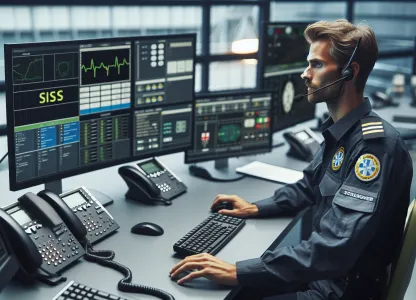
Alarm operators play a crucial role in the security and surveillance industry. The profession involves receiving, assessing, and managing incoming alarms via telephone, radio, or digital systems. An alarm operator often works in shifts and must quickly make decisions, prioritize cases, and coordinate resources such as police, ambulance, or rescue services. The work environment is high-pressure and requires concentration, stress tolerance, and good teamwork skills, as responses sometimes need to be coordinated under stressful conditions. Alarm operators are active at alarm centers, with private security companies, or within SOS Alarm, and the work is usually performed in an office environment with advanced technical equipment.
Read more ->-

Opinion Landscape: Novus February 2026 – Social Democrats Still Largest
Thu, 19 Feb 2026 - 01:35 -

Policy rate remains at 1.75% – Riksbank signals stability
Thu, 29 Jan 2026 - 14:02

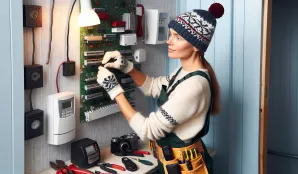
A security system installer works with installation, service, and maintenance of various security systems, such as intruder alarms, fire alarms, access control systems, and surveillance cameras. Tasks often include wiring, mounting and configuring technical equipment, as well as troubleshooting and repairs. Security system installers work with both private clients and companies, which means the working environment can range from homes to larger office or industrial premises. The job often involves travel between sites and may require working at heights or in confined spaces.
Read more ->
Vocational teachers instruct students in upper secondary vocational programs and sometimes in adult education, focusing on providing both theoretical and practical knowledge required in various trades. Tasks include planning and conducting lessons, supervising students during internships, and assessing their performance. The role often involves close collaboration with industry to ensure the education meets labor market demands. The work environment varies depending on the subject area and can include classrooms, workshops, and internship sites. Flexibility and the ability to adapt teaching to different learning styles and needs are central qualities for success in the profession.
Read more ->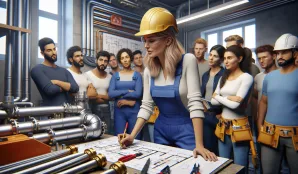
A teacher in HVAC technology educates future professionals in areas such as heating, ventilation, and sanitation at upper secondary vocational programs or adult education. Tasks include planning and conducting practical and theoretical lessons, supervising students during internships, and assessing students' knowledge and skills. The profession requires close contact with both students and industry companies, meaning the work environment often shifts between classrooms, workshops, and sometimes workplaces in the field. The focus is on conveying technical competence and industry safety requirements, while pedagogical methods are adapted to the needs and conditions of the student group.
Read more ->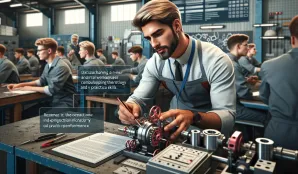
Teachers in workshop and industrial technology are responsible for educating students in vocational subjects related to technology, production, and industrial processes. Teaching primarily takes place in upper secondary vocational programs, adult education, or within corporate training. The role includes planning and conducting theoretical and practical lessons, supervising students in workshop environments, and ensuring safety regulations are followed. The work environment varies between classrooms, workshops, and sometimes industrial facilities, requiring both practical and pedagogical skills. Together with industry partners, the content of teaching is also developed to meet current industry requirements.
Read more ->
A teacher within healthcare professions instructs students in high school care and welfare programs or in adult education focused on health and care. Tasks include both theoretical and practical teaching, supervision at workplaces, and development of course materials. The role also involves following up on students' knowledge development, collaborating with colleagues, and sometimes participating in development projects to enhance educational quality. The work environment is often school-based but can also include internship visits and cooperation with healthcare and care organizations, making the profession varied and demanding.
Read more ->
A teacher in woodworking technology is responsible for educating students in both theoretical and practical aspects of woodworking and carpentry techniques. Tasks include planning and delivering lessons, supervising in workshop settings, and assessing student performance. Teaching often takes place in high schools or adult education centers and involves safety procedures and the use of machinery and tools. The work environment is varied, combining classroom instruction with hands-on work in well-equipped workshops, requiring both pedagogical skills and technical competence.
Read more ->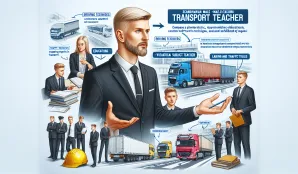
Transportation teachers educate students in subjects related to vehicle technology, logistics, and traffic regulations at upper secondary school transportation programs and adult education. Tasks include both theoretical and practical teaching, often involving supervision in workshops, simulator training, and driving exercises. The instruction is adapted to industry requirements, meaning teachers stay updated on legislation, environmental aspects, and new technology. The work environment varies between classrooms, workshops, and sometimes outdoor training areas, requiring flexibility and safety awareness.
Read more ->
A teacher in traffic professions, often called a traffic instructor, is responsible for educating students in theoretical and practical aspects in preparation for driving tests. The work involves supervising students during driving lessons, planning and conducting training sessions, and monitoring student progress. A key part of the tasks is to provide tailored feedback and create a safe learning environment in the vehicle. The work environment is varied, comprising both the traffic school’s premises and the roads where training takes place, requiring constant attention and good stress management.
Read more ->