News and articles
- Home
- Articles






Latest posts
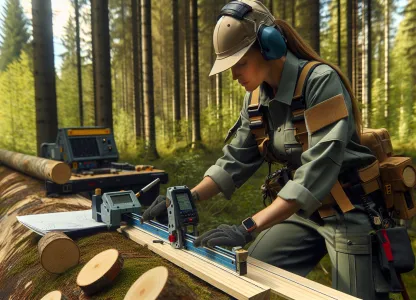
A Measurement Manager in timber measurement leads and coordinates the work of measuring, classifying, and quality-assuring timber at reception sites, sawmills, and within the forestry industry. The role involves planning, supervising, and quality control of measurement personnel, ensuring that measurements comply with laws, standards, and industry norms. The work often involves close contact with forestry companies, transporters, and authorities, and includes reporting, documentation, and sometimes training staff. The work environment can vary between outdoor fieldwork at timber terminals and administrative tasks at the office, requiring both practical experience and good organizational skills.
Read more ->
A Matinspiratör works to inspire people with new food experiences, often by demonstrating products, hosting tastings, or leading cooking activities at store events, fairs, or within companies. Tasks may include planning and executing food demonstrations, presenting new food products, engaging with customers, and creating enthusiasm around cooking and healthy choices. Many Matinspiratörer are employed by event companies or grocery chains and work in environments centered around interaction with people. The work environment is often mobile and social, with varied hours and periods of high activity.
Read more ->-

Opinion Landscape: Novus February 2026 – Social Democrats Still Largest
Thu, 19 Feb 2026 - 01:35 -

Policy rate remains at 1.75% – Riksbank signals stability
Thu, 29 Jan 2026 - 14:02


Surveying engineers in land surveying are responsible for collecting, analyzing, and interpreting geographic data used to create maps, property boundaries, and basis for construction and planning projects. Tasks include fieldwork with advanced measurement equipment as well as digital processing and analysis of collected data in GIS and CAD environments. The profession involves close collaboration with property owners, construction companies, municipal agencies, and other technical experts. The work environment varies between office work and outdoor work in changing weather conditions, requiring both technical skills and practical problem-solving abilities.
Read more ->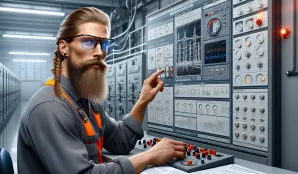
A measurement engineer in electric power works with planning, implementing, and analyzing measurements in power grids and facilities. Tasks often include installation, operation, and maintenance of measurement equipment, troubleshooting, quality assurance, and reporting measurement data to internal and external stakeholders. The role involves collaboration with other engineers, technicians, and sometimes clients to ensure that power distribution is safe, efficient, and environmentally friendly. The work environment varies between office work, fieldwork at substations, and sometimes working at heights or outdoors. Safety is always a central aspect, as the work often occurs near high-voltage electrical installations.
Read more ->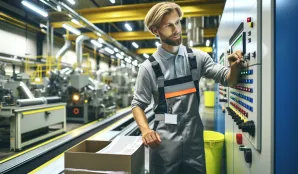
A materials management engineer within mechanical engineering plays a central role in the industrial production chain. Their tasks mainly involve planning, optimizing, and monitoring material flows from suppliers to production and further to finished products. This involves close collaboration with purchasing, production, logistics, and sometimes development departments to ensure the right materials are in the right place at the right time. The role also includes working with inventory management systems, analyzing material needs, and implementing measures to minimize waste and improve efficiency. The work environment is often office-based but can also include work in production or at supplier visits, requiring good communication skills and an analytical approach.
Read more ->
A materials coordinator is responsible for coordinating and optimizing the flow of materials within warehouses, terminals, or production facilities. Tasks include receiving, inspecting, and registering goods, inventory management, order handling, and delivery planning. It is also often part of the role to ensure that the right materials are available at the right time and in the right quantity, working closely with purchasing, suppliers, and production. The work environment is typically dynamic, sometimes physically demanding, and characterized by a high pace, where flexibility and accuracy are crucial for an efficient material flow.
Read more ->
A materials tester in physics is responsible for analyzing and testing materials to ensure they meet technical and quality requirements. Tasks include sampling, laboratory analyses, documenting results, and reporting to project managers or other engineers. Often, advanced measurement equipment and instruments are used to examine properties such as strength, chemical composition, or electrical characteristics. The work primarily takes place in a laboratory setting but can also involve work at production facilities or construction sites. The work environment emphasizes precision, safety regulations, and a methodical approach, with collaboration with colleagues in research, development, or production being common.
Read more ->
Material planners with a university engineer degree are responsible for ensuring that the right materials are available at the right time and in the right quantity within manufacturing or technology companies. The tasks include planning, ordering, and monitoring material flows, optimizing inventory management, and coordinating between purchasing, production, and suppliers. The role requires a good understanding of both technology and logistics, as well as the ability to work with digital systems and analyze data. The work environment is often office-based but can also include visits to production environments, especially in larger companies or within industry.
Read more ->
A material planner, assistant works to ensure that the right materials are available at the right place and time within warehouse and production operations. Tasks include planning material flows, ordering goods, monitoring stock levels, and coordinating between suppliers, purchasing, production, and logistics. The role requires precision, good organizational skills, and the ability to handle multiple tasks simultaneously. The work is often conducted in an office environment near warehouses or production units, involving continuous contact with both internal and external parties.
Read more ->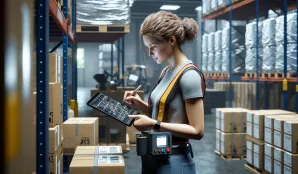
A Material Master primarily works to ensure that material flow in warehouses and terminals operates efficiently and safely. Tasks include receiving, registering, sorting, delivering goods, inventory management, and warehouse optimization. The role requires good organizational skills, accuracy, and a structured approach, as the Material Master often bears responsibility for correct material handling and timely deliveries. The work is usually performed in warehouse facilities or terminals, where the environment can be physically demanding and fast-paced, especially during peak seasons or in larger logistics operations.
Read more ->