- Salary statistics
- Horse breeder salary
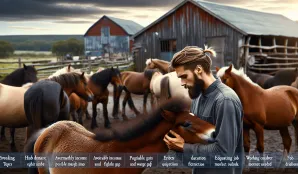
Horse breeder salary
Latest available salary statistics are for 2025. Compare average pay, salary range and related job listings.
29 000 - 33 900 SEK / month
Women earn 100% of what men do.
Naturbruk
Related tools
Salary progression Horse breeder
What does a horse breeder do? – Tasks and work environment
A horse breeder is responsible for planning, executing, and supervising the breeding of horses, from covering and pregnancy to foaling and the foal's first year. Tasks include breeding planning, feeding, stable management, documentation of lineage, and contact with veterinarians and buyers. The work is often carried out on private farms or larger studs and requires physical outdoor work year-round, sometimes in unfavorable weather conditions. A horse breeder needs to have good rapport with animals and be meticulous to ensure the well-being and development of the horses.
Salary development over time
The salary for horse breeders has shown steady growth in recent years. In 2022, the average salary was 27,200 SEK per month and increased to 29 400 kr in both 2023 and 2024, corresponding to a salary increase of approximately 4% between 2022 and 2023. Since then, the salary level has remained unchanged. This increase can partly be explained by increased demand for qualified labor in agriculture and general wage pressure within the sector. Meanwhile, the industry's salary levels have stagnated in the past year, possibly due to the fact that the profession is often practiced at smaller farms and stables with limited salary budgets. Differences in education level and staffing shortages also influence salary levels.
Horse breeder salary – comprehensive overview
- Average salary: 29 400 SEK/month
- Lowest salary: 27,000 SEK/month (female, private sector, high school education, 3 years)
- Highest salary: 32,500 SEK/month (female, public sector, high school education up to 2 years)
- Hourly wage: 171 SEK
- Gender differences: Women earn 29 300 SEK (100% of men's salary), men earn 29,700 SEK
- Regional differences: Limited public statistics, but variations may occur depending on region and employer
Education and qualifications
To work as a horse breeder, a high school education in agricultural studies with a focus on horses is usually required, but many combine this with practical experience on farms or studs. Further training and specialized courses in breeding, animal health, and entrepreneurship are often advantageous for career development.
- Formal education: Agricultural program with horse specialization (3 years)
- Certifications: Courses in breeding, animal health, and stable management
- Internships: Longer internships at studs or farms are recommended
- Prerequisites: Basic knowledge of horses and animal husbandry
- Self-study: Opportunities for online courses and industry seminars are available
Many horse breeders choose to combine breeding with other activities, such as riding lessons or stall rental. This creates a more varied and economically sustainable workday, while also providing valuable networks within the horse industry.
Common benefits and compensation
Common benefits for horse breeders include access to company housing on the farm, discounts on feed and stable equipment, and insurance for both animals and staff. Some employers also offer opportunities for professional development and participation in industry events, which can be valuable for long-term career growth.
Competition and challenges
The profession of horse breeding is characterized by a paradoxical labor market situation where there are recruitment difficulties at the same time as many work part-time. Competition for permanent positions can be tough, especially in regions with many established studs. Economic fluctuations, changes in demand for horses, and the need for specialized knowledge in breeding and animal health pose challenges for both newcomers and experienced practitioners. Flexibility and the ability to adapt operations to market needs are required. Despite this, the prospects for employment nationwide are considered large, with demand expected to remain unchanged over the next five years.
Tips for aspiring horse breeders
To succeed as a horse breeder, it is good to combine a genuine interest in animals with practical experience and business-minded thinking. Attention to detail is crucial, as breeding work requires documentation and monitoring of the horses' health. Patience and perseverance help manage long working days and challenges such as foaling or illness. Networking and collaboration skills are important for finding the right partners and buyers. Finally, continuous education and staying updated on new research in breeding and animal health are wise to develop within the profession.
Key facts about horse breeders
- Education level: High school education, often agricultural with horse specialization
- Work environment: Physical outdoor work on farms or studs
- Job market: Large opportunities, 360 available jobs within the profession
- Demand: Unchanged over five years according to the Swedish Employment Service
- Special skills: Breeding, animal health, entrepreneurship
Career paths and future outlook
After three to five years in the profession, a horse breeder can advance to running their own business, become responsible for larger breeding projects, or work as an industry advisor. There are also opportunities to specialize in areas such as competitive horse breeding, training young horses, or sales. According to the Swedish Employment Service's forecast, the prospects for employment as a breeder and caretaker of farm animals are large, with demand expected to be unchanged over the next five years. The profession suits those who want to combine practical work with long-term planning and have an interest in animals and nature.
Frequently asked questions about horse breeders
- What is the average salary of a horse breeder?
- The average salary is 29 400 kr per month. - What are the gender differences in salary for horse breeders?
- Women earn 29 300 kr (100% of men's salary), men earn 29,700 kr. - What education is required to become a horse breeder?
- Usually, a high school education in agricultural studies, preferably with a focus on horses. - Are there many job openings for horse breeders?
- Yes, there are 360 available jobs according to current statistics. - What is the highest salary for a horse breeder?
- The highest salary is 32,500 kr per month and belongs to a woman in the public sector. - What personal qualities are important for the profession?
- Attention to detail, patience, interest in animals, and business skills are especially valuable. - What are the future prospects for horse breeders?
- Opportunities for employment are considered large, and demand is expected to remain unchanged over the next five years.

Salary distributed by age and sector
| Age | Base salary | Monthly salary | |
|---|---|---|---|
| 18-24 | 25200 kr | 26300 kr | |
| 25-34 | 28700 kr | 29300 kr | |
| 35-44 | 29700 kr | 30600 kr | |
| 45-54 | 30900 kr | 31400 kr | |
| 55-64 | 29900 kr | 30300 kr | |
| Snitt | 100% | 28700 kr | 29400 kr |
| Age | Base salary | Monthly salary | |
|---|---|---|---|
| 18-24 | 28400 kr | 30800 kr | |
| 25-34 | 99% | 29200 kr | 30800 kr |
| 35-44 | 115% | 31500 kr | 32600 kr |
| 45-54 | 32100 kr | 33400 kr | |
| 55-64 | 98% | 31000 kr | 32400 kr |
| Snitt | 99% | 30300 kr | 31800 kr |
| Age | Base salary | Monthly salary | |
|---|---|---|---|
| 18-24 | 28400 kr | 30800 kr | |
| 25-34 | 99% | 29200 kr | 30800 kr |
| 35-44 | 115% | 31500 kr | 32600 kr |
| 45-54 | 32100 kr | 33400 kr | |
| 55-64 | 98% | 31000 kr | 32400 kr |
| Snitt | 99% | 30300 kr | 31800 kr |
| Age | Base salary | Monthly salary | |
|---|---|---|---|
| 18-24 | 25200 kr | 26200 kr | |
| 25-34 | 28700 kr | 29300 kr | |
| Snitt | 99% | 28600 kr | 29300 kr |
| Age | Base salary | Monthly salary | |
|---|---|---|---|
| 18-24 | 25200 kr | 26200 kr | |
| 25-34 | 28700 kr | 29300 kr | |
| Snitt | 99% | 28600 kr | 29300 kr |
| Age | Base salary | Monthly salary | |
|---|---|---|---|
| Snitt | 100% | 29100 kr | 29500 kr |
| Age | Base salary | Monthly salary | |
|---|---|---|---|
| 25-34 | 99% | 29900 kr | 31000 kr |
| 35-44 | 115% | 28100 kr | 28800 kr |
| 55-64 | 98% | 30300 kr | 32900 kr |
| Snitt | 99% | 29600 kr | 32000 kr |
| Age | Base salary | Monthly salary | |
|---|---|---|---|
| 25-34 | 99% | 29900 kr | 31000 kr |
| 35-44 | 115% | 28100 kr | 28800 kr |
| 55-64 | 98% | 30300 kr | 32900 kr |
| Snitt | 99% | 29600 kr | 32000 kr |
| Age | Base salary | Monthly salary | |
|---|---|---|---|
| Snitt | 99% | 29100 kr | 29500 kr |
| Age | Base salary | Monthly salary | |
|---|---|---|---|
| Snitt | 99% | 29100 kr | 29500 kr |
| Age | Base salary | Monthly salary | |
|---|---|---|---|
| 18-24 | 24200 kr | 25700 kr | |
| 25-34 | 29400 kr | 30000 kr | |
| Snitt | 100% | 28300 kr | 29300 kr |
| Age | Base salary | Monthly salary | |
|---|---|---|---|
| 18-24 | 28300 kr | 30400 kr | |
| 25-34 | 99% | 29100 kr | 30700 kr |
| 35-44 | 115% | 32000 kr | 33100 kr |
| 45-54 | 32300 kr | 33200 kr | |
| 55-64 | 98% | 31100 kr | 32400 kr |
| Snitt | 99% | 30400 kr | 31800 kr |
| Age | Base salary | Monthly salary | |
|---|---|---|---|
| 18-24 | 28300 kr | 30400 kr | |
| 25-34 | 99% | 29100 kr | 30700 kr |
| 35-44 | 115% | 32000 kr | 33100 kr |
| 45-54 | 32300 kr | 33200 kr | |
| 55-64 | 98% | 31100 kr | 32400 kr |
| Snitt | 99% | 30400 kr | 31800 kr |
| Age | Base salary | Monthly salary | |
|---|---|---|---|
| 25-34 | 29400 kr | 30000 kr | |
| Snitt | 99% | 28300 kr | 29300 kr |
| Age | Base salary | Monthly salary | |
|---|---|---|---|
| 25-34 | 29400 kr | 30000 kr | |
| Snitt | 99% | 28300 kr | 29300 kr |

About the data
All information displayed on this page is based on data from the Swedish Central Bureau of Statistics (SCB), the Swedish Tax Agency and the Swedish employment agency. Learn more about our data and data sources here.
All figures are gross salaries, meaning salaries before tax. The average salary, or mean salary, is calculated by adding up the total salary for all individuals within the profession and dividing it by the number of individuals. For specific job categories, we have also considered various criteria such as experience and education.
Profession Horse breeder has the SSYK code 6121, which we use to match against the SCB database to obtain the latest salary statistics.
-

Stable Assistant Needed for Weekday Mornings – Östra Torns Equestrian Club
Breeders and caretakers of farm animals
Sat, 11 Jul 2026 - 20:33 -

Animal Caretaker for Pig Production – Full Time in Rural Setting
Breeders and caretakers of farm animals
Fri, 10 Jul 2026 - 21:33 -

Stable Technician at Lövsta Agricultural Research, Uppsala
Breeders and caretakers of farm animals
Thu, 9 Jul 2026 - 01:54 -

Employee Wanted for Dairy Farm (600 Cows)
Breeders and caretakers of farm animals
Mon, 6 Jul 2026 - 23:46 -

Animal Caretaker / Farm Manager at Aviagen SweChick AB
Breeders and caretakers of farm animals
Mon, 6 Jul 2026 - 17:44
Compare salary, work tasks and job outlook in adjacent occupations to find roles with similar skills or pay levels.
-

Average salary: 33 600 SEK/month • Naturbruk
Forestry workers
Compare with Horse breeder
Tue, 14 Jul 2026 - 09:56 -

Homeowners, plant cultivation salary
Average salary: 31 752 SEK/month • Naturbruk
Growers of agricultural crops, fruit and berries
Compare with Horse breeder
Tue, 14 Jul 2026 - 08:16 -

Average salary: 30 200 SEK/month • Naturbruk
Horticulturists
Compare with Horse breeder
Mon, 13 Jul 2026 - 00:46 -

Landowners, agriculture mixed plant species salary
Average salary: 31 752 SEK/month • Naturbruk
Growers of agricultural crops, fruit and berries
Compare with Horse breeder
Tue, 14 Jul 2026 - 09:48 -

Ground preparation driver, forestry salary
Average salary: 33 500 SEK/month • Naturbruk
Operators of agricultural and forestry machinery
Compare with Horse breeder
Tue, 14 Jul 2026 - 05:43 -

Average salary: 30 000 SEK/month • Naturbruk
Other animal breeders and animal caretakers
Compare with Horse breeder
Sat, 11 Jul 2026 - 14:48


