- Salary statistics
- Heat press salary
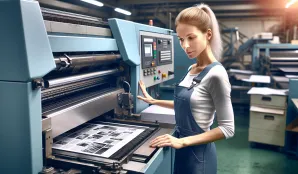
Heat press salary
Latest available salary statistics are for 2025. Compare average pay, salary range and related job listings.
32 300 - 37 600 SEK / month
Women earn 92% of what men do.
Industriell tillverkning
Related tools
Salary progression Heat press
What does a Heatset Printer do? – Tasks and work environment
A Heatset Printer works with operating and monitoring heatset printing presses, a method where ink dries quickly using heat. The profession involves preparing printing machines, adjusting color settings, changing paper, and overseeing the entire printing process to ensure the highest quality. Heatset Printers are also responsible for ongoing maintenance of equipment and troubleshooting technical issues. The work is typically performed in industrial environments with high demands for accuracy, technical knowledge, and teamwork skills.
Salary development over time
The salary for Heatset Printers has shown some variation in recent years. In 2022, the average salary was 33,100 SEK per month, which decreased slightly to 35 000 SEK in 2023. However, in 2024, the salary increased significantly to 34 600 SEK, corresponding to approximately 7.7% growth from the previous year. This positive trend can partly be explained by increased demand for technically skilled personnel in the printing industry and general wage pressure in the industry. Changes in technology and higher requirements for specialized skills have also contributed to rising wages. Despite these increases, clear gender pay gaps remain, reflecting broader challenges within the industry.
Heatset Printer salary – comprehensive overview
- Average salary: 34 600 SEK/month
- Lowest salary: 32,000 SEK/month (female), 34,000 SEK/month (male)
- Highest salary: 37,000 SEK/month (male), 32,300 SEK/month (female)
- Hourly wage (average): 210 SEK
- Gender pay gap: Women earn 92% of what men do (men: 35 200 SEK, women: 32,000 SEK)
- Regional differences: Data not available
Education and qualifications
To work as a Heatset Printer, a high school diploma with a focus on printing and graphic production is usually required, often supplemented with practical training or an apprenticeship. Technical interest and experience with machinery are highly meritorious, as well as basic knowledge in color management and quality assurance. Some employers may also offer internal training or certification courses to ensure employees master modern technology and machinery.
- Type of education: High school diploma (3 years), focus on printing/graphic production
- Practical training: Often mandatory during education
- Certifications: Opportunities for internal training and certificates via employers
- Prerequisites: Technical interest and some machine experience
- Tips: Extra courses in color theory and quality control can be advantageous
Heatset Printers often work under tight deadlines and must handle unexpected production stoppages efficiently. Resilience to stress and good communication skills are essential for quickly resolving problems with colleagues. The industry has also begun to integrate more digital technology, making interest in automation and IT increasingly valuable.
Common benefits and compensation
Heatset Printers are often offered benefits such as shift allowances, overtime pay, and wellness contributions. Employers in the industry may also provide work clothes, subsidized lunches, and sometimes opportunities for further training or internal career development. Occupational pensions and insurance are common collective agreement benefits.
Competition and challenges
The job market for Heatset Printers is characterized by some competition, especially in regions with many printing houses or where technological advancements have led to automation. Challenges in the profession include staying updated with new technology, maintaining high quality under tight production schedules, and handling physically demanding tasks. Additionally, gender pay gaps mean that equality issues are still relevant within the profession. For those seeking advancement, experience and a willingness to continue learning are often required.
Tips for those who want to become a Heatset Printer
To succeed as a Heatset Printer, it is beneficial to have a strong technical interest and be meticulous, as small mistakes can impact the entire production chain. Problem-solving skills are crucial when unexpected faults occur, requiring quick action. It is also important to be cooperative, as tasks are often performed in teams where good communication facilitates work. Flexibility helps with shift work and varying tasks, while resilience makes it easier to handle periods of high pace and tight deadlines. Continually learning new techniques and keeping up with industry developments provides a competitive edge and opens opportunities for advancement within the profession.
Key facts about Heatset Printers
- Educational level: High school diploma with focus on printing/graphic production
- Work environment: Industrial setting with shift work
- Demand: 1,437 job openings in Sweden (2024)
- Gender distribution: Men dominate the profession, but women are represented
- Special skills: Machinery operation and color management
Career paths and future prospects
After three to five years as a Heatset Printer, opportunities may open to advance to supervisory roles, such as foreman or production manager within the printing industry. Some choose to specialize further in machinery or quality assurance, while others move into training or service roles. According to the Swedish Public Employment Service's forecasts, demand for printers remains stable, with 1,437 job openings in 2024. However, digitalization and technological development increase the requirements for technical competence, making continuous skills development increasingly important for long-term employability.
Frequently asked questions about Heatset Printers
- What does a Heatset Printer earn?
- A Heatset Printer has an average salary of 34 600 SEK per month, with variations depending on experience, region, and gender. - How has the salary development for Heatset Printers been?
- Salaries have increased from 33,100 SEK (2022) to 34 600 SEK (2024), reflecting a positive trend especially in the past year. - What education is required to become a Heatset Printer?
- High school education with a focus on printing or graphic production is most common, often combined with practical training. - Are there significant gender pay gaps within the profession?
- Yes, women earn approximately 92% of what men do within the profession. - What are the job tasks of a Heatset Printer?
- Tasks include monitoring the printing process, adjusting machines, and ensuring print quality. - What is the job market outlook?
- There is good demand with 1,437 job openings in Sweden during 2024.

Salary distributed by age and sector
| Age | Base salary | Monthly salary | |
|---|---|---|---|
| 18-24 | 28200 kr | 30100 kr | |
| 25-34 | 32000 kr | 33300 kr | |
| 35-44 | 33300 kr | 34400 kr | |
| 45-54 | 36600 kr | 37700 kr | |
| 55-64 | 34500 kr | 35500 kr | |
| Snitt | 92% | 33400 kr | 34600 kr |
| Age | Base salary | Monthly salary | |
|---|---|---|---|
| 18-24 | 28200 kr | 30100 kr | |
| 25-34 | 32000 kr | 33300 kr | |
| 35-44 | 33300 kr | 34300 kr | |
| 45-54 | 36600 kr | 37700 kr | |
| 55-64 | 34500 kr | 35500 kr | |
| Snitt | 92% | 33400 kr | 34600 kr |
| Age | Base salary | Monthly salary | |
|---|---|---|---|
| 18-24 | 28200 kr | 30100 kr | |
| 25-34 | 32000 kr | 33300 kr | |
| 35-44 | 33300 kr | 34300 kr | |
| 45-54 | 36600 kr | 37700 kr | |
| 55-64 | 34500 kr | 35500 kr | |
| Snitt | 92% | 33400 kr | 34600 kr |
| Age | Base salary | Monthly salary | |
|---|---|---|---|
| 18-24 | 28500 kr | 30300 kr | |
| 25-34 | 32500 kr | 33700 kr | |
| 35-44 | 34000 kr | 35000 kr | |
| 45-54 | 37300 kr | 38300 kr | |
| 55-64 | 35000 kr | 36000 kr | |
| Snitt | 92% | 34100 kr | 35200 kr |
| Age | Base salary | Monthly salary | |
|---|---|---|---|
| 18-24 | 28500 kr | 30300 kr | |
| 25-34 | 32500 kr | 33700 kr | |
| 35-44 | 34000 kr | 35000 kr | |
| 45-54 | 37300 kr | 38300 kr | |
| 55-64 | 35000 kr | 36000 kr | |
| Snitt | 92% | 34100 kr | 35200 kr |
| Age | Base salary | Monthly salary | |
|---|---|---|---|
| 18-24 | 28500 kr | 30300 kr | |
| 25-34 | 32500 kr | 33700 kr | |
| 35-44 | 34000 kr | 35000 kr | |
| 45-54 | 37300 kr | 38300 kr | |
| 55-64 | 35000 kr | 36000 kr | |
| Snitt | 92% | 34100 kr | 35200 kr |
| Age | Base salary | Monthly salary | |
|---|---|---|---|
| Snitt | 92% | 30900 kr | 32300 kr |
| Age | Base salary | Monthly salary | |
|---|---|---|---|
| Snitt | 92% | 30900 kr | 32300 kr |
| Age | Base salary | Monthly salary | |
|---|---|---|---|
| Snitt | 92% | 30900 kr | 32300 kr |

About the data
All information displayed on this page is based on data from the Swedish Central Bureau of Statistics (SCB), the Swedish Tax Agency and the Swedish employment agency. Learn more about our data and data sources here.
All figures are gross salaries, meaning salaries before tax. The average salary, or mean salary, is calculated by adding up the total salary for all individuals within the profession and dividing it by the number of individuals. For specific job categories, we have also considered various criteria such as experience and education.
Profession Heat press has the SSYK code 7322, which we use to match against the SCB database to obtain the latest salary statistics.
-

Machine Operator for Printing Press in Gothenburg – Immediate Start
Printers
Tue, 7 Jul 2026 - 20:48 -
Machine Operator for Printing Press in Gothenburg – Start Immediately
Printers
Tue, 7 Jul 2026 - 20:32



Compare salary, work tasks and job outlook in adjacent occupations to find roles with similar skills or pay levels.
-

Turbine fitter, manufacturing salary
Average salary: 35 700 SEK/month • Industriell tillverkning
Vehicle assemblers
Compare with Heat press
Tue, 14 Jul 2026 - 11:57 -

Process operator, glass, ceramic products salary
Average salary: 36 900 SEK/month • Industriell tillverkning
Other process and machine operators
Compare with Heat press
Tue, 14 Jul 2026 - 08:17 -

Fan fitter, manufacturing salary
Average salary: 33 500 SEK/month • Industriell tillverkning
Assemblers, metal, rubber and plastic products
Compare with Heat press
Tue, 14 Jul 2026 - 14:00 -
Wallpaper roller engravers salary
Average salary: 35 300 SEK/month • Industriell tillverkning
Prepress technicians
Compare with Heat press
Tue, 14 Jul 2026 - 11:05 -

Average salary: 37 900 SEK/month • Industriell tillverkning
Toolmakers
Compare with Heat press
Tue, 14 Jul 2026 - 04:06 -

Average salary: 31 900 SEK/month • Industriell tillverkning
Hand packers and other factory workers
Compare with Heat press
Tue, 14 Jul 2026 - 07:40


