- Salary statistics
- Fan fitter, manufacturing salary
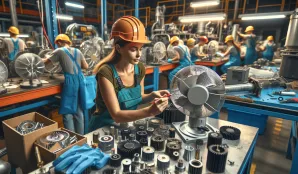
Fan fitter, manufacturing salary
Latest available salary statistics are for 2025. Compare average pay, salary range and related job listings.
32 100 - 35 800 SEK / month
Women earn 95% of what men do.
Industriell tillverkning
Related tools
Salary progression Fan fitter, manufacturing
What does a ventilation fan installer in manufacturing do? – Tasks and work environment
A ventilation fan installer in manufacturing mainly works with assembling, installing, and inspecting ventilation fans and similar equipment in an industrial environment. Tasks include reading and interpreting drawings and work instructions, as well as using machines and manual tools to assemble components. The role often involves collaboration with other installers and technicians, with quality assurance and functional testing of finished products being central elements. The work environment is typically a workshop or factory setting, involving heavy lifting, noise, and periods of high pace, requiring precision and safety awareness.
Salary development over time
The salary for ventilation fan installers in manufacturing has shown a steady upward trend in recent years. In 2022, the average salary was 29,600 kr, which increased to 32 700 kr in 2023 and further to 33 500 kr in 2024. This corresponds to a total increase of approximately 10.5% over three years. The salary development reflects a combination of collective bargaining negotiations, increased demand for technically skilled installers, and a general upward pressure on wages within the industry. The shortage of experienced installers particularly influences wage formation, while regional labor shortages also contribute to competition for skills. There are also gender differences, with women still earning a lower average salary than men within the profession.
Ventilation Fan Installer, manufacturing salary – comprehensive overview
- Average salary: 33 500 kr/month
- Lowest salary: 29,700 kr/month (female)
- Highest salary: 35,600 kr/month (male)
- Hourly wage: 196 kr
- Average salary men: 33 900 kr/month
- Average salary women: 32 200 kr/month
- Women’s salary as a percentage of men’s: 95%
Education and qualifications
A ventilation fan installer in manufacturing typically requires a high school education in industry, technology, or electrical engineering, often combined with practical experience from similar assembly work. Many onboarding and training processes take place on-site, but some employers may require supplementary courses or certifications. Technical interest, precision, and the ability to follow instructions are key qualities for success.
- High school education: Industrial or electrical programs, 3 years
- Introduction/practical training: Often on-the-job or via trainee programs
- Certifications: Work environment and safety, sometimes forklift license
- Prerequisites: Basic technical knowledge and ability to read drawings
- Further education: Opportunities for specialization via courses or internal training
The work of a ventilation fan installer often involves handling both manual and automated tasks, making technical curiosity and the ability to quickly learn new machines particularly valuable. Many workplaces invest in internal training to keep up with the rapid technological development within the manufacturing industry.
Common benefits and compensations
Ventilation fan installers in manufacturing are often covered by collective agreements that provide access to occupational pensions, insurance, and various allowances for shift work or inconvenient hours. Other common benefits include wellness contributions, work clothing, and opportunities for further training. Some employers also offer bonus systems linked to productivity or quality.
Challenges and competition
The profession as a ventilation fan installer in manufacturing is characterized by high demand, but also challenges related to recruitment and work environment. Despite many job openings, there is competition for the most qualified installers, especially those with experience in complex installations or automation. Physical strain, monotonous tasks, and high demands for accuracy can be stressful, and the work environment can sometimes be noisy or involve heavy lifting. Digitalization and automation also require skills development, making flexibility and willingness to learn new technologies central to success in the profession.
Tips for those wanting to become a ventilation fan installer in manufacturing
To succeed as a ventilation fan installer in manufacturing, it is advantageous to have a technical interest and be meticulous, as details and precision often determine the final result. Good teamwork skills are important since work is often performed in teams and requires communication with colleagues and supervisors. Being flexible and able to quickly adapt to different tasks or machines facilitates daily work, especially as technology evolves. Problem-solving skills are highly valued, as unexpected challenges may arise during assembly. Endurance and stress tolerance help when the pace is high or production peaks require extra effort. Finally, showing a willingness to learn new skills, such as taking further training or participating in internal courses, is valuable for staying competitive in the job market.
Key facts about ventilation fan installer in manufacturing
- Education level: High school, industrial or technical program
- Work environment: Workshop/factory, often noisy and physically demanding
- Work form: Full-time, often shift work
- Demand: Large opportunities for employment nationwide
- Number of job openings (2024): 1437 within the profession
Career paths and future outlook
After several years of experience as a ventilation fan installer in manufacturing, there are opportunities to advance to supervisor, team leader, or technical specialist within ventilation systems. Further education can also open doors to roles such as maintenance technician or production engineer. The forecast from the Swedish Public Employment Service indicates that job opportunities are plentiful and expected to remain stable over the next five years. Despite this, a paradox exists where unemployment is high while employers experience recruitment difficulties, making specialized skills and experience particularly valuable. The technological development within the industry suggests that those investing in further education and skills development have good chances of a stable and progressive career.
Common questions about ventilation fan installer in manufacturing
- What does a ventilation fan installer in manufacturing earn?
- The average salary for a ventilation fan installer in manufacturing is 33 500 kr/month, with variation depending on experience, gender, and region. - What education is required to become a ventilation fan installer in manufacturing?
- High school education in industry or technology is most common, often supplemented with practical training and internal onboarding. - What is the work environment like for ventilation fan installers?
- The work environment is usually a workshop or factory, where noise, heavy lifting, and periods of high activity are common. - Are there salary differences between men and women?
- Yes, women earn on average 95% of men's salaries within the profession. - What are the future prospects for ventilation fan installers?
- Job opportunities are plentiful, and demand is expected to remain unchanged in the coming years. - What benefits are common in this profession?
- Common benefits include collective agreements, occupational pensions, insurance, and wellness contributions. - What career paths are available for an experienced ventilation fan installer?
- Opportunities include progressing to supervisor, technical specialist, or further education within production technology.

Salary distributed by age and sector
| Age | Base salary | Monthly salary | |
|---|---|---|---|
| 18-24 | 97% | 29800 kr | 30900 kr |
| 25-34 | 99% | 32200 kr | 33200 kr |
| 35-44 | 94% | 32500 kr | 33400 kr |
| 45-54 | 98% | 33100 kr | 33900 kr |
| 55-64 | 89% | 34600 kr | 35100 kr |
| Snitt | 95% | 32700 kr | 33500 kr |
| Age | Base salary | Monthly salary | |
|---|---|---|---|
| 18-24 | 97% | 29800 kr | 30900 kr |
| 25-34 | 99% | 32200 kr | 33200 kr |
| 35-44 | 94% | 32500 kr | 33400 kr |
| 45-54 | 98% | 33100 kr | 33900 kr |
| 55-64 | 89% | 34600 kr | 35100 kr |
| Snitt | 95% | 32700 kr | 33500 kr |
| Age | Base salary | Monthly salary | |
|---|---|---|---|
| 18-24 | 97% | 29800 kr | 30900 kr |
| 25-34 | 99% | 32200 kr | 33200 kr |
| 35-44 | 94% | 32500 kr | 33400 kr |
| 45-54 | 98% | 33100 kr | 33900 kr |
| 55-64 | 89% | 34600 kr | 35100 kr |
| Snitt | 95% | 32700 kr | 33500 kr |
| Age | Base salary | Monthly salary | |
|---|---|---|---|
| 18-24 | 97% | 30100 kr | 31100 kr |
| 25-34 | 99% | 32300 kr | 33200 kr |
| 35-44 | 94% | 33000 kr | 33900 kr |
| 45-54 | 98% | 33300 kr | 34100 kr |
| 55-64 | 89% | 35500 kr | 35900 kr |
| Snitt | 95% | 33100 kr | 33900 kr |
| Age | Base salary | Monthly salary | |
|---|---|---|---|
| 18-24 | 97% | 30100 kr | 31100 kr |
| 25-34 | 99% | 32300 kr | 33200 kr |
| 35-44 | 94% | 33000 kr | 33900 kr |
| 45-54 | 98% | 33300 kr | 34100 kr |
| 55-64 | 89% | 35500 kr | 35900 kr |
| Snitt | 95% | 33100 kr | 33900 kr |
| Age | Base salary | Monthly salary | |
|---|---|---|---|
| 18-24 | 97% | 30100 kr | 31100 kr |
| 25-34 | 99% | 32300 kr | 33200 kr |
| 35-44 | 94% | 33000 kr | 33900 kr |
| 45-54 | 98% | 33300 kr | 34100 kr |
| 55-64 | 89% | 35500 kr | 35900 kr |
| Snitt | 95% | 33100 kr | 33900 kr |
| Age | Base salary | Monthly salary | |
|---|---|---|---|
| 18-24 | 97% | 29000 kr | 30200 kr |
| 25-34 | 99% | 31700 kr | 32800 kr |
| 35-44 | 94% | 31200 kr | 31900 kr |
| 45-54 | 98% | 32300 kr | 33300 kr |
| 55-64 | 89% | 31200 kr | 32000 kr |
| Snitt | 95% | 31300 kr | 32200 kr |
| Age | Base salary | Monthly salary | |
|---|---|---|---|
| 18-24 | 97% | 29000 kr | 30200 kr |
| 25-34 | 99% | 31700 kr | 32800 kr |
| 35-44 | 94% | 31200 kr | 31900 kr |
| 45-54 | 98% | 32300 kr | 33300 kr |
| 55-64 | 89% | 31200 kr | 32000 kr |
| Snitt | 95% | 31300 kr | 32200 kr |
| Age | Base salary | Monthly salary | |
|---|---|---|---|
| 18-24 | 97% | 29000 kr | 30200 kr |
| 25-34 | 99% | 31700 kr | 32800 kr |
| 35-44 | 94% | 31200 kr | 31900 kr |
| 45-54 | 98% | 32300 kr | 33300 kr |
| 55-64 | 89% | 31200 kr | 32000 kr |
| Snitt | 95% | 31300 kr | 32200 kr |

About the data
All information displayed on this page is based on data from the Swedish Central Bureau of Statistics (SCB), the Swedish Tax Agency and the Swedish employment agency. Learn more about our data and data sources here.
All figures are gross salaries, meaning salaries before tax. The average salary, or mean salary, is calculated by adding up the total salary for all individuals within the profession and dividing it by the number of individuals. For specific job categories, we have also considered various criteria such as experience and education.
Profession Fan fitter, manufacturing has the SSYK code 8213, which we use to match against the SCB database to obtain the latest salary statistics.
-

Sunscreen Installer at Primetex in Jönköping
Assemblers, metal, rubber and plastic products
Mon, 13 Jul 2026 - 23:52 -

Fine Assembler for Aimpoint in Malmö
Assemblers, metal, rubber and plastic products
Mon, 13 Jul 2026 - 23:52 -

Technician for Electromechanical Products - Hughes Power System AB
Assemblers, metal, rubber and plastic products
Mon, 13 Jul 2026 - 21:25 -

Installer for Cable Laying, Step Assembly, and Metalwork
Assemblers, metal, rubber and plastic products
Mon, 13 Jul 2026 - 21:06 -

Looking for industrial jobs in Töcksfors or Årjäng? Apply now!
Assemblers, metal, rubber and plastic products
Mon, 13 Jul 2026 - 21:05
Compare salary, work tasks and job outlook in adjacent occupations to find roles with similar skills or pay levels.
-

Turbine fitter, manufacturing salary
Average salary: 35 700 SEK/month • Industriell tillverkning
Vehicle assemblers
Compare with Fan fitter, manufacturing
Tue, 14 Jul 2026 - 11:57 -

Process operator, glass, ceramic products salary
Average salary: 36 900 SEK/month • Industriell tillverkning
Other process and machine operators
Compare with Fan fitter, manufacturing
Tue, 14 Jul 2026 - 08:17 -

Fan fitter, manufacturing salary
Average salary: 33 500 SEK/month • Industriell tillverkning
Assemblers, metal, rubber and plastic products
Compare with Fan fitter, manufacturing
Tue, 14 Jul 2026 - 14:00 -
Wallpaper roller engravers salary
Average salary: 35 300 SEK/month • Industriell tillverkning
Prepress technicians
Compare with Fan fitter, manufacturing
Tue, 14 Jul 2026 - 11:05 -

Average salary: 37 900 SEK/month • Industriell tillverkning
Toolmakers
Compare with Fan fitter, manufacturing
Tue, 14 Jul 2026 - 04:06 -

Average salary: 31 900 SEK/month • Industriell tillverkning
Hand packers and other factory workers
Compare with Fan fitter, manufacturing
Tue, 14 Jul 2026 - 07:40


