- Salary statistics
- Dryers, fiberboard salary
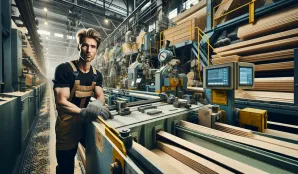
Dryers, fiberboard salary
Latest available salary statistics are for 2025. Compare average pay, salary range and related job listings.
36 700 - 39 200 SEK / month
Women earn 95% of what men do.
Industriell tillverkning
Related tools
Salary progression Dryers, fiberboard
What does a dryer operator within fiberboard production do? – Tasks and work environment
A dryer operator in fiberboard manufacturing is responsible for monitoring and controlling the drying process of wood fiber boards in an industrial environment. Tasks include starting, setting, and adjusting the drying equipment, checking temperature and moisture levels, and ensuring that production maintains consistent and high quality. It also involves performing basic maintenance and troubleshooting on machines, reporting any deviations, and collaborating with other operators and technicians. The work environment is often noisy and may involve shift work, as production runs around the clock in many factories.
Salary development over time
The salary for dryer operators within fiberboard production has shown a steady upward trend in recent years. In 2022, the average salary was 33,600 SEK per month, increasing to 36 800 SEK in 2023. The latest data from 2024 shows an average salary of 38 300 SEK, representing an increase of approximately 9.5% over three years. This development can be attributed to a combination of increased demand for experienced operators, some shortage of qualified labor, and general adjustments in industry collective agreements. Salary increases have been consistent, with a slightly stronger rise in the most recent year, reflecting inflationary pressures and a greater need for technically skilled workers within the wood industry.
Dryer operator within fiberboard production salary – complete overview
- Average salary: 38 300 SEK/month
- Lowest salary: 35,400 SEK/month (female, unspecified education)
- Highest salary: 37,400 SEK/month (male, regional sector, high school education up to 2 years)
- Hourly wage: 221 SEK/hour (average, hourly paid)
- Gender pay gap: Women earn on average 95% of men's salary (women: 35,400 SEK, men: 38 600 SEK)
Education and qualifications
The path to working as a dryer operator within fiberboard production typically goes through a vocational high school industrial technical program or equivalent vocational training focusing on wood, production, or process. Practical experience in an industrial environment and technical interest are crucial, while formal requirements for longer education are rarely necessary. Many employers value internal training and previous experience in machinery or process work.
- High school education: Industrial technical program, 3 years
- Internship: Usually internship or trainee period at the workplace
- Prerequisites: Basic technical knowledge, preferably industrial experience
- Certifications: Safety training and forklift licenses may be advantageous
- Tips for choosing: Interest in technology, machinery, and process control facilitates entry into the profession
It is common for dryer operators to develop a very good sense of the machines' sounds and vibrations – experienced professionals can often detect deviations before technical systems alarm. This makes tacit knowledge and experience valuable assets in the role.
Common benefits and compensations
For dryer operators within fiberboard production, collective agreement-based benefits such as overtime pay, shift premiums for night and weekend work, and wellness allowances are often offered. Additional pay for working in noisy or dusty environments may be provided, along with opportunities for training and skill development within the company. Pension contributions and insurance schemes according to agreement are typically included.
Competition and challenges
The competition for jobs as a dryer operator within fiberboard production is relatively low, as the profession requires both technical knowledge and experience in process industries. Challenges include physically demanding work environments, shift work, and high demands on accuracy and safety. Since production is often automated, the ability to quickly identify and resolve issues in the process is essential. Digitalization and increased automation impose new requirements for technical competence, which can be a challenge for those without updated training.
Tips for those who want to become a dryer operator within fiberboard production
To succeed as a dryer operator within fiberboard production, it is good to combine technical interest with responsibility and precision. Demonstrating initiative and willingness to learn new machines and processes makes it easier to develop at the workplace. Resilience to stress is an important trait, especially during shift work where the pace can be high and quick decisions are required. Good teamwork skills facilitate everyday work, as the role often involves teamwork and close communication with colleagues. Flexibility to adapt to changing routines and tasks is also valuable, as production can vary over time. For those interested in industrial production and enjoy solving practical problems, there are good opportunities to thrive and develop in the profession. Being attentive to safety routines and showing engagement for the work environment are additional success factors.
Key facts about dryer operators within fiberboard production
- Salary range: 35,400–37,400 SEK/month
- Average salary: 38 300 SEK/month
- Education level: High school with industrial specialization
- Work environment: Industrial, often shift work and noise
- Vacant jobs in the profession: 1,437 (May 2024)
Career paths and future prospects
After three to five years of experience as a dryer operator within fiberboard production, opportunities may exist to advance to supervisor, production planner, or technician within process control. Some choose to further their education in automation or maintenance, which can lead to more specialized roles. The employment service's prognosis for the occupational group operators within sawmills, planing mills, and plywood industries indicates a continued need for skilled workers, although no exact assessment is available for this specific profession. Currently, there are 1,437 vacant jobs in the profession, indicating relatively good employment prospects. Future demand will be influenced by economic cycles, technological development, and investments in the wood industry.
Frequently asked questions about dryer operators within fiberboard production
- What does a dryer operator within fiberboard production earn?
- The average salary is 38 300 SEK per month, with a salary range between 35,400 and 37,400 SEK. - What education is required to become a dryer operator within fiberboard production?
- A vocational high school industrial technical program or equivalent vocational training is usually required. - Are there salary differences between men and women?
- Yes, women earn on average 95% of men's salaries within the profession. - What is the work environment like for a dryer operator?
- The work environment is industrial, often noisy, and often involves shift work. - What career opportunities are available after a few years in the profession?
- Opportunities include roles such as supervisor, production planner, or technician. - How high is the demand for dryer operators within fiberboard production?
- There are 1,437 vacant jobs in the profession, indicating good demand.

Salary distributed by age and sector
| Age | Base salary | Monthly salary | |
|---|---|---|---|
| 18-24 | 96% | 32000 kr | 36600 kr |
| 25-34 | 97% | 33700 kr | 38400 kr |
| 35-44 | 95% | 33900 kr | 38100 kr |
| 45-54 | 34400 kr | 38700 kr | |
| 55-64 | 34800 kr | 39000 kr | |
| Snitt | 95% | 33900 kr | 38300 kr |
| Age | Base salary | Monthly salary | |
|---|---|---|---|
| 18-24 | 96% | 32000 kr | 36600 kr |
| 25-34 | 97% | 33700 kr | 38400 kr |
| 35-44 | 95% | 33900 kr | 38100 kr |
| 45-54 | 34400 kr | 38700 kr | |
| 55-64 | 34800 kr | 39000 kr | |
| Snitt | 95% | 33900 kr | 38300 kr |
| Age | Base salary | Monthly salary | |
|---|---|---|---|
| 18-24 | 96% | 32000 kr | 36600 kr |
| 25-34 | 97% | 33700 kr | 38400 kr |
| 35-44 | 95% | 33900 kr | 38100 kr |
| 45-54 | 34400 kr | 38700 kr | |
| 55-64 | 34800 kr | 39000 kr | |
| Snitt | 95% | 33900 kr | 38300 kr |
| Age | Base salary | Monthly salary | |
|---|---|---|---|
| 18-24 | 96% | 32200 kr | 37000 kr |
| 25-34 | 97% | 33800 kr | 38600 kr |
| 35-44 | 95% | 34100 kr | 38400 kr |
| 45-54 | 34500 kr | 38900 kr | |
| 55-64 | 34900 kr | 39200 kr | |
| Snitt | 95% | 34100 kr | 38600 kr |
| Age | Base salary | Monthly salary | |
|---|---|---|---|
| 18-24 | 96% | 32200 kr | 37000 kr |
| 25-34 | 97% | 33800 kr | 38600 kr |
| 35-44 | 95% | 34100 kr | 38400 kr |
| 45-54 | 34500 kr | 38900 kr | |
| 55-64 | 34900 kr | 39200 kr | |
| Snitt | 95% | 34100 kr | 38600 kr |
| Age | Base salary | Monthly salary | |
|---|---|---|---|
| 18-24 | 96% | 32200 kr | 37000 kr |
| 25-34 | 97% | 33800 kr | 38600 kr |
| 35-44 | 95% | 34100 kr | 38400 kr |
| 45-54 | 34500 kr | 38900 kr | |
| 55-64 | 34900 kr | 39200 kr | |
| Snitt | 95% | 34100 kr | 38600 kr |
| Age | Base salary | Monthly salary | |
|---|---|---|---|
| 18-24 | 96% | 31000 kr | 35600 kr |
| 25-34 | 97% | 33100 kr | 37300 kr |
| 35-44 | 95% | 33300 kr | 36600 kr |
| Snitt | 95% | 32900 kr | 36800 kr |
| Age | Base salary | Monthly salary | |
|---|---|---|---|
| 18-24 | 96% | 31000 kr | 35600 kr |
| 25-34 | 97% | 33100 kr | 37300 kr |
| 35-44 | 95% | 33300 kr | 36600 kr |
| Snitt | 95% | 32900 kr | 36800 kr |
| Age | Base salary | Monthly salary | |
|---|---|---|---|
| 18-24 | 96% | 31000 kr | 35600 kr |
| 25-34 | 97% | 33100 kr | 37300 kr |
| 35-44 | 95% | 33300 kr | 36600 kr |
| Snitt | 95% | 32900 kr | 36800 kr |

About the data
All information displayed on this page is based on data from the Swedish Central Bureau of Statistics (SCB), the Swedish Tax Agency and the Swedish employment agency. Learn more about our data and data sources here.
All figures are gross salaries, meaning salaries before tax. The average salary, or mean salary, is calculated by adding up the total salary for all individuals within the profession and dividing it by the number of individuals. For specific job categories, we have also considered various criteria such as experience and education.
Profession Dryers, fiberboard has the SSYK code 8173, which we use to match against the SCB database to obtain the latest salary statistics.
-

Production Technician in Gnosjö – Start Week 34
Operators in sawmills, planing mills and plywood etc.
Mon, 6 Jul 2026 - 22:52 -

Boiler and Drying Operator at Sävar Sawmill
Operators in sawmills, planing mills and plywood etc.
Thu, 2 Jul 2026 - 09:12 -

Sawmill Operator at Södra Wood in Ivaberg
Operators in sawmills, planing mills and plywood etc.
Tue, 30 Jun 2026 - 21:21 -

Operators in sawmills, planing mills and plywood etc.
Mon, 29 Jun 2026 - 22:30 -

Operator with Maintenance Experience for Pellet Plant in Ruda
Operators in sawmills, planing mills and plywood etc.
Mon, 29 Jun 2026 - 22:29
Compare salary, work tasks and job outlook in adjacent occupations to find roles with similar skills or pay levels.
-

Average salary: 34 200 SEK/month • Industriell tillverkning
Machine operators, plastics industry
Compare with Dryers, fiberboard
Tue, 14 Jul 2026 - 11:56 -

Average salary: 48 700 SEK/month • Industriell tillverkning
Process operators, stone crushing and ore processing
Compare with Dryers, fiberboard
Tue, 14 Jul 2026 - 03:32 -

Steel engravers, print media salary
Average salary: 35 300 SEK/month • Industriell tillverkning
Prepress technicians
Compare with Dryers, fiberboard
Tue, 14 Jul 2026 - 13:14 -

Average salary: 32 200 SEK/month • Industriell tillverkning
Other machine operators, textile, leather and leather industry
Compare with Dryers, fiberboard
Mon, 13 Jul 2026 - 11:22 -

Average salary: 28 600 SEK/month • Industriell tillverkning
Machine operators, bleaching, dyeing and washing
Compare with Dryers, fiberboard
Tue, 14 Jul 2026 - 13:55 -

Average salary: 33 800 SEK/month • Industriell tillverkning
Bookbinders etc.
Compare with Dryers, fiberboard
Tue, 14 Jul 2026 - 13:55


