- Salary statistics
- Warp salary
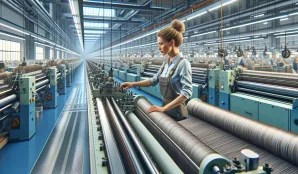
Warp salary
Latest available salary statistics are for 2025. Compare average pay, salary range and related job listings.
31 300 - 34 400 SEK / month
Women earn 94% of what men do.
Industriell tillverkning
Related tools
Salary progression Warp
What does a Varpare do? – Tasks and working environment
A Varpare works within the textile industry and is responsible for preparing spinning yarns for the weaving process. Tasks include setting up and monitoring spinning machines, as well as checking that the yarns are fed correctly and that the machines operate without interruption. The role also involves fixing minor faults and performing ongoing maintenance on the machines. The working environment is often noisy and physically demanding, with shift work and sometimes high pace. Safety routines are important as the machines can be large and powerful.
Salary development over time
Over the past three years, the salary of a Varpare has developed in a clearly positive direction. In 2022, the average salary for a Varpare was 27,700 SEK per month. It increased to 30 400 during 2023, which corresponds to an increase of about 6.9%. In 2024, the current average salary is 32 200, representing a further increase of approximately 2.7% from the previous year. This salary increase can be linked to a growing demand for educated labor within the textile industry, the overall wage development in the labor market, and an increased focus on technical skills. Although the job's future outlook is difficult to assess due to limited data, wage statistics show a stable and slowly rising trend for what a Varpare earns.
Varpare salary – comprehensive overview
- Average salary: 32 200 SEK/month
- Lowest salary: 29,400 SEK/month
- Highest salary: 32,200 SEK/month
- Average hourly wage: 183 SEK/hour
- Women: 31 300 SEK/month (94% of men's salary)
- Men: 33 200 SEK/month
- Regional differences: No available data
Education and qualifications
To work as a Varpare, a high school education in industry, technology, or textiles is usually required. Many employers also seek experience in machine handling and technical knowledge. Practical training or internal on-the-job training is common and may be a requirement for employment. In some cases, shorter courses or certifications in textile production or machine safety are offered.
- High school education: Industry, technology, or textile programs (3 years)
- Certifications: Machine safety and maintenance (voluntary but meritorious)
- Internship: On-the-job training during education
- Prerequisites: Good technical understanding and accuracy
- Workplace training: Common upon employment
Automation within the textile industry has changed the role of the Varpare, but knowledge of yarn quality and machine settings remains crucial for the quality and efficiency of production.
Common benefits and compensations
Varpare often have access to collective agreement benefits such as occupational pension, paid vacation, and sick leave. Other common benefits include wellness allowances, work clothes, and sometimes opportunities for further training within the profession. Shift work can provide additional pay beyond the base salary, especially for night or weekend shifts.
Competition and challenges
The competition for positions as a Varpare varies depending on region and demand within the textile industry. Since the profession requires specific technical skills, those with experience in machine handling may have an advantage in the job market. A challenge is that the profession is affected by the global textile market and automation, which can lead to changing tasks and requirements. At the same time, there is a continuous need for precise and technically skilled employees, especially in specialized production. Limited data makes future forecasts difficult, but there are several job openings within the occupational group.
Tips for those who want to become a Varpare
To succeed as a Varpare, it is good to combine technical curiosity with the ability to work carefully under pressure. Gaining early experience with machines through internships or summer jobs increases chances of employment. A structured and attentive personality is important, especially when it comes to detecting and fixing machine faults. Flexibility and willingness to work shifts, sometimes nights and weekends, are appreciated by employers. The ability to collaborate with colleagues and communicate clearly about production status is also an asset. Continual willingness to develop skills in new machines or techniques benefits long-term career development. Finally, patience and endurance are necessary, as the working environment can be monotonous but requires constant attention.
Key facts about Varpare
- Average salary: 32 200 SEK/month
- Education level: High school (industry/technology/textiles)
- Work environment: Industrial, shift work common
- Number of job openings: 1433 within the occupational group
- Gender salary gap: Women earn 94% of what men do
Career paths and future outlook
After three to five years in the profession as a Varpare, there are opportunities to advance to supervisory roles such as team leader or production manager within the textile industry. Some choose to further their education to become machine operators with broader skills or specialize in maintenance and repair of machines. According to the Swedish Employment Service's forecasts, there is no exact assessment for the profession Varpare, but within the occupational group, 1433 job openings are reported. Future prospects are influenced by automation and global competition, but technical knowledge and experience with modern machinery increase chances of continued employment and development.
Frequently asked questions about Varpare
- What is the average salary of a Varpare?
- A Varpare has an average salary of 32 200 SEK per month. - What is the lowest and highest salary for a Varpare?
- The lowest salary is 29,400 SEK and the highest is 32,200 SEK per month. - Are there salary differences between women and men?
- Yes, women earn on average 94% of what men do in the profession. - What education is required to become a Varpare?
- High school education in industry, technology, or textiles is most common, often supplemented with practical training. - What is the working environment like for a Varpare?
- The working environment is industrial and noisy, often involving shift work and requirements for machine safety. - What are the future prospects for a Varpare?
- There is no exact forecast for the profession, but 1433 job openings are reported within the occupational group. - What is the hourly wage for a Varpare?
- The average hourly wage is 183 SEK based on 166 working hours per month.

Salary distributed by age and sector
| Age | Base salary | Monthly salary | |
|---|---|---|---|
| 25-34 | 29100 kr | 31500 kr | |
| 35-44 | 95% | 29900 kr | 31800 kr |
| 45-54 | 92% | 30900 kr | 32600 kr |
| 55-64 | 93% | 31200 kr | 33000 kr |
| Snitt | 94% | 30300 kr | 32200 kr |
| Age | Base salary | Monthly salary | |
|---|---|---|---|
| 25-34 | 29100 kr | 31500 kr | |
| 35-44 | 95% | 29900 kr | 31800 kr |
| 45-54 | 92% | 30900 kr | 32600 kr |
| 55-64 | 93% | 31200 kr | 33000 kr |
| Snitt | 94% | 30300 kr | 32200 kr |
| Age | Base salary | Monthly salary | |
|---|---|---|---|
| 25-34 | 29100 kr | 31500 kr | |
| 35-44 | 95% | 29900 kr | 31800 kr |
| 45-54 | 92% | 30900 kr | 32600 kr |
| 55-64 | 93% | 31200 kr | 33000 kr |
| Snitt | 94% | 30300 kr | 32200 kr |
| Age | Base salary | Monthly salary | |
|---|---|---|---|
| 25-34 | 29600 kr | 32500 kr | |
| 35-44 | 95% | 29800 kr | 32500 kr |
| 45-54 | 92% | 31800 kr | 34000 kr |
| 55-64 | 93% | 31700 kr | 34500 kr |
| Snitt | 94% | 30500 kr | 33200 kr |
| Age | Base salary | Monthly salary | |
|---|---|---|---|
| 25-34 | 29600 kr | 32500 kr | |
| 35-44 | 95% | 29800 kr | 32500 kr |
| 45-54 | 92% | 31800 kr | 34000 kr |
| 55-64 | 93% | 31700 kr | 34500 kr |
| Snitt | 94% | 30500 kr | 33200 kr |
| Age | Base salary | Monthly salary | |
|---|---|---|---|
| 25-34 | 29600 kr | 32500 kr | |
| 35-44 | 95% | 29800 kr | 32500 kr |
| 45-54 | 92% | 31800 kr | 34000 kr |
| 55-64 | 93% | 31700 kr | 34500 kr |
| Snitt | 94% | 30500 kr | 33200 kr |
| Age | Base salary | Monthly salary | |
|---|---|---|---|
| 35-44 | 95% | 30000 kr | 30900 kr |
| 45-54 | 92% | 30200 kr | 31400 kr |
| 55-64 | 93% | 30900 kr | 32000 kr |
| Snitt | 94% | 30000 kr | 31300 kr |
| Age | Base salary | Monthly salary | |
|---|---|---|---|
| 35-44 | 95% | 30000 kr | 30900 kr |
| 45-54 | 92% | 30200 kr | 31400 kr |
| 55-64 | 93% | 30900 kr | 32000 kr |
| Snitt | 94% | 30000 kr | 31300 kr |
| Age | Base salary | Monthly salary | |
|---|---|---|---|
| 35-44 | 95% | 30000 kr | 30900 kr |
| 45-54 | 92% | 30200 kr | 31400 kr |
| 55-64 | 93% | 30900 kr | 32000 kr |
| Snitt | 94% | 30000 kr | 31300 kr |

About the data
All information displayed on this page is based on data from the Swedish Central Bureau of Statistics (SCB), the Swedish Tax Agency and the Swedish employment agency. Learn more about our data and data sources here.
All figures are gross salaries, meaning salaries before tax. The average salary, or mean salary, is calculated by adding up the total salary for all individuals within the profession and dividing it by the number of individuals. For specific job categories, we have also considered various criteria such as experience and education.
Profession Warp has the SSYK code 8159, which we use to match against the SCB database to obtain the latest salary statistics.
-

Machine Operator at Nordifa in Halmstad
Other machine operators, textile, leather and leather industry
Wed, 8 Jul 2026 - 06:22 -

Industrial Seamstress for Germa in Kristianstad
Other machine operators, textile, leather and leather industry
Tue, 7 Jul 2026 - 21:42 -

Sewer/Seamstress for NHC in Umeå
Other machine operators, textile, leather and leather industry
Mon, 6 Jul 2026 - 21:26 -
Sewer/Seamstress for NHC in Timrå
Other machine operators, textile, leather and leather industry
Mon, 6 Jul 2026 - 17:06 -
Process Operator at TreeToTextile – Develop the Next Generation of Sustainable Textile Fiber
Other machine operators, textile, leather and leather industry
Thu, 2 Jul 2026 - 00:37
Compare salary, work tasks and job outlook in adjacent occupations to find roles with similar skills or pay levels.
-

Average salary: 34 800 SEK/month • Industriell tillverkning
Machine operators, filling, packing and labeling
Compare with Warp
Tue, 14 Jul 2026 - 15:04 -

Average salary: 32 200 SEK/month • Industriell tillverkning
Other machine operators, textile, leather and leather industry
Compare with Warp
Tue, 14 Jul 2026 - 09:18 -

Average salary: 35 200 SEK/month • Industriell tillverkning
Machine operators, mill, bakery and confectionery industry
Compare with Warp
Tue, 14 Jul 2026 - 07:40 -

Machine operator, plasterboard salary
Average salary: 37 800 SEK/month • Industriell tillverkning
Machine operators, cement, stone and concrete products
Compare with Warp
Tue, 14 Jul 2026 - 11:42 -

Average salary: 39 900 SEK/month • Industriell tillverkning
Stonemasons etc.
Compare with Warp
Mon, 13 Jul 2026 - 05:37 -

Average salary: 35 700 SEK/month • Industriell tillverkning
Vehicle assemblers
Compare with Warp
Tue, 14 Jul 2026 - 11:56


