- Salary statistics
- Tombstone carver salary
Tombstone carver salary
Latest available salary statistics are for 2025. Compare average pay, salary range and related job listings.
39 500 - 39 900 SEK / month
Industriell tillverkning
Related tools
Salary progression Tombstone carver
What does a gravestone carver do? – Tasks and work environment
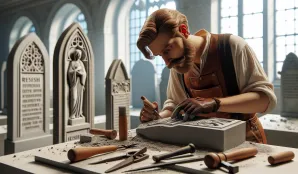
A gravestone carver works with designing, manufacturing, and restoring gravestones, memorials, and other stone products intended for cemeteries and memorial sites. Tasks include selecting suitable stone materials, engraving text and symbols, creating artistic decorations, and installing and maintaining existing gravestones. The work takes place both in a workshop and outdoors at cemeteries, requiring both technical precision and physical endurance. Gravestone carvers use various tools and machinery, as well as traditional hand tools, to achieve the desired detail and finish.
Salary development over time
Over the past three years, gravestone carvers have seen a clear increase in salary. In 2022, the average salary was 33,500 SEK per month, which increased slightly to 38 000 during 2023. The most significant rise occurred between 2023 and 2024, when the average salary increased to 39 900, representing a growth of over 12% in just one year. This trend can partly be explained by increased demand for artisanal stone services, along with generational changes and a shortage of new recruits affecting salary levels. The profession has limited training places and specialized skills, which can further drive up salaries for qualified individuals. Salaries within the group of stonemasons and related trades have developed steadily, with occasional rapid increases when demand rises.
Gravestone carver salary – complete overview
- Average salary: 39 900 SEK/month
- Lowest/highest salary: Data not available, but the range often falls between 32,000–42,000 SEK/month
- Hourly wage: 228 SEK/hour (based on 166 working hours/month)
- Gender differences: Men earn an average of 39 900 SEK/month; no specific statistics are available for women
- Regional differences: Data not available, but variations may occur depending on demand and competition
Education and qualifications
The path to becoming a gravestone carver usually involves vocational training in stone processing or an apprenticeship with established stonemasonry companies. Formal education is not always required, but practical experience and artistic sense are crucial for success in the profession. Specialized courses in engraving, design, and material knowledge are often advantageous and can improve employment opportunities.
- Vocational training: Upper secondary vocational education in stone processing or similar craft programs (3 years)
- Certifications: Courses in engraving, design, or material science can be beneficial
- Practical experience: Apprenticeship with an established stonemasonry company is strongly recommended
- Prerequisites: Good physical health, attention to detail, and artistic interest
- Self-study: Opportunities to deepen knowledge through online courses and craft workshops
Working as a gravestone carver often involves passing down craftsmanship traditions that have been handed down through generations. Many companies in the industry are family-owned, and knowledge about materials and techniques is often shared between older and younger colleagues, creating a unique work community.
Common benefits and compensations
Gravestone carvers are often covered by collective agreements that include occupational pension schemes, insurance, and paid vacations. Other common benefits may include work clothing, wellness allowances, and opportunities for further training in the craft. In some cases, bonuses are awarded for larger projects or long-term employment.
Competition and challenges
The profession of gravestone carver is characterized by a relatively small labor market and limited training opportunities, which can lead to tough competition for available positions. At the same time, the industry faces challenges from technological development, such as machine engraving and import of ready-made gravestones, increasing foreign competition. Physical strain and outdoor work in varying weather conditions demand good health and endurance. For those looking to establish themselves, both craftsmanship skills and the ability to handle customer relations respectfully and empathetically are essential. Despite these challenges, there are opportunities for niche specialists, especially in restoration and artistic decoration.
Tips for those wanting to become a gravestone carver
To succeed as a gravestone carver, it is beneficial to combine precision with artistic sense and a genuine interest in craftsmanship. Patience and perseverance during both training and practical work help develop the needed accuracy. Social skills are important when interacting with relatives and clients, as the profession often involves contact in sensitive situations. Being proactive and seeking internships or apprenticeships early can provide valuable experience and open doors to employment. Keeping up with new tools and techniques is also advantageous, especially for those interested in working with modern stone processing methods. Finally, physical strength and good work environment awareness are crucial for handling heavy tasks and preventing work-related injuries.
Key facts about Gravestone Carvers
- Educational level: Upper secondary vocational training or apprenticeship
- Work environment: Workshop and outdoor environment at cemeteries
- Work type: Craftsmanship with artistic elements
- Demand: Limited number of positions, but steady demand within niche areas
- Special skills: Engraving, material knowledge, and customer interaction
Career paths and future prospects
After three to five years in the profession, opportunities may open for greater responsibility within workshops or management, or for specialization in engraving and restoration of cultural heritage monuments. Some choose to start their own business or focus on artistic decoration. According to the Employment Service's forecasts, there is no specific assessment for gravestone carvers, as the profession is part of a broader group with limited statistical data. There are a total of 1,437 available jobs within the group of stonemasons and related trades, but competition varies depending on region and specialization. Future prospects are influenced by generational changes and demand for traditional craftsmanship, while new technology and imported services may alter the labor market over time.
Frequently asked questions about Gravestone Carvers
- What does a gravestone carver earn?
- A gravestone carver has an average salary of 39 900 SEK per month according to current statistics. - What education is required to become a gravestone carver?
- The most common pathway is vocational training in stone processing or an apprenticeship with a stonemasonry company. - Does a gravestone carver work mostly outdoors or indoors?
- The work takes place both in workshops and outdoors at cemeteries depending on the task. - Are there many jobs as a gravestone carver?
- Within the trade group of stonemasons and others, there are a total of 1437 available jobs, but the number of specific positions as a gravestone carver is limited. - What does the future look like for gravestone carvers?
- The Employment Service does not make a specific forecast due to limited data, but the need for traditional craftsmanship remains. - What is required to be successful in the profession?
- Attention to detail, artistic ability, good physical condition, and social skills are important qualities.

Salary distributed by age and sector
| Age | Base salary | Monthly salary | |
|---|---|---|---|
| Snitt | 39500 kr | 39900 kr |
| Age | Base salary | Monthly salary | |
|---|---|---|---|
| Snitt | 39500 kr | 39900 kr |
| Age | Base salary | Monthly salary | |
|---|---|---|---|
| Snitt | 39500 kr | 39900 kr |
| Age | Base salary | Monthly salary | |
|---|---|---|---|
| Snitt | 39600 kr | 39900 kr |
| Age | Base salary | Monthly salary | |
|---|---|---|---|
| Snitt | 39600 kr | 39900 kr |
| Age | Base salary | Monthly salary | |
|---|---|---|---|
| Snitt | 39600 kr | 39900 kr |

About the data
All information displayed on this page is based on data from the Swedish Central Bureau of Statistics (SCB), the Swedish Tax Agency and the Swedish employment agency. Learn more about our data and data sources here.
All figures are gross salaries, meaning salaries before tax. The average salary, or mean salary, is calculated by adding up the total salary for all individuals within the profession and dividing it by the number of individuals. For specific job categories, we have also considered various criteria such as experience and education.
Profession Tombstone carver has the SSYK code 8116, which we use to match against the SCB database to obtain the latest salary statistics.
Compare salary, work tasks and job outlook in adjacent occupations to find roles with similar skills or pay levels.
-

Average salary: 34 700 SEK/month • Industriell tillverkning
Machine carpenters and machine operators, wood industry
Compare with Tombstone carver
Tue, 14 Jul 2026 - 18:49 -

Machine operator, photographic products salary
Average salary: 42 600 SEK/month • Industriell tillverkning
Machine operators, chemical technology and photographic products
Compare with Tombstone carver
Tue, 14 Jul 2026 - 21:28 -

Average salary: 35 300 SEK/month • Industriell tillverkning
Prepress technicians
Compare with Tombstone carver
Tue, 14 Jul 2026 - 20:05 -

Average salary: 32 200 SEK/month • Industriell tillverkning
Other machine operators, textile, leather and leather industry
Compare with Tombstone carver
Tue, 14 Jul 2026 - 22:29 -

Average salary: 35 700 SEK/month • Industriell tillverkning
Vehicle assemblers
Compare with Tombstone carver
Tue, 14 Jul 2026 - 23:45 -

Average salary: 36 300 SEK/month • Industriell tillverkning
Machine setters and machine operators, metal work
Compare with Tombstone carver
Tue, 14 Jul 2026 - 17:55


