- Salary statistics
- Veneer answer salary
Veneer answer salary
Latest available salary statistics are for 2025. Compare average pay, salary range and related job listings.
36 700 - 39 200 SEK / month
Women earn 95% of what men do.
Industriell tillverkning
Related tools
Salary progression Veneer answer
What does a veneer turner do? – Tasks and work environment
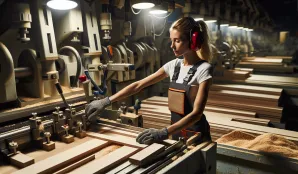
A veneer turner works with the manufacturing and processing of veneer, a thin layer of wood used to surface and finish furniture, panels, and building elements. Tasks often include operating and monitoring machines that cut, plan, or press wood into thin sheets, as well as inspecting the quality of the finished material. The role also involves adjusting machine settings, handling raw materials, and sometimes performing basic maintenance on equipment. The work environment is typically industry-based, with work taking place in sawmills, planing mills, or specialized factories, often with high demands on safety and accuracy.
Salary development over time
Veneer turners have experienced steady salary growth in recent years. In 2022, the average salary was 33,600 SEK per month, increasing to 36 800 in 2023, and reaching 38 300 in 2024. This represents a total increase of approximately 9.5% over three years, with the largest increase between 2023 and 2024. The salary increase reflects both a general appreciation for professions within the wood industry and an increased focus on technical specialization. The demand for experienced operators and the need to attract new workers have likely contributed to rising wages. Despite this, some pay disparities between genders and regions remain.
Veneer turner salary – comprehensive overview
- Average salary: 38 300 SEK/month
- Lowest salary: 35,400 SEK/month
- Highest salary: 37,400 SEK/month
- Hourly wage (average): 221 SEK
- Gender differences: Women earn 95% of what men do (men: 38 600 SEK, women: 35,400 SEK)
- Regional differences: Highest wages are found mainly in the regional sector, primarily among men
Education and qualifications
To work as a veneer turner, a high school education with a focus on wood technology, industry, or production is usually required. Many employers prefer candidates with experience in machine handling and industrial work, while some offer in-house training or trainee programs. Practical skills and precision are highly valued, and additional courses in machine safety or quality control can be advantageous.
- High school education: Industry- or wood technology-oriented, 3 years
- Certifications: Machine safety and work environment (e.g., forklift license)
- Internships: Common within education or via trainee programs
- Prerequisites: Basic mathematics and technical understanding
- Tips for choosing: Apply for internships early to build experience and networks
Veneer turners often develop a very good sense of the properties and variations of wood, enabling them to detect and solve quality issues directly at the machine – a skill highly valued across the entire wood industry.
Common benefits and compensations
Typical benefits for veneer turners include extra vacation days, wellness allowances, and the possibility of reduced working hours. Many also receive work clothing, subsidized lunches, and sometimes bonuses linked to production or safety. Union members may have access to supplementary insurance and pension plans.
Competition and challenges
Competition for positions as a veneer turner varies by region and economic cycle, but the profession is relatively niche and requires specific technical knowledge. One of the main challenges is staying updated on new machines and methods, as technological development in the wood industry is rapid. High demands are placed on accuracy and work environment, which can involve physical strain and repetitive motions. The shortage of new recruits to the industry can create opportunities for those willing to further their education or take on more responsibility.
Tips for aspiring veneer turners
To succeed as a veneer turner, combine technical interest with precision and a sense of responsibility. Gaining practical experience early, such as through internships or summer jobs in the wood industry, provides a solid foundation and increases employability. A problem-solving attitude is important, as unexpected situations at the machines require quick decisions and adaptation. Being resilient and able to work under pressure is also beneficial, especially since the work environment can be noisy and fast-paced. Showing engagement in safety and quality matters is appreciated by employers. Lastly, a willingness to learn new techniques and machines offers great opportunities for growth within the profession.
Key facts about veneer turners
- Educational level: High school (wood technology/industry)
- Work environment: Industrial settings, sawmills, and factories
- Typical work pattern: Shift work and full-time employment
- Demand: 1,437 job openings according to latest data
- Special skills: Machine handling and quality control
Career paths and future prospects
After three to five years as a veneer turner, opportunities may exist to advance to team leader, production technician, or quality control specialist. Larger companies sometimes offer internal training to handle more advanced machinery or take responsibility for production optimization. According to the Swedish Public Employment Service’s forecasts, no detailed assessment is made for this specific job title due to limited data, but there is a stable number of job openings for operators in sawmills, planing mills, and plywood factories. Future prospects are influenced by economic cycles and technological development, but demand for skilled operators is expected to remain strong as older workers retire and new recruits are limited.
Frequently asked questions about veneer turners
- What does a veneer turner earn?
- The average salary is 38 300 SEK per month, with an hourly wage of 221 SEK. - Are there pay differences between genders?
- Yes, women earn 95% of what men do (men: 38 600 SEK, women: 35,400 SEK). - What education is required to become a veneer turner?
- High school education in wood technology or industry, often supplemented with practical experience. - What is the work environment like for veneer turners?
- The work environment is industry-based, often involving shift work with a focus on safety and precision. - What career opportunities are available?
- After some years, veneer turners can advance to team leader, production technician, or specialist roles. - What is the demand like in the job market?
- There is a stable number of job openings within the profession, with 1,437 positions according to recent data.

Salary distributed by age and sector
| Age | Base salary | Monthly salary | |
|---|---|---|---|
| 18-24 | 96% | 32000 kr | 36600 kr |
| 25-34 | 97% | 33700 kr | 38400 kr |
| 35-44 | 95% | 33900 kr | 38100 kr |
| 45-54 | 34400 kr | 38700 kr | |
| 55-64 | 34800 kr | 39000 kr | |
| Snitt | 95% | 33900 kr | 38300 kr |
| Age | Base salary | Monthly salary | |
|---|---|---|---|
| 18-24 | 96% | 32000 kr | 36600 kr |
| 25-34 | 97% | 33700 kr | 38400 kr |
| 35-44 | 95% | 33900 kr | 38100 kr |
| 45-54 | 34400 kr | 38700 kr | |
| 55-64 | 34800 kr | 39000 kr | |
| Snitt | 95% | 33900 kr | 38300 kr |
| Age | Base salary | Monthly salary | |
|---|---|---|---|
| 18-24 | 96% | 32000 kr | 36600 kr |
| 25-34 | 97% | 33700 kr | 38400 kr |
| 35-44 | 95% | 33900 kr | 38100 kr |
| 45-54 | 34400 kr | 38700 kr | |
| 55-64 | 34800 kr | 39000 kr | |
| Snitt | 95% | 33900 kr | 38300 kr |
| Age | Base salary | Monthly salary | |
|---|---|---|---|
| 18-24 | 96% | 32200 kr | 37000 kr |
| 25-34 | 97% | 33800 kr | 38600 kr |
| 35-44 | 95% | 34100 kr | 38400 kr |
| 45-54 | 34500 kr | 38900 kr | |
| 55-64 | 34900 kr | 39200 kr | |
| Snitt | 95% | 34100 kr | 38600 kr |
| Age | Base salary | Monthly salary | |
|---|---|---|---|
| 18-24 | 96% | 32200 kr | 37000 kr |
| 25-34 | 97% | 33800 kr | 38600 kr |
| 35-44 | 95% | 34100 kr | 38400 kr |
| 45-54 | 34500 kr | 38900 kr | |
| 55-64 | 34900 kr | 39200 kr | |
| Snitt | 95% | 34100 kr | 38600 kr |
| Age | Base salary | Monthly salary | |
|---|---|---|---|
| 18-24 | 96% | 32200 kr | 37000 kr |
| 25-34 | 97% | 33800 kr | 38600 kr |
| 35-44 | 95% | 34100 kr | 38400 kr |
| 45-54 | 34500 kr | 38900 kr | |
| 55-64 | 34900 kr | 39200 kr | |
| Snitt | 95% | 34100 kr | 38600 kr |
| Age | Base salary | Monthly salary | |
|---|---|---|---|
| 18-24 | 96% | 31000 kr | 35600 kr |
| 25-34 | 97% | 33100 kr | 37300 kr |
| 35-44 | 95% | 33300 kr | 36600 kr |
| Snitt | 95% | 32900 kr | 36800 kr |
| Age | Base salary | Monthly salary | |
|---|---|---|---|
| 18-24 | 96% | 31000 kr | 35600 kr |
| 25-34 | 97% | 33100 kr | 37300 kr |
| 35-44 | 95% | 33300 kr | 36600 kr |
| Snitt | 95% | 32900 kr | 36800 kr |
| Age | Base salary | Monthly salary | |
|---|---|---|---|
| 18-24 | 96% | 31000 kr | 35600 kr |
| 25-34 | 97% | 33100 kr | 37300 kr |
| 35-44 | 95% | 33300 kr | 36600 kr |
| Snitt | 95% | 32900 kr | 36800 kr |

About the data
All information displayed on this page is based on data from the Swedish Central Bureau of Statistics (SCB), the Swedish Tax Agency and the Swedish employment agency. Learn more about our data and data sources here.
All figures are gross salaries, meaning salaries before tax. The average salary, or mean salary, is calculated by adding up the total salary for all individuals within the profession and dividing it by the number of individuals. For specific job categories, we have also considered various criteria such as experience and education.
Profession Veneer answer has the SSYK code 8173, which we use to match against the SCB database to obtain the latest salary statistics.
-

Production Technician in Gnosjö – Start Week 34
Operators in sawmills, planing mills and plywood etc.
Mon, 6 Jul 2026 - 22:52 -

Boiler and Drying Operator at Sävar Sawmill
Operators in sawmills, planing mills and plywood etc.
Thu, 2 Jul 2026 - 09:12 -

Sawmill Operator at Södra Wood in Ivaberg
Operators in sawmills, planing mills and plywood etc.
Tue, 30 Jun 2026 - 21:21 -

Operators in sawmills, planing mills and plywood etc.
Mon, 29 Jun 2026 - 22:30 -

Operator with Maintenance Experience for Pellet Plant in Ruda
Operators in sawmills, planing mills and plywood etc.
Mon, 29 Jun 2026 - 22:29
Compare salary, work tasks and job outlook in adjacent occupations to find roles with similar skills or pay levels.
-

Charcuterie worker, manufacturing salary
Average salary: 33 000 SEK/month • Industriell tillverkning
Machine operators, meat and fish processing industry
Compare with Veneer answer
Tue, 14 Jul 2026 - 08:18 -
Textile machine adjuster, yarn preparation salary
Average salary: 32 200 SEK/month • Industriell tillverkning
Other machine operators, textile, leather and leather industry
Compare with Veneer answer
Tue, 14 Jul 2026 - 07:14 -

Average salary: 33 900 SEK/month • Industriell tillverkning
Machine operators, rubber industry
Compare with Veneer answer
Mon, 13 Jul 2026 - 01:29 -

Average salary: 47 800 SEK/month • Industriell tillverkning
Production supervisors
Compare with Veneer answer
Thu, 9 Jul 2026 - 13:10 -

Average salary: 40 000 SEK/month • Industriell tillverkning
Rolling mill operators
Compare with Veneer answer
Mon, 13 Jul 2026 - 09:37 -

Supervisor, confectionery salary
Average salary: 47 800 SEK/month • Industriell tillverkning
Production supervisors
Compare with Veneer answer
Tue, 14 Jul 2026 - 10:08


