- Salary statistics
- Animal conservator salary
Animal conservator salary
Latest available salary statistics are for 2025. Compare average pay, salary range and related job listings.
43 692 - 41 986 SEK / month
Kultur, media, design
Related tools
Salary progression Animal conservator
What does a Djurkonservator do? – tasks and work environment
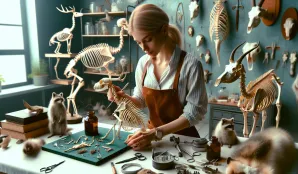
A Djurkonservator works with preparing, preserving, and mounting animals to create lifelike stuffed specimens. Tasks range from handling and treating animal skins to reconstructing details like eyes, noses, and claws, as well as coloring and completing mounts for museums, educational settings, or private collections. The work requires great precision and artistic skill, as the final result should be as naturalistic as possible. The work environment can vary between personal studios, workshops, or museums and often involves working with chemicals, tools, and natural materials. Physical patience and a keen eye for details are important qualities for thriving in this profession.
Salary development over time
Over the past three years, salaries for Djurkonservator have shown steady growth. In 2022, the average salary was 36,200 SEK per month. The following year, the average increased to 39 779 SEK, representing an increase of about 6%. In 2024, the average salary continued to rise to 41 986 SEK, a further increase of just over 3% from the previous year. This positive salary trend can be linked to increased demand for specialized craftsmanship and greater appreciation for the preservation of biological materials within museums and educational contexts. The lack of formal education and the niche recruitment base may also contribute to pushing up salary levels within the profession.
Many Djurkonservator combine artistic creativity with scientific understanding, making the profession unique among craftsmanship fields. The work often involves close collaboration with museums, biologists, and researchers and can lead to assignments abroad or special projects within conservation and education.
Djurkonservator salary – complete overview
- Average salary: 41 986 SEK/month
- Lowest salary: 36,200 SEK/month (2022)
- Highest salary: 41 986 SEK/month (2024)
- Hourly wage: 239 SEK/hour
- Gender differences: Data not available
- Regional differences: Data not available
Education and qualifications
The path to becoming a Djurkonservator is uncommon and often individual, as there are no formal university programs in Sweden. Many learn the profession through apprenticeships with experienced conservators, supplemented with courses in biology, art, and craftsmanship techniques. Specialized training may sometimes be offered abroad or through short courses in the museum sector. A strong interest in nature and art is crucial, along with a willingness to learn through practical work.
- Apprenticeship: Practical training with an experienced Djurkonservator over several years
- Courses: Short courses in preparation, anatomy, and art
- Prerequisites: Interest in biology, art, and craftsmanship
- Certifications: Some international organizations offer certificates
- Self-study: Personal training and work with materials and techniques
Common benefits and compensations
Djurkonservator often enjoy benefits such as flexible working hours, the opportunity to work independently or run their own business, and access to specialized equipment and further education in craftsmanship and art. Employment at museums or larger institutions may also include wellness allowances, insurance, and occupational pension schemes.
Competition and challenges
The competition within the profession is relatively low due to the limited availability of trained Djurkonservator, but the number of available positions is also small. Because the profession is narrow and specialized, it often requires building a personal network of clients and collaborators. A major challenge is staying updated with new materials and conservation techniques, as well as meeting high standards of quality and authenticity. Since demand varies depending on museum and institutional budgets, workload can be uneven throughout the year. The ability to handle unusual work environments and sometimes difficult ethical questions is also important.
Tips for aspiring Djurkonservator
To succeed as a Djurkonservator, it’s helpful to be meticulous and have a genuine interest in both nature and art. Patience during long work processes and creativity in problem-solving make the work more enjoyable and successful. Actively seeking internships and learning from experienced conservators provides invaluable practical experience and helps build a strong network. Good communication skills facilitate collaboration with museums and researchers, while a keen eye for details helps create lifelike and durable results. Finally, being open to continuously learning new techniques and materials is vital, as the profession evolves with research and new demands.
Key facts about Djurkonservator
- Educational path: Apprenticeship and practical training
- Work environment: Workshop, studio, or museum setting
- Occupational group: Visual artists, etc.
- Number of available jobs: 620
- Hourly wage: 239 SEK
Career paths and future prospects
After a few years in the profession, opportunities may open to specialize in areas such as bird or mammal conservation or to undertake larger projects for museums and educational institutions. Some choose to start their own business as consultants or collaborate with international museums. According to the Swedish Public Employment Service, no specific forecast exists for Djurkonservator due to limited data, but within the visual arts sector, approximately 620 job openings are available. This indicates ongoing demand, although competition for permanent positions can be high. Development of new techniques and increased interest in nature education may create new career opportunities within the field.
Frequently asked questions about Djurkonservator
- What does a Djurkonservator earn?
- The average salary for a Djurkonservator is 41 986 SEK per month. - How to become a Djurkonservator?
- Most commonly, by apprenticing with an experienced conservator and supplementing with courses in craftsmanship and biology. - Is there a formal education for Djurkonservator?
- There is no university degree in Sweden, but internships, short courses, and international certifications are available. - What is the job market like for Djurkonservator?
- The job market is limited but there are approximately 620 available positions within the visual arts profession. - Where do Djurkonservator work?
- Most work in their own studios, at museums, or as consultants for educational institutions and private clients. - What personal qualities are important?
- Attention to detail, patience, creativity, and an interest in nature and art are crucial for success.

Salary distributed by age and sector

About the data
All information displayed on this page is based on data from the Swedish Central Bureau of Statistics (SCB), the Swedish Tax Agency and the Swedish employment agency. Learn more about our data and data sources here.
All figures are gross salaries, meaning salaries before tax. The average salary, or mean salary, is calculated by adding up the total salary for all individuals within the profession and dividing it by the number of individuals. For specific job categories, we have also considered various criteria such as experience and education.
Profession Animal conservator has the SSYK code 2651, which we use to match against the SCB database to obtain the latest salary statistics.


Compare salary, work tasks and job outlook in adjacent occupations to find roles with similar skills or pay levels.
-
Average salary: 41 986 SEK/month • Kultur, media, design
Visual artists etc.
Compare with Animal conservator
Mon, 13 Jul 2026 - 13:28 -

Average salary: 39 900 SEK/month • Kultur, media, design
Interior designers, decorators and scenographers etc.
Compare with Animal conservator
Tue, 14 Jul 2026 - 03:30 -

Average salary: 51 700 SEK/month • Kultur, media, design
Other designers and creators
Compare with Animal conservator
Fri, 10 Jul 2026 - 20:56 -

Average salary: 40 600 SEK/month • Kultur, media, design
Translators, interpreters and linguists etc.
Compare with Animal conservator
Tue, 14 Jul 2026 - 09:20 -

Average salary: 41 986 SEK/month • Kultur, media, design
Visual artists etc.
Compare with Animal conservator
Tue, 14 Jul 2026 - 10:16 -

Average salary: 38 900 SEK/month • Kultur, media, design
Librarians and archivists
Compare with Animal conservator
Tue, 14 Jul 2026 - 04:07


