- Salary statistics
- A photographer salary
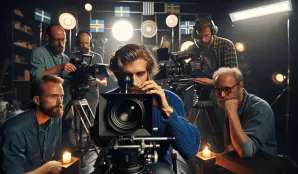
A photographer salary
Latest available salary statistics are for 2025. Compare average pay, salary range and related job listings.
33 400 - 44 400 SEK / month
Women earn 81% of what men do.
Kultur, media, design
Related tools
Salary progression A photographer
What does an A-photographer do? – Tasks and work environment
An A-photographer has primary responsibility for cinematography during film, TV, and commercial productions. The role involves visually interpreting scripts, planning lighting, selecting equipment, and leading a team of camera technicians and assistants. The work environment is often intense and varied, with shoots at different locations, both indoors and outdoors, sometimes under time pressure. Creativity, technical skill, and teamwork are central qualities for success in the profession.
Salary development over time
Over the past three years, the salary of an A-photographer has shown a slow but steady increase. In 2022, the average salary was 36,400 SEK per month, which increased to 37 300 SEK in 2023 and further to 38 500 SEK in 2024. The total increase amounts to approximately 5% over the period, which aligns with the general salary trend within creative professions. This development can partly be explained by increased demand for moving images in digital media, but also by the fact that technical competence and experience are increasingly valued. At the same time, competition for attractive assignments remains fierce, limiting larger salary increases. The small year-to-year differences indicate a relatively stable market with limited room for significant pay hikes.
A-photographer salary – comprehensive overview
- Average salary: 38 500 SEK/month
- Lowest salary: 36,100 SEK/month (men), 37,100 SEK/month (women)
- Highest salary: 39,600 SEK/month (men), 39,000 SEK/month (women)
- Hourly wage: 224 SEK
- Gender differences: Men earn an average of 41 200 SEK; specific figures for women are partially missing
- Regional differences: Available data indicates no significant variation between regions
Education and qualifications
The path to becoming an A-photographer often involves a combination of formal education and practical experience. Many start with film or photography studies at high school or post-secondary level, followed by internships and assistant roles on productions. Technical knowledge of camera equipment, lighting, and image composition is crucial, as well as the ability to collaborate in larger teams. Several routes are possible, and many build their skills through self-study and networking.
- Formal education: High school education (often with media/film specialization), or post-secondary education shorter than 3 years
- Internships: Experience as a camera assistant or intern on film and TV productions
- Courses: Specialized courses in cinematography, lighting, and digital image processing
- Prerequisites: Interest and basic knowledge in photography and film technology
- Self-study: Many develop their skills through personal projects and online courses
Many A-photographers develop a personal style that can become their signature in the market. Building a strong visual expression and a broad network is often just as important as technical skills, especially for those aiming to work on larger productions or international projects.
Common benefits and compensations
A-photographers are often offered benefits such as compensation for unsocial hours, access to specialized equipment, and sometimes opportunities for further training through the employer. Travel and per diems are common for productions at different locations, and some larger companies also offer health benefits or insurance. Freelancers can negotiate daily rates for their own equipment and fees beyond base salary.
Competition and challenges
The competition in the profession is high, especially for the most attractive and well-paid assignments in feature films and TV dramas. Many A-photographers work as freelancers, which requires self-marketing and networking. Rapid advances in camera technology and digital post-production demand continuous education. Uncertainty regarding employment forms and project-based work can create financial insecurity for some. At the same time, the creative freedom and variety of tasks can be very rewarding for those who enjoy a flexible work life.
Tips for aspiring A-photographers
To succeed as an A-photographer, it is good to combine technical curiosity with a sharp artistic eye. Gaining experience through internships and personal film projects provides a solid foundation, while initiative and collaboration skills are crucial in production teams. Networking and showcasing your portfolio to industry contacts can open doors to new assignments. Flexibility is important as working days are often irregular and environments vary. An eye for detail, problem-solving ability, and patience help manage stressful situations and make shoots as efficient as possible. Ultimately, genuine engagement and passion for visual storytelling enable the development of a personal style and standing out in the job market.
Key facts about A-photographer
- Education level: High school or post-secondary education, often with media specialization
- Work environment: Varied, often shoots at different locations and times
- Typical employment: Freelance or project-based employment
- Demand: 620 available jobs within the profession according to latest statistics
- Special skills: Lighting, camera technology, image composition
Career paths and future prospects
After three to five years as an A-photographer, there are opportunities to take on larger productions, such as feature films, drama series, or international projects. Some choose to specialize in advertising, documentary, or music videos, while others advance to roles like director of photography or mentor for younger photographers. According to the latest forecast from the Employment Service, no specific assessment is made for the profession due to limited data, but within the photographer profession, there are 620 available jobs, indicating some demand. Future outlooks are mainly influenced by the increasing production of moving images and the need for technical and artistic competence. At the same time, rapid technological development and increased competition from freelancers mean that the job market can be challenging for recent graduates.
Common questions about A-photographer
- What is the average salary of an A-photographer?
- An A-photographer has an average salary of 38 500 SEK per month. - What education is required to become an A-photographer?
- High school or post-secondary education with a focus on photography, film, or media is recommended. - What is the job market like for A-photographers?
- There are 620 available jobs in the profession, but competition for attractive assignments is high. - Are there gender differences in A-photographer salaries?
- Men earn an average of 41 200 SEK, while specific figures for women are partially missing, but the lowest and highest salaries are close to men's levels. - What are the responsibilities of an A-photographer?
- Responsibility for cinematography, lighting, selection of camera equipment, and directing the camera team during shoots. - How much does an A-photographer earn per hour?
- An hourly wage of 224 SEK on average. - What personal qualities are important for an A-photographer?
- Creativity, technical skill, teamwork ability, and flexibility are key qualities in the profession.

Salary distributed by age and sector
| Age | Base salary | Monthly salary | |
|---|---|---|---|
| 25-34 | 33300 kr | 33500 kr | |
| 35-44 | 40600 kr | 41400 kr | |
| 45-54 | 43100 kr | 44500 kr | |
| 55-64 | 43700 kr | 45400 kr | |
| Snitt | 81% | 37700 kr | 38500 kr |
| Age | Base salary | Monthly salary | |
|---|---|---|---|
| 25-34 | 37500 kr | 38500 kr | |
| 35-44 | 99% | 38000 kr | 38000 kr |
| 45-54 | 95% | 39800 kr | 39800 kr |
| 55-64 | 100% | 39700 kr | 40000 kr |
| Snitt | 99% | 39300 kr | 39600 kr |
| Age | Base salary | Monthly salary | |
|---|---|---|---|
| 25-34 | 37500 kr | 38500 kr | |
| 35-44 | 99% | 38000 kr | 38000 kr |
| 45-54 | 95% | 39800 kr | 39800 kr |
| 55-64 | 100% | 39700 kr | 40000 kr |
| Snitt | 99% | 39300 kr | 39600 kr |
| Age | Base salary | Monthly salary | |
|---|---|---|---|
| 25-34 | 33300 kr | 33500 kr | |
| 35-44 | 40800 kr | 41600 kr | |
| 45-54 | 43300 kr | 44700 kr | |
| 55-64 | 44000 kr | 0 kr | |
| Snitt | 37700 kr | 38500 kr |
| Age | Base salary | Monthly salary | |
|---|---|---|---|
| 25-34 | 33300 kr | 33500 kr | |
| 35-44 | 40800 kr | 41600 kr | |
| 45-54 | 43300 kr | 44700 kr | |
| 55-64 | 44000 kr | 0 kr | |
| Snitt | 37700 kr | 38500 kr |
| Age | Base salary | Monthly salary | |
|---|---|---|---|
| 25-34 | 35300 kr | 35500 kr | |
| 35-44 | 40900 kr | 41800 kr | |
| 45-54 | 43900 kr | 45800 kr | |
| Snitt | 81% | 40100 kr | 41200 kr |
| Age | Base salary | Monthly salary | |
|---|---|---|---|
| 35-44 | 99% | 38000 kr | 38100 kr |
| 45-54 | 95% | 41400 kr | 41400 kr |
| 55-64 | 100% | 39500 kr | 40100 kr |
| Snitt | 99% | 39500 kr | 39800 kr |
| Age | Base salary | Monthly salary | |
|---|---|---|---|
| 35-44 | 99% | 38000 kr | 38100 kr |
| 45-54 | 95% | 41400 kr | 41400 kr |
| 55-64 | 100% | 39500 kr | 40100 kr |
| Snitt | 99% | 39500 kr | 39800 kr |
| Age | Base salary | Monthly salary | |
|---|---|---|---|
| 35-44 | 41000 kr | 41900 kr | |
| 45-54 | 43900 kr | 45800 kr | |
| Snitt | 40100 kr | 41300 kr |
| Age | Base salary | Monthly salary | |
|---|---|---|---|
| 35-44 | 41000 kr | 41900 kr | |
| 45-54 | 43900 kr | 45800 kr | |
| Snitt | 40100 kr | 41300 kr |
| Age | Base salary | Monthly salary | |
|---|---|---|---|
| Snitt | 81% | 33200 kr | 33400 kr |
| Age | Base salary | Monthly salary | |
|---|---|---|---|
| 35-44 | 99% | 37900 kr | 37900 kr |
| 45-54 | 95% | 39200 kr | 39200 kr |
| 55-64 | 100% | 39800 kr | 39900 kr |
| Snitt | 99% | 39100 kr | 39300 kr |
| Age | Base salary | Monthly salary | |
|---|---|---|---|
| 35-44 | 99% | 37900 kr | 37900 kr |
| 45-54 | 95% | 39200 kr | 39200 kr |
| 55-64 | 100% | 39800 kr | 39900 kr |
| Snitt | 99% | 39100 kr | 39300 kr |
| Age | Base salary | Monthly salary | |
|---|---|---|---|
| Snitt | 32900 kr | 0 kr |
| Age | Base salary | Monthly salary | |
|---|---|---|---|
| Snitt | 32900 kr | 0 kr |

About the data
All information displayed on this page is based on data from the Swedish Central Bureau of Statistics (SCB), the Swedish Tax Agency and the Swedish employment agency. Learn more about our data and data sources here.
All figures are gross salaries, meaning salaries before tax. The average salary, or mean salary, is calculated by adding up the total salary for all individuals within the profession and dividing it by the number of individuals. For specific job categories, we have also considered various criteria such as experience and education.
Profession A photographer has the SSYK code 3431, which we use to match against the SCB database to obtain the latest salary statistics.
-

Photographer for Creative and Production – Svenskt Kosttillskott
Photographers
Mon, 13 Jul 2026 - 21:14 -

Looking for cheerful photographers for school photography in Stockholm
Photographers
Sat, 4 Jul 2026 - 09:02 -

Teacher in Film & Photo (20%) – Temporary Position Autumn 2026
Photographers
Tue, 30 Jun 2026 - 06:42


Compare salary, work tasks and job outlook in adjacent occupations to find roles with similar skills or pay levels.
-

Average salary: 55 500 SEK/month • Kultur, media, design
Industrial designers
Compare with A photographer
Tue, 14 Jul 2026 - 13:58 -
Average salary: 42 300 SEK/month • Kultur, media, design
Image and broadcast technicians
Compare with A photographer
Tue, 14 Jul 2026 - 15:02 -

Average salary: 41 400 SEK/month • Kultur, media, design
Museum curators etc.
Compare with A photographer
Tue, 14 Jul 2026 - 13:59 -

Average salary: 47 400 SEK/month • Kultur, media, design
Musicians, singers and composers
Compare with A photographer
Tue, 14 Jul 2026 - 15:23 -

Average salary: 38 500 SEK/month • Kultur, media, design
Photographers
Compare with A photographer
Mon, 13 Jul 2026 - 02:11 -

Average salary: 55 500 SEK/month • Kultur, media, design
Industrial designers
Compare with A photographer
Tue, 14 Jul 2026 - 15:57


