News and articles
- Home
- Articles
Latest posts
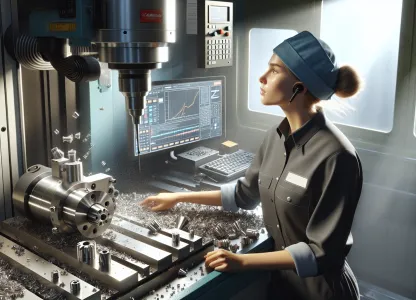
A civil engineer in mechanical engineering works on developing, designing, and improving technical systems, machines, and products. Tasks can include everything from construction and calculations to project management and quality assurance within sectors such as automotive, energy, manufacturing, or consulting. Many work in interdisciplinary teams where problem-solving, innovation, and technical analysis are central. The work environment varies between office settings, laboratories, and sometimes on-site at production facilities, depending on project nature and company focus.
Read more ->
A food technology engineer works on developing, improving, and ensuring processes for the production of food and beverages. The role often includes responsibility for quality control, product development, and optimization of manufacturing processes to achieve maximum safety and efficiency. The work environment can vary between laboratories, offices, and production facilities, where collaboration with other engineers, production staff, and researchers is common. Project management, problem-solving, and implementing new technical solutions are central parts of daily life for a professional in this field.
Read more ->-
Opinion Polls: Kantar-Sifo shows increased support for S, decline for SD and C
Fri, 13 Feb 2026 - 01:35 -
Policy rate remains at 1.75% – Riksbank signals stability
Thu, 29 Jan 2026 - 14:02
A civil engineer in land surveying works with measuring, mapping, and analyzing land, properties, and buildings. Tasks include property formation, detailed planning, geodata management, and advising on land use. The profession often involves contact with authorities, companies, and private individuals, requiring both technical and legal expertise. The work environment is varied, combining fieldwork with office tasks, where digital tools and advanced measurement systems are used daily. Many are employed by government agencies, consulting firms, or private companies focused on urban development and infrastructure.
Read more ->
A civil engineer in chemical engineering works on developing processes, products, and systems where chemistry and technology meet. Tasks range from research and development in laboratory settings to process optimization within industry and project management in larger technical initiatives. The work often involves improving efficiency, safety, and sustainability in manufacturing processes, for example within pharmaceuticals, energy, environmental technology, or food industry. The work environment can vary between offices, laboratories, and production facilities, with collaboration with other engineers, technicians, and managers being common.
Read more ->
A chemical engineering graduate works on developing, analyzing, and improving chemical processes and products within industry, research institutes, or public sector. Common tasks include research and development of new materials, process optimization, quality control, and environmental and safety work. The work environment varies between laboratories, offices, and production facilities, where both independent work and teamwork are central. Precision, problem-solving skills, and a willingness to continuously acquire new knowledge in technology and natural sciences are often required.
Read more ->
A civil engineer in mining engineering is responsible for planning, developing, and optimizing processes related to the extraction of minerals and metals from rock and soil. The work includes technical project management, detailed planning of mining operations, geological data analysis, and development of sustainable and efficient working methods. The role often involves collaboration with geologists, mechanical engineers, and environmental experts to ensure productivity and safety in mining environments. The work environment varies between office-based tasks and fieldwork in underground or open-pit mines, where safety procedures are of utmost importance.
Read more ->
A civil engineer in vehicle technology works on developing, designing, and optimizing vehicles and their technical systems. Tasks include designing new vehicle components and systems, leading technical projects, and analyzing performance and safety. The work is often done in close collaboration with colleagues in mechanics, electronics, and software, and it is common to participate in interdisciplinary development teams. The work environment is primarily office-based, but there may also be elements of work in laboratories, test facilities, or production environments, depending on the project phase and focus.
Read more ->
A civil engineer in energy works on developing, optimizing, and leading projects related to energy production, distribution, and energy efficiency. Tasks often include technical analysis, design, system development, and implementing solutions that contribute to sustainable energy use. The role typically involves collaboration with other engineers, project managers, and specialists in both private and public sectors. The work environment varies between office work, site visits at facilities, and field studies, where both independent and team-based work occurs.
Read more ->
A civil engineer in electrical engineering works on developing, designing, and maintaining systems and products based on electrical and electronic principles. Tasks can include everything from circuit board and control system design to project management and technical troubleshooting within areas such as power, automation, telecommunications, and electronics. Common work environments include offices, laboratories, or industrial facilities, where interdisciplinary teamwork is often involved. The role demands high analytical skills, precision, and technical interest, with workdays characterized by both independent work and collaborative projects.
Read more ->
An electrical engineering graduate works on developing, designing, and improving electronic systems and components. Typical tasks include circuit board design, programming embedded systems, developing control and regulation technology, as well as testing and troubleshooting electronic solutions. The work environment is often office-based but can also include laboratories and production environments, especially during development and testing phases. Many projects are carried out in teams where collaboration with other engineers, project managers, and sometimes customer contact is common. The profession requires continuous updating of knowledge due to the rapid technological development in the field.
Read more ->