- Salary statistics
- CNC milling machine, metal salary
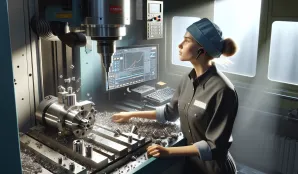
CNC milling machine, metal salary
Latest available salary statistics are for 2025. Compare average pay, salary range and related job listings.
33 600 - 37 300 SEK / month
Women earn 97% of what men do.
Industriell tillverkning
Related tools
Salary progression CNC milling machine, metal
What does a CNC miller, metal, do – tasks and work environment
A CNC miller in metal works with programming, setting up, and monitoring computer-controlled milling machines that produce metal parts with high precision. Tasks include interpreting drawings, selecting the right tools and materials, and checking that the final products meet industry quality standards. The work often takes place in production environments with high demands on accuracy and safety, where both independent work and teamwork are common. The work environment can be noisy and require protective gear, and following safety routines is essential to minimize the risk of accidents.
Salary development over time
Over the past three years, the salary for CNC millers in metal has steadily increased. In 2022, the average salary was 33,000 SEK per month, which rose to 35 200 SEK in 2023 and reached 36 300 SEK in 2024. This represents a total increase of approximately 6.7% during this period. This positive salary trend reflects both high demand for skilled CNC millers and general wage adjustments within the industry. The increase has been influenced by a shortage of qualified labor, technological development, and an increased focus on advanced production. Despite an expected decrease in demand in the longer term, salaries have continued to strengthen, especially for those with specialized skills and experience.
CNC miller, metal salary – comprehensive overview
- Average salary: 36 300 SEK/month
- Lowest salary: 31,400 SEK/month (female, private sector employee, education less than 9 years)
- Highest salary: 36,100 SEK/month (male, various sectors, post-secondary education less than 3 years)
- Hourly wage: 212 SEK (average for hourly workers, based on 166 hours/month)
- Gender pay gap: Men 36 500 SEK, women 35 300 SEK (women earn 97% of men's salary)
- Regional differences: Data varies depending on region and labor demand
Education and qualifications
To work as a CNC miller in metal, a vocational education in industrial technology or equivalent is usually required, supplemented with specialized courses in CNC technology. Practical experience and good knowledge of reading drawings and machine programming are highly meritorious. Many employers prefer candidates who have completed certification courses or have experience with specific machine systems.
- Vocational education: Industrial technology program, 3 years
- Further education: Vocational college or courses in CNC technology (6–24 months)
- Certifications: CNC operator certificates and machine-specific certificates
- Internships: Practical periods or trainee programs during education
- Prerequisites: Basic mathematics and technical interest
- Tips: Choose educational paths with plenty of practical training and close collaboration with industry
Since technological development is rapid in the industry, CNC millers often need to update their knowledge of new machines and software. Those who are curious and enjoy problem-solving have great opportunities to develop in their roles and take on more advanced tasks.
Common benefits and compensation
CNC millers in metal often receive benefits such as collective agreement-based occupational pension, insurance, and wellness allowances. Shift or overtime premiums are common, as are bonuses for good production results. Some employers also offer training support and subsidized lunches, especially in larger industry companies.
Competition and challenges
The profession currently experiences high demand and a shortage of qualified CNC millers in metal, providing good job opportunities. At the same time, requirements for technical competence and the ability to work with advanced automation are increasing. Automation and digitalization mean some simpler tasks disappear, which can raise the entry barrier for beginners. The work environment demands safety awareness and endurance, as work is often performed in shifts and in industrial settings that can be noisy and physically demanding. The ability to quickly solve problems and adapt to new routines becomes increasingly important as technology develops.
Tips for those who want to become a CNC miller in metal
To succeed as a CNC miller in metal, it’s good to have an analytical mindset and strong problem-solving skills, as the work often involves interpreting drawings and adjusting machines for high precision. Accuracy is crucial, since small errors can have significant consequences in the manufacturing process. Being flexible and quickly adapting to new machines and techniques facilitates career development, especially in a field where technology is constantly changing. Teamwork skills are valued, as many tasks are performed in teams and require communication with colleagues and management. Showing initiative and taking responsibility for quality and safety enhances opportunities for advancement. Additionally, resilience and stress tolerance are important, as production pace can be high and work performed in shifts. Finally, a clear interest in technology and a willingness to learn new things provide a solid foundation for long-term development in the profession.
Key facts about CNC miller, metal
- Education level: Vocational diploma, often supplemented with vocational college or certificates
- Work environment: Industrial workshop environment with high demands on safety and precision
- Demand: Great job opportunities, but expected to decline over five years
- Gender distribution: Dominated by men, but more women are entering the profession
- Special skills: CNC programming and reading drawings required
Career paths and future outlook
After three to five years in the profession, CNC millers in metal can take on greater responsibilities, such as supervisor, production technician, or specialist in advanced machine programming. Some choose to further their education in automation or quality assurance and can eventually advance to roles like production manager or technical consultant. According to the Swedish Public Employment Service's forecast, job opportunities remain strong in the short term but are expected to decrease over five years due to technological development and increased automation. Despite this, the demand for qualified CNC millers remains high, especially in regions with a strong industrial sector. The profession also reports a large number of vacancies, indicating a continued robust labor market.
Frequently asked questions about CNC miller, metal
- What does a CNC miller, metal, earn?
- The average salary is 36 300 SEK per month, with variation depending on experience, education, and region. - How to become a CNC miller in metal?
- Most commonly, a vocational education in industrial technology and supplementary courses or certification in CNC technology. - Are there salary differences between men and women?
- Yes, men earn on average 36 500 SEK and women 35 300 SEK, which means women earn 97% of men's salary. - What are the workplace risks?
- Noise, risk of cuts and crush injuries, and the need for protective gear are common workplace factors. - What are the future prospects for CNC millers in metal?
- The job market is strong today but is expected to decline slightly over five years due to automation. - What is required to advance in the profession?
- Experience, further education, and specialization in areas such as programming or production technology open career opportunities. - Which related professions might be interesting?
- Machine operator, production technician, quality inspector, and automation technician are related career choices.

Salary distributed by age and sector
| Age | Base salary | Monthly salary | |
|---|---|---|---|
| 18-24 | 100% | 31900 kr | 34300 kr |
| 25-34 | 98% | 34200 kr | 36400 kr |
| 35-44 | 96% | 34400 kr | 36400 kr |
| 45-54 | 96% | 35100 kr | 36900 kr |
| 55-64 | 95% | 35100 kr | 36700 kr |
| 65-68 | 33500 kr | 34800 kr | |
| Snitt | 97% | 34300 kr | 36300 kr |
| Age | Base salary | Monthly salary | |
|---|---|---|---|
| 25-34 | 32900 kr | 35600 kr | |
| 35-44 | 35600 kr | 36700 kr | |
| 45-54 | 32700 kr | 32700 kr | |
| 55-64 | 33300 kr | 34300 kr | |
| Snitt | 33300 kr | 34300 kr |
| Age | Base salary | Monthly salary | |
|---|---|---|---|
| 25-34 | 32900 kr | 35600 kr | |
| 35-44 | 35600 kr | 36700 kr | |
| 45-54 | 32700 kr | 32700 kr | |
| 55-64 | 33300 kr | 34300 kr | |
| Snitt | 33300 kr | 34300 kr |
| Age | Base salary | Monthly salary | |
|---|---|---|---|
| 18-24 | 100% | 31900 kr | 34300 kr |
| 25-34 | 98% | 34200 kr | 36400 kr |
| 35-44 | 96% | 34400 kr | 36400 kr |
| 45-54 | 96% | 35100 kr | 37000 kr |
| 55-64 | 95% | 35100 kr | 36700 kr |
| 65-68 | 33500 kr | 34800 kr | |
| Snitt | 97% | 34300 kr | 36300 kr |
| Age | Base salary | Monthly salary | |
|---|---|---|---|
| 18-24 | 100% | 31900 kr | 34300 kr |
| 25-34 | 98% | 34200 kr | 36400 kr |
| 35-44 | 96% | 34400 kr | 36400 kr |
| 45-54 | 96% | 35100 kr | 37000 kr |
| 55-64 | 95% | 35100 kr | 36700 kr |
| 65-68 | 33500 kr | 34800 kr | |
| Snitt | 97% | 34300 kr | 36300 kr |
| Age | Base salary | Monthly salary | |
|---|---|---|---|
| 18-24 | 100% | 32000 kr | 34300 kr |
| 25-34 | 98% | 34200 kr | 36500 kr |
| 35-44 | 96% | 34600 kr | 36700 kr |
| 45-54 | 96% | 35300 kr | 37200 kr |
| 55-64 | 95% | 35300 kr | 37000 kr |
| 65-68 | 33600 kr | 34800 kr | |
| Snitt | 97% | 34500 kr | 36500 kr |
| Age | Base salary | Monthly salary | |
|---|---|---|---|
| 25-34 | 32800 kr | 36400 kr | |
| 35-44 | 35600 kr | 36700 kr | |
| 45-54 | 32700 kr | 32700 kr | |
| 55-64 | 33300 kr | 34300 kr | |
| Snitt | 33300 kr | 34300 kr |
| Age | Base salary | Monthly salary | |
|---|---|---|---|
| 25-34 | 32800 kr | 36400 kr | |
| 35-44 | 35600 kr | 36700 kr | |
| 45-54 | 32700 kr | 32700 kr | |
| 55-64 | 33300 kr | 34300 kr | |
| Snitt | 33300 kr | 34300 kr |
| Age | Base salary | Monthly salary | |
|---|---|---|---|
| 18-24 | 100% | 32000 kr | 34300 kr |
| 25-34 | 98% | 34200 kr | 36500 kr |
| 35-44 | 96% | 34600 kr | 36700 kr |
| 45-54 | 96% | 35300 kr | 37200 kr |
| 55-64 | 95% | 35300 kr | 37000 kr |
| 65-68 | 33600 kr | 34800 kr | |
| Snitt | 97% | 34500 kr | 36500 kr |
| Age | Base salary | Monthly salary | |
|---|---|---|---|
| 18-24 | 100% | 32000 kr | 34300 kr |
| 25-34 | 98% | 34200 kr | 36500 kr |
| 35-44 | 96% | 34600 kr | 36700 kr |
| 45-54 | 96% | 35300 kr | 37200 kr |
| 55-64 | 95% | 35300 kr | 37000 kr |
| 65-68 | 33600 kr | 34800 kr | |
| Snitt | 97% | 34500 kr | 36500 kr |
| Age | Base salary | Monthly salary | |
|---|---|---|---|
| 18-24 | 100% | 31900 kr | 34300 kr |
| 25-34 | 98% | 34100 kr | 35900 kr |
| 35-44 | 96% | 33400 kr | 35300 kr |
| 45-54 | 96% | 33800 kr | 35700 kr |
| 55-64 | 95% | 33500 kr | 35200 kr |
| Snitt | 97% | 33400 kr | 35300 kr |
| Age | Base salary | Monthly salary | |
|---|---|---|---|
| 18-24 | 100% | 31900 kr | 34300 kr |
| 25-34 | 98% | 34100 kr | 35900 kr |
| 35-44 | 96% | 33400 kr | 35300 kr |
| 45-54 | 96% | 33800 kr | 35700 kr |
| 55-64 | 95% | 33500 kr | 35200 kr |
| Snitt | 97% | 33400 kr | 35300 kr |
| Age | Base salary | Monthly salary | |
|---|---|---|---|
| 18-24 | 100% | 31900 kr | 34300 kr |
| 25-34 | 98% | 34100 kr | 35900 kr |
| 35-44 | 96% | 33400 kr | 35300 kr |
| 45-54 | 96% | 33800 kr | 35700 kr |
| 55-64 | 95% | 33500 kr | 35200 kr |
| Snitt | 97% | 33400 kr | 35300 kr |

About the data
All information displayed on this page is based on data from the Swedish Central Bureau of Statistics (SCB), the Swedish Tax Agency and the Swedish employment agency. Learn more about our data and data sources here.
All figures are gross salaries, meaning salaries before tax. The average salary, or mean salary, is calculated by adding up the total salary for all individuals within the profession and dividing it by the number of individuals. For specific job categories, we have also considered various criteria such as experience and education.
Profession CNC milling machine, metal has the SSYK code 7223, which we use to match against the SCB database to obtain the latest salary statistics.
-

Industrial Mechanic for Compressors at Kompressorteknik in Norrköping
Machine setters and machine operators, metal work
Tue, 14 Jul 2026 - 09:01 -

Machine Operator for Precision Industry in Northern Stockholm
Machine setters and machine operators, metal work
Mon, 13 Jul 2026 - 21:55 -

Bending Press Operator Wanted at Plåtteknik i Kumla AB
Machine setters and machine operators, metal work
Mon, 13 Jul 2026 - 21:36 -

Machine Operator for Established Operation in Västerås
Machine setters and machine operators, metal work
Mon, 13 Jul 2026 - 21:30 -

Machine setters and machine operators, metal work
Mon, 13 Jul 2026 - 21:27
Compare salary, work tasks and job outlook in adjacent occupations to find roles with similar skills or pay levels.
-
Tool technician, tool maker salary
Average salary: 37 900 SEK/month • Industriell tillverkning
Toolmakers
Compare with CNC milling machine, metal
Tue, 14 Jul 2026 - 10:09 -

Machine operator, glass wool salary
Average salary: 36 900 SEK/month • Industriell tillverkning
Other process and machine operators
Compare with CNC milling machine, metal
Tue, 14 Jul 2026 - 10:05 -

Average salary: 34 200 SEK/month • Industriell tillverkning
Machine operators, plastics industry
Compare with CNC milling machine, metal
Tue, 14 Jul 2026 - 07:11 -

Average salary: 36 900 SEK/month • Industriell tillverkning
Other process and machine operators
Compare with CNC milling machine, metal
Tue, 14 Jul 2026 - 07:12 -

Average salary: 36 300 SEK/month • Industriell tillverkning
Machine setters and machine operators, metal work
Compare with CNC milling machine, metal
Tue, 14 Jul 2026 - 03:57 -

Stencil manufacturer, screen printing salary
Average salary: 34 600 SEK/month • Industriell tillverkning
Printers
Compare with CNC milling machine, metal
Tue, 14 Jul 2026 - 08:18


