- Salary statistics
- Ice cream melter salary
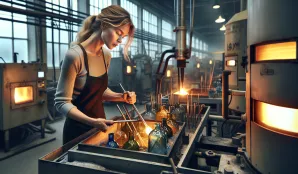
Ice cream melter salary
Latest available salary statistics are for 2025. Compare average pay, salary range and related job listings.
35 200 - 37 600 SEK / month
Women earn 95% of what men do.
Industriell tillverkning
Related tools
Salary progression Ice cream melter
What does a glass melter do? – Tasks and working environment
A glass melter works with melting, processing, and shaping glass into various products within the industry. Tasks include monitoring melting processes, adjusting furnace temperatures, adding raw materials, and inspecting the finished glass mass. Advanced equipment and machines are often used, and the working environment can be hot and noisy due to the high temperatures required to melt glass. Safety routines and protective gear are a natural part of daily work to prevent accidents and health risks.
Salary development over time
Over the past three years, the salary development for glass melters has shown steady growth. In 2022, the average salary was 34,400 SEK per month, followed by a slight increase to 37 100 SEK in 2023. In 2024, a more significant salary increase was reached as the average salary rose to 36 900 SEK, which is approximately 11% higher than in 2023. These changes can be linked to increased demand for specialized skills within the glass industry and general industry wage pressures. Variations between years may also be due to changes in collective agreements and technological advancements within the sector, which have increased demands for education and experience.
Glass melter salary – complete overview
- Average salary: 36 900 SEK/month
- Lowest salary: 35,400 SEK/month
- Highest salary: 39,000 SEK/month
- Hourly wage (average): 223 SEK/hour
- Women's average salary: 35,700 SEK/month (95% of men's salary)
- Men's average salary: 37 300 SEK/month
- Regional differences: No specific statistics available
Education and qualifications
To work as a glass melter, a high school education in industrial technology or similar is usually required. Many employers also prefer candidates who have completed specific courses or internal training within the glass industry. Practical experience from industrial environments is often advantageous, and some companies offer trainee programs as part of the introduction to the profession.
- High school education: Industrial technology program, 3 years
- Post-secondary courses: Specific training in glass and ceramic manufacturing (often 6–18 months)
- Internship/Trainee: Common, often 3–12 months
- Prerequisites: Basic eligibility, technical interest
- Certifications: Workplace safety training
Glass melters often have the opportunity to work with both traditional craftsmanship methods and modern, automated production. The profession offers a unique combination of creative work and advanced technology, making it particularly attractive to those who appreciate variety and innovation in their daily work.
Common benefits and compensations
Glass melters are often covered by collective agreements that entitle them to overtime pay, shift bonuses, and holiday pay. Healthcare, wellness allowances, and work clothing are common benefits. Some workplaces also offer bonuses linked to production or quality, as well as opportunities for further training and skill development within the company.
Competition and challenges
The job market for glass melters is relatively narrow and specialized, which means competition for the most attractive positions can be high. Since the profession requires both technical knowledge and experience with industrial processes, experience and education are crucial for employment. A challenge is that the working environment can be physically demanding, with high temperatures and heavy lifting. Additionally, demand for glass melters is affected by economic cycles and developments in the construction and manufacturing industries. Digitalization and automation also mean new skill requirements may arise, necessitating continuous further education.
Tips for those who want to become a glass melter
To succeed as a glass melter, it is good to have a keen eye for detail and be precise in your work, as the quality of the finished glass often depends on small adjustments in the process. An interest in technology helps in understanding and handling the machines and control systems used in production. Physical endurance is also an advantage, as the work can be strenuous in hot and noisy environments. Being solution-oriented helps when unexpected problems occur in manufacturing, and teamwork skills are important as the work is often done in teams. Finally, being open to learning new things is wise, as technology in the industry develops rapidly and new working methods may be introduced.
Key facts about glass melters
- Education level: High school industrial technology education or equivalent
- Work environment: Industrial, often high temperature and noise
- Typical work form: Shift work and teamwork
- Demand: Around 1,437 job openings in 2024
- Special skills: Process monitoring and machine operation
Career paths and future prospects
After three to five years in the profession, a glass melter can move on to more advanced roles such as process operator, supervisor, or production planner within the glass industry. Some choose to specialize further in quality control or maintenance of advanced equipment. According to the Employment Service, no specific forecast exists for glass melters, but within the process and machine operators group, there are good opportunities for employment, indicating stable prospects. However, technological development and automation may change skill requirements in the future, making ongoing education important.
Frequently asked questions about glass melters
- What does a glass melter earn?
- A glass melter has an average monthly salary of 36 900 SEK. - How has the salary development been for glass melters?
- The salary development has been positive over the past three years, with an increase from 34,400 SEK in 2022 to 36 900 SEK in 2024. - Are there differences between men and women?
- Yes, women earn an average of 35,700 SEK, which is 95% of men's average salary of 37 300 SEK. - What education is required to become a glass melter?
- Typically, a high school education in industrial technology, along with internships or internal training. - What does the working environment look like?
- The environment is industrial with high temperatures, noise, and the need for protective equipment. - What career opportunities are there?
- Opportunities include advancing to process operator, supervisor, or specializing in quality control. - How many job openings are there in the profession?
- There are approximately 1437 job openings in the process and machine operators (glass and ceramics) profession.

Salary distributed by age and sector
| Age | Base salary | Monthly salary | |
|---|---|---|---|
| 18-24 | 30300 kr | 35200 kr | |
| 25-34 | 32000 kr | 36100 kr | |
| 35-44 | 33100 kr | 37300 kr | |
| 45-54 | 33600 kr | 37400 kr | |
| 55-64 | 34300 kr | 38100 kr | |
| Snitt | 95% | 32900 kr | 36900 kr |
| Age | Base salary | Monthly salary | |
|---|---|---|---|
| 18-24 | 30300 kr | 35200 kr | |
| 25-34 | 32000 kr | 36100 kr | |
| 35-44 | 33100 kr | 37300 kr | |
| 45-54 | 33600 kr | 37400 kr | |
| 55-64 | 34300 kr | 38100 kr | |
| Snitt | 95% | 32900 kr | 36900 kr |
| Age | Base salary | Monthly salary | |
|---|---|---|---|
| 18-24 | 30300 kr | 35200 kr | |
| 25-34 | 32000 kr | 36100 kr | |
| 35-44 | 33100 kr | 37300 kr | |
| 45-54 | 33600 kr | 37400 kr | |
| 55-64 | 34300 kr | 38100 kr | |
| Snitt | 95% | 32900 kr | 36900 kr |
| Age | Base salary | Monthly salary | |
|---|---|---|---|
| 18-24 | 30400 kr | 35700 kr | |
| 25-34 | 31900 kr | 36200 kr | |
| 35-44 | 33400 kr | 38000 kr | |
| 45-54 | 33800 kr | 37800 kr | |
| 55-64 | 34500 kr | 38300 kr | |
| Snitt | 95% | 33000 kr | 37300 kr |
| Age | Base salary | Monthly salary | |
|---|---|---|---|
| 18-24 | 30400 kr | 35700 kr | |
| 25-34 | 31900 kr | 36200 kr | |
| 35-44 | 33400 kr | 38000 kr | |
| 45-54 | 33800 kr | 37800 kr | |
| 55-64 | 34500 kr | 38300 kr | |
| Snitt | 95% | 33000 kr | 37300 kr |
| Age | Base salary | Monthly salary | |
|---|---|---|---|
| 18-24 | 30400 kr | 35700 kr | |
| 25-34 | 31900 kr | 36200 kr | |
| 35-44 | 33400 kr | 38000 kr | |
| 45-54 | 33800 kr | 37800 kr | |
| 55-64 | 34500 kr | 38300 kr | |
| Snitt | 95% | 33000 kr | 37300 kr |
| Age | Base salary | Monthly salary | |
|---|---|---|---|
| Snitt | 95% | 32400 kr | 35600 kr |
| Age | Base salary | Monthly salary | |
|---|---|---|---|
| Snitt | 95% | 32400 kr | 35600 kr |
| Age | Base salary | Monthly salary | |
|---|---|---|---|
| Snitt | 95% | 32400 kr | 35600 kr |

About the data
All information displayed on this page is based on data from the Swedish Central Bureau of Statistics (SCB), the Swedish Tax Agency and the Swedish employment agency. Learn more about our data and data sources here.
All figures are gross salaries, meaning salaries before tax. The average salary, or mean salary, is calculated by adding up the total salary for all individuals within the profession and dividing it by the number of individuals. For specific job categories, we have also considered various criteria such as experience and education.
Profession Ice cream melter has the SSYK code 8189, which we use to match against the SCB database to obtain the latest salary statistics.
-

Operator in Storfors – Starting in August
Other process and machine operators
Fri, 10 Jul 2026 - 21:19 -

Machine Operator for Grinding Disc Production in Västervik
Other process and machine operators
Thu, 9 Jul 2026 - 21:15 -

Production Staff for EB Glas & Fasad AB in Halmstad
Other process and machine operators
Fri, 3 Jul 2026 - 21:31 -

Machine Operator in Skurup – Fixed-term with potential for permanent role
Other process and machine operators
Mon, 15 Jun 2026 - 20:58 -
Machine Operator for Grinding Disc Production in Västervik
Other process and machine operators
Fri, 22 May 2026 - 22:05
Compare salary, work tasks and job outlook in adjacent occupations to find roles with similar skills or pay levels.
-

Average salary: 35 300 SEK/month • Industriell tillverkning
Prepress technicians
Compare with Ice cream melter
Tue, 14 Jul 2026 - 18:46 -
Average salary: 28 600 SEK/month • Industriell tillverkning
Machine operators, bleaching, dyeing and washing
Compare with Ice cream melter
Tue, 14 Jul 2026 - 13:54 -

Average salary: 38 300 SEK/month • Industriell tillverkning
Operators in sawmills, planing mills and plywood etc.
Compare with Ice cream melter
Tue, 14 Jul 2026 - 18:42 -

Mineral wool workers, manufacturing salary
Average salary: 36 900 SEK/month • Industriell tillverkning
Other process and machine operators
Compare with Ice cream melter
Tue, 14 Jul 2026 - 13:07 -
Average salary: 36 300 SEK/month • Industriell tillverkning
Machine setters and machine operators, metal work
Compare with Ice cream melter
Tue, 14 Jul 2026 - 17:12 -

Average salary: 37 800 SEK/month • Industriell tillverkning
Machine operators, cement, stone and concrete products
Compare with Ice cream melter
Tue, 14 Jul 2026 - 19:41


