- Salary statistics
- Machine informer, foundry salary
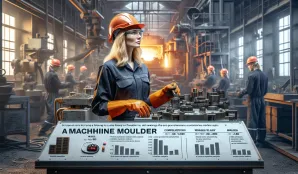
Machine informer, foundry salary
Latest available salary statistics are for 2025. Compare average pay, salary range and related job listings.
39 500 - 40 800 SEK / month
Women earn 99% of what men do.
Industriell tillverkning
Related tools
Salary progression Machine informer, foundry
What does a mold maker in foundry do? – Tasks and work environment
A mold maker in foundry is responsible for producing molds for metal casting using specialized machines. Tasks include monitoring and adjusting molding machines, inspecting raw materials, and quality control of finished molds. The work often takes place in an industrial environment where noise levels can be high, and tasks require precision and safety awareness. Physical endurance and technical interest are important qualities, as the mold maker handles both machines and materials daily that demand accuracy and care.
Salary development over time
The salary for a mold maker in foundry has shown steady and clear increases in recent years. In 2022, the average salary was 36,300 SEK per month. In 2023, it increased to 39 800 SEK, which corresponds to a salary increase of approximately 1.7%. Between 2023 and 2024, there was a more significant rise, with the average salary reaching 40 100 SEK, an increase of about 7.8%. This positive trend can partly be explained by increased demand for skilled workers in Swedish industry, as well as general salary adjustments to meet inflation and skill shortages in technical professions. Despite some variation between genders and regions, the overall trend for the profession is upward.
Salary overview for mold makers in foundry
- Average salary: 40 100 SEK/month
- Lowest salary: 38,100 SEK (woman), 38,200 SEK (man)
- Highest salary: 41,000 SEK (woman), 40,400 SEK (man)
- Hourly wage: 239 SEK
- Gender differences: Women earn 99% of men's salary (39 700 SEK vs. 39900 SEK)
- Regional differences: The highest salaries are found in regional sectors, especially among women with high school education
Education and qualifications
A career as a mold maker in foundry often begins with a high school education in industrial technology or equivalent, where basic knowledge in metalworking and machinery handling is provided. Additional qualifications can be obtained through further training, internal company courses, or apprenticeship programs. Practical experience is highly valued, and many employers prefer candidates who have completed internships or trainee positions within foundry work. Some companies also offer their own introductory programs to ensure new employees quickly learn the specific machines and processes used in the business.
- High school education: Industrial technology program, 3 years
- Internal company training: Certifications and safety courses
- Internships: Apprenticeships or practical training during education
- Prerequisites: Interest in technology, accuracy, and teamwork skills
- Tips: Choose schools or employers with modern equipment and strong industry contacts
Many mold makers in foundry work in teams where collaboration and clear communication are crucial for efficient production. The ability to quickly identify and solve minor technical problems directly at the machine is a valued skill that often leads to greater responsibility over time.
Common benefits and compensations
Mold makers in foundry are often offered collective agreement-based benefits such as occupational pension, insurance, and wellness contributions. Shift work may provide additional allowances, and overtime pay is common, especially during production peaks. Some employers also provide work clothing, subsidized lunch, and opportunities for skill development within the company.
Competition and challenges
The profession of mold maker in foundry is specialized, and competition for positions varies between regions and companies. The shortage of young workers with the right technical background is noticeable, increasing the demand for trained personnel. At the same time, automation and technological development impose new requirements for skills and flexibility. Challenges include staying updated on machine technology and safety regulations, as well as managing physically demanding tasks. The ability to adapt quickly to changing production needs and work effectively in teams is crucial for long-term success.
Tips for those who want to become a mold maker in foundry
To succeed as a mold maker in foundry, it is good to have a genuine interest in technology and machines, as the work involves constant problem-solving and technical understanding. Precision is a key trait, since small errors can lead to costly production stoppages or quality issues. Endurance and stress resilience help manage physically demanding tasks and tight deadlines during peak production. Good teamwork skills facilitate working in teams, while initiative allows you to take responsibility for improving processes and solving technical challenges independently. Being open to further education and staying updated on new methods and machines in the industry is also valuable. Showing engagement and willingness to learn increases chances of advancement and specialization. Finally, a high safety awareness is appreciated, as the work environment requires carefulness and responsibility.
Key facts about mold makers in foundry
- Education level: High school education in industrial technology or equivalent
- Work environment: Industrial, often shift work
- Typical employment: Permanent employment, collective agreement
- Demand: 1,437 job openings within the profession (2024)
- Special skills: Machine handling and quality assurance
Career paths and future prospects
After three to five years in the profession, a mold maker in foundry often has opportunities to advance to leadership roles such as team leader, supervisor, or production technician. Some choose to specialize in maintenance, quality control, or programming of advanced molding machines. The Employment Service does not provide a specific forecast for mold makers in foundry due to limited data, but within the broader group of machine and process operators at steel and metalworks, there are good opportunities for continued employment, with 1,437 job openings reported in 2024. Technological development and retirements are expected to increase the need for new skilled workers in the industry.
Frequently asked questions about mold makers in foundry
- What is the average salary of a mold maker in foundry?
- The average salary for a mold maker in foundry is 40 100 SEK per month. - Are there differences in salary between men and women?
- Yes, women earn on average 39 700 SEK and men 39900 SEK. Women thus earn 99% of men's salaries. - What education is required to become a mold maker in foundry?
- A high school education in industrial technology or equivalent is most common, often supplemented with internships or internal company courses. - What is the work environment like?
- The work environment is industrial, often with high noise levels and shift work. Safety routines are important. - What are the future prospects for the profession?
- The forecast is uncertain, but there are 1437 job openings within the profession according to recent data. - What are the highest and lowest salaries for the profession?
- The highest salary is 41,000 SEK (woman), and the lowest is 38,100 SEK (woman). For men, the highest is 40,400 SEK and the lowest is 38,200 SEK. - What personal qualities are important?
- Accuracy, technical interest, endurance, and good teamwork skills are central qualities.

Salary distributed by age and sector
| Age | Base salary | Monthly salary | |
|---|---|---|---|
| 18-24 | 102% | 31800 kr | 37200 kr |
| 25-34 | 99% | 34500 kr | 39500 kr |
| 35-44 | 100% | 35700 kr | 40300 kr |
| 45-54 | 97% | 36500 kr | 41000 kr |
| 55-64 | 98% | 36600 kr | 40800 kr |
| Snitt | 99% | 35500 kr | 40100 kr |
| Age | Base salary | Monthly salary | |
|---|---|---|---|
| 18-24 | 102% | 31800 kr | 37200 kr |
| 25-34 | 99% | 34500 kr | 39500 kr |
| 35-44 | 100% | 35700 kr | 40300 kr |
| 45-54 | 97% | 36500 kr | 41000 kr |
| 55-64 | 98% | 36600 kr | 40800 kr |
| Snitt | 99% | 35500 kr | 40100 kr |
| Age | Base salary | Monthly salary | |
|---|---|---|---|
| 18-24 | 102% | 31800 kr | 37200 kr |
| 25-34 | 99% | 34500 kr | 39500 kr |
| 35-44 | 100% | 35700 kr | 40300 kr |
| 45-54 | 97% | 36500 kr | 41000 kr |
| 55-64 | 98% | 36600 kr | 40800 kr |
| Snitt | 99% | 35500 kr | 40100 kr |
| Age | Base salary | Monthly salary | |
|---|---|---|---|
| 18-24 | 102% | 31700 kr | 37000 kr |
| 25-34 | 99% | 34500 kr | 39500 kr |
| 35-44 | 100% | 35800 kr | 40300 kr |
| 45-54 | 97% | 36600 kr | 41200 kr |
| 55-64 | 98% | 36700 kr | 40900 kr |
| Snitt | 99% | 35600 kr | 40200 kr |
| Age | Base salary | Monthly salary | |
|---|---|---|---|
| 18-24 | 102% | 31700 kr | 37000 kr |
| 25-34 | 99% | 34500 kr | 39500 kr |
| 35-44 | 100% | 35800 kr | 40300 kr |
| 45-54 | 97% | 36600 kr | 41200 kr |
| 55-64 | 98% | 36700 kr | 40900 kr |
| Snitt | 99% | 35600 kr | 40200 kr |
| Age | Base salary | Monthly salary | |
|---|---|---|---|
| 18-24 | 102% | 31700 kr | 37000 kr |
| 25-34 | 99% | 34500 kr | 39500 kr |
| 35-44 | 100% | 35800 kr | 40300 kr |
| 45-54 | 97% | 36600 kr | 41200 kr |
| 55-64 | 98% | 36700 kr | 40900 kr |
| Snitt | 99% | 35600 kr | 40200 kr |
| Age | Base salary | Monthly salary | |
|---|---|---|---|
| 18-24 | 102% | 31900 kr | 37900 kr |
| 25-34 | 99% | 34700 kr | 39300 kr |
| 35-44 | 100% | 35400 kr | 40300 kr |
| 45-54 | 97% | 35700 kr | 39800 kr |
| 55-64 | 98% | 36000 kr | 40000 kr |
| Snitt | 99% | 35000 kr | 39700 kr |
| Age | Base salary | Monthly salary | |
|---|---|---|---|
| 18-24 | 102% | 31900 kr | 37900 kr |
| 25-34 | 99% | 34700 kr | 39300 kr |
| 35-44 | 100% | 35400 kr | 40300 kr |
| 45-54 | 97% | 35700 kr | 39800 kr |
| 55-64 | 98% | 36000 kr | 40000 kr |
| Snitt | 99% | 35000 kr | 39700 kr |
| Age | Base salary | Monthly salary | |
|---|---|---|---|
| 18-24 | 102% | 31900 kr | 37900 kr |
| 25-34 | 99% | 34700 kr | 39300 kr |
| 35-44 | 100% | 35400 kr | 40300 kr |
| 45-54 | 97% | 35700 kr | 39800 kr |
| 55-64 | 98% | 36000 kr | 40000 kr |
| Snitt | 99% | 35000 kr | 39700 kr |

About the data
All information displayed on this page is based on data from the Swedish Central Bureau of Statistics (SCB), the Swedish Tax Agency and the Swedish employment agency. Learn more about our data and data sources here.
All figures are gross salaries, meaning salaries before tax. The average salary, or mean salary, is calculated by adding up the total salary for all individuals within the profession and dividing it by the number of individuals. For specific job categories, we have also considered various criteria such as experience and education.
Profession Machine informer, foundry has the SSYK code 8129, which we use to match against the SCB database to obtain the latest salary statistics.
-

Pipe Cutter Operator for Production in Halmstad
Other machine and process operators, steel and metal
Fri, 10 Jul 2026 - 21:17 -

Industrial and Production Assignments in Vimmerby – Lernia
Other machine and process operators, steel and metal
Thu, 9 Jul 2026 - 21:13 -
Operator for Glue Department – Nord-Lock Group
Other machine and process operators, steel and metal
Thu, 9 Jul 2026 - 02:31 -

Operator for Production Company in Falkenberg
Other machine and process operators, steel and metal
Thu, 9 Jul 2026 - 01:25 -

Production Operator near Borås
Other machine and process operators, steel and metal
Wed, 8 Jul 2026 - 00:08
Compare salary, work tasks and job outlook in adjacent occupations to find roles with similar skills or pay levels.
-
Tool technician, tool maker salary
Average salary: 37 900 SEK/month • Industriell tillverkning
Toolmakers
Compare with Machine informer, foundry
Tue, 14 Jul 2026 - 10:09 -

Machine operator, glass wool salary
Average salary: 36 900 SEK/month • Industriell tillverkning
Other process and machine operators
Compare with Machine informer, foundry
Tue, 14 Jul 2026 - 10:05 -

Average salary: 34 200 SEK/month • Industriell tillverkning
Machine operators, plastics industry
Compare with Machine informer, foundry
Tue, 14 Jul 2026 - 07:11 -

Average salary: 36 900 SEK/month • Industriell tillverkning
Other process and machine operators
Compare with Machine informer, foundry
Tue, 14 Jul 2026 - 07:12 -

Average salary: 36 300 SEK/month • Industriell tillverkning
Machine setters and machine operators, metal work
Compare with Machine informer, foundry
Tue, 14 Jul 2026 - 03:57 -

Stencil manufacturer, screen printing salary
Average salary: 34 600 SEK/month • Industriell tillverkning
Printers
Compare with Machine informer, foundry
Tue, 14 Jul 2026 - 08:18


