- Salary statistics
- Mower, sheet metal salary
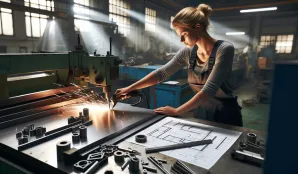
Mower, sheet metal salary
Latest available salary statistics are for 2025. Compare average pay, salary range and related job listings.
37 300 - 37 500 SEK / month
Industriell tillverkning
Related tools
Salary progression Mower, sheet metal
What does a sheet metal cutter do? – Tasks and work environment
A sheet metal cutter primarily works with processing and cutting thin sheet metal parts for further industrial use. Tasks include measuring, marking, and cutting sheets according to drawings and specifications, often utilizing advanced machinery such as shears, nibbling machines, and laser cutting equipment. Precision and technical knowledge are essential, as cuts and measurements must be highly accurate to fit into subsequent manufacturing steps. The work environment is often workshop-based, involving noise and heavy lifting, which requires good physical condition and safety awareness.
Salary development over time
The salary for sheet metal cutters has shown steady and positive growth in recent years. In 2022, the average salary was 32,200 SEK per month, rising to 35 700 SEK in 2023. The latest recorded salary for 2024 indicates further increase to 37 500 SEK, representing an approximate 10.9% increase over three years. Factors driving this growth include high demand for skilled workers and recruitment challenges, along with many leaving the profession. The trend suggests that competition for competent sheet metal cutters has pushed wages upward.
Sheet metal cutter salary – comprehensive overview
- Average salary: 37 500 SEK/month
- Lowest/Highest salary: Data unavailable
- Hourly wage: 215 SEK
- Gender pay gap: Men earn on average 37 600 SEK, data on women is unavailable
- Regional differences: Data unavailable
Education and qualifications
To work as a sheet metal cutter, a basic education in an industrial program with a focus on sheet metal work or equivalent vocational training is usually required. Practical experience and a good understanding of drawing reading and machine operation are important qualifications. Many employers also value certificates or diplomas demonstrating specialized skills in sheet metal processing and welding.
- High school education: Industrial program with sheet metal specialization (3 years)
- Vocational training: Adult education / YH in sheet metal processing
- Certificates: Meritorious for welding or machine handling
- Internship: Common during training
- Prerequisites: Passing grades in mathematics and technology
Many sheet metal cutters have the opportunity to work with advanced technology, such as CNC-controlled machines and laser cutting. This creates a dynamic daily work life where technological development continually opens new possibilities for those interested in industrial innovation.
Common benefits and compensations
Workers in the profession are often offered benefits such as shift premiums, wellness allowances, work clothing, and sometimes bonus schemes linked to production or quality. Occupational pensions and insurance via collective agreements are standard within the industry, providing a secure financial foundation beyond base salary.
Competition and challenges
The competition for sheet metal cutter positions is currently relatively low, thanks to a large demand for labor in the industry and difficulties for employers in recruiting the right skills. At the same time, the profession presents challenges such as the requirement for high precision, physically demanding tasks, and constant adaptation to new technology and methods. Many leave the profession, creating both opportunities and pressure for remaining workers. The work environment can be noisy and sometimes stressful, especially during peak production periods.
Tips for aspiring sheet metal cutters
To succeed as a sheet metal cutter, combining technical interest with practical problem-solving skills is beneficial. Precision is critical, so practicing drawing reading and measurement techniques is advisable. A methodical approach helps when performing multiple tasks under time pressure. Physical endurance and good motor skills make the workday smoother, especially when handling heavy or unwieldy sheets. Flexibility and curiosity about new technology offer great development opportunities, as machinery and methods are constantly evolving. The ability to collaborate and communicate clearly with colleagues contributes to a safer and more efficient work environment. Finally, showing engagement in safety routines is often rewarded by employers.
Key facts about Sheet Metal Cutter
- Education level: High school or vocational training
- Work environment: Workshop/industry, often noisy and physically demanding
- Demand: Excellent opportunities for employment nationwide
- Employment type: Permanent or hourly employment
- Special skills: Machine handling and drawing reading
Career paths and outlook
After three to five years in the profession, a sheet metal cutter can advance to roles such as supervisor, production technician, or specialize in advanced machine handling, such as CNC-controlled cutters or laser processing. There are also opportunities to take on mentoring responsibilities or work in quality control within manufacturing. According to the Swedish Public Employment Service, demand for sheet metal workers, including cutters, remains high and is expected to stay stable over the next five years. The recruitment situation is challenging, meaning those who train in the field have good prospects for employment. Currently, there are 1437 job openings in the industry, further confirming the need for skilled sheet metal cutters.
Common questions about Sheet Metal Cutter
- What does a Sheet Metal Cutter earn?
- The average salary is 37 500 SEK per month, with an hourly wage of 215 SEK. - What education is required to become a sheet metal cutter?
- A high school industrial program with a focus on sheet metal work or a vocational training in sheet metal processing is recommended. - What is the job market like for sheet metal cutters?
- The job market is very good, with great opportunities for employment and a continued high recruitment need nationwide. - Are there salary differences between men and women?
- Data on women's salaries is unavailable, but men earn on average 37 600 SEK. - What are the job tasks of a sheet metal cutter?
- Tasks include measuring, marking, and cutting sheet metal according to drawings, often using specialized machinery. - What benefits are offered in the profession?
- Common benefits include shift premiums, wellness allowances, work clothing, and collective agreement-based occupational pensions.

Salary distributed by age and sector
| Age | Base salary | Monthly salary | |
|---|---|---|---|
| 18-24 | 30300 kr | 30400 kr | |
| 25-34 | 37100 kr | 37300 kr | |
| 35-44 | 39500 kr | 39600 kr | |
| 45-54 | 40600 kr | 41100 kr | |
| 55-64 | 36000 kr | 36300 kr | |
| Snitt | 37300 kr | 37500 kr |
| Age | Base salary | Monthly salary | |
|---|---|---|---|
| 18-24 | 30300 kr | 30400 kr | |
| 25-34 | 37100 kr | 37300 kr | |
| 35-44 | 39500 kr | 39600 kr | |
| 45-54 | 40600 kr | 41100 kr | |
| 55-64 | 36000 kr | 36300 kr | |
| Snitt | 37300 kr | 37500 kr |
| Age | Base salary | Monthly salary | |
|---|---|---|---|
| 18-24 | 30300 kr | 30400 kr | |
| 25-34 | 37100 kr | 37300 kr | |
| 35-44 | 39500 kr | 39600 kr | |
| 45-54 | 40600 kr | 41100 kr | |
| 55-64 | 36000 kr | 36300 kr | |
| Snitt | 37300 kr | 37500 kr |
| Age | Base salary | Monthly salary | |
|---|---|---|---|
| 18-24 | 30400 kr | 30500 kr | |
| 25-34 | 37400 kr | 37600 kr | |
| 35-44 | 39700 kr | 39700 kr | |
| 45-54 | 40600 kr | 41100 kr | |
| 55-64 | 36000 kr | 36300 kr | |
| Snitt | 37400 kr | 37600 kr |
| Age | Base salary | Monthly salary | |
|---|---|---|---|
| 18-24 | 30400 kr | 30500 kr | |
| 25-34 | 37400 kr | 37600 kr | |
| 35-44 | 39700 kr | 39700 kr | |
| 45-54 | 40600 kr | 41100 kr | |
| 55-64 | 36000 kr | 36300 kr | |
| Snitt | 37400 kr | 37600 kr |
| Age | Base salary | Monthly salary | |
|---|---|---|---|
| 18-24 | 30400 kr | 30500 kr | |
| 25-34 | 37400 kr | 37600 kr | |
| 35-44 | 39700 kr | 39700 kr | |
| 45-54 | 40600 kr | 41100 kr | |
| 55-64 | 36000 kr | 36300 kr | |
| Snitt | 37400 kr | 37600 kr |

About the data
All information displayed on this page is based on data from the Swedish Central Bureau of Statistics (SCB), the Swedish Tax Agency and the Swedish employment agency. Learn more about our data and data sources here.
All figures are gross salaries, meaning salaries before tax. The average salary, or mean salary, is calculated by adding up the total salary for all individuals within the profession and dividing it by the number of individuals. For specific job categories, we have also considered various criteria such as experience and education.
Profession Mower, sheet metal has the SSYK code 7214, which we use to match against the SCB database to obtain the latest salary statistics.





Compare salary, work tasks and job outlook in adjacent occupations to find roles with similar skills or pay levels.
-

Charcuterie worker, manufacturing salary
Average salary: 33 000 SEK/month • Industriell tillverkning
Machine operators, meat and fish processing industry
Compare with Mower, sheet metal
Tue, 14 Jul 2026 - 08:18 -
Textile machine adjuster, yarn preparation salary
Average salary: 32 200 SEK/month • Industriell tillverkning
Other machine operators, textile, leather and leather industry
Compare with Mower, sheet metal
Tue, 14 Jul 2026 - 07:14 -

Average salary: 33 900 SEK/month • Industriell tillverkning
Machine operators, rubber industry
Compare with Mower, sheet metal
Mon, 13 Jul 2026 - 01:29 -

Average salary: 47 800 SEK/month • Industriell tillverkning
Production supervisors
Compare with Mower, sheet metal
Thu, 9 Jul 2026 - 13:10 -

Average salary: 40 000 SEK/month • Industriell tillverkning
Rolling mill operators
Compare with Mower, sheet metal
Mon, 13 Jul 2026 - 09:37 -

Supervisor, confectionery salary
Average salary: 47 800 SEK/month • Industriell tillverkning
Production supervisors
Compare with Mower, sheet metal
Tue, 14 Jul 2026 - 10:08


