News and articles
- Home
- Articles






Latest posts
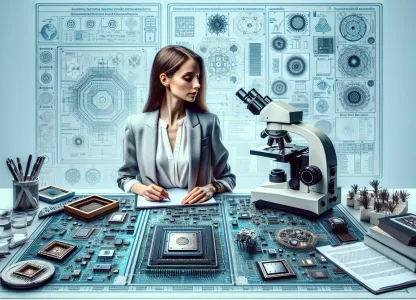
A researcher in microelectronics works on developing and improving components and systems based on semiconductor technology and nanostructures. Tasks often include advanced experimental research, simulations, and analysis of microelectronic circuits, as well as publishing scientific articles and participating in international projects. The research environment is typically laboratory-based, often within universities, research institutes, or larger technology companies. The work requires precision, analytical skills, and the ability to collaborate in interdisciplinary teams, where both independent work and teamwork are central elements.
Read more ->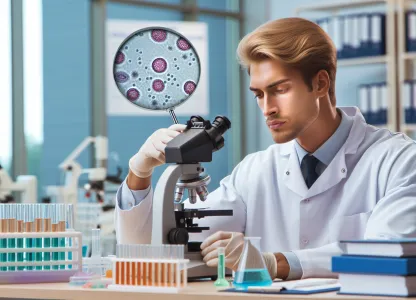
A microbiology researcher investigates microorganisms such as bacteria, viruses, fungi, and protozoa using advanced laboratory methods. Tasks include planning and conducting experiments, analyzing results, and reporting research findings in scientific articles or to partners. Many microbiologists work at universities, government agencies, hospitals, or the pharmaceutical industry. The work environment is characterized by laboratory work, teamwork, and sometimes teaching. The profession requires precision, analytical skills, and an interest in solving complex biological problems.
Read more ->-

Opinion Polls: Kantar-Sifo shows increased support for S, decline for SD and C
Fri, 13 Feb 2026 - 01:35 -

Policy rate remains at 1.75% – Riksbank signals stability
Thu, 29 Jan 2026 - 14:02


A researcher in medicine primarily works on planning, conducting, and analyzing scientific studies to increase knowledge about human health, diseases, and treatments. Tasks may include laboratory experiments, clinical trials, data collection, and advanced statistical analysis. The work often takes place in interdisciplinary teams with other researchers, doctors, and technicians. The work environment is usually research institutions, university hospitals, pharmaceutical companies, or government agencies, where high standards of accuracy, ethics, and documentation are required.
Read more ->
A researcher in pharmaceuticals works on developing, analyzing, and improving medicines and medical products. Tasks often include laboratory work, planning and conducting experiments, data collection, and evaluating results. Documentation for regulatory purposes and collaboration with experts in pharmacology, toxicology, and clinical trials are also common. The work environment is usually laboratory-based with high demands for accuracy, safety, and documentation, but researchers may also participate in international collaborations and present their findings at conferences.
Read more ->
A researcher in cultural geography analyzes the interaction between people, societies, and their surrounding environments. Tasks may include collecting and processing geographical data, field studies, interviews, mapping, and statistical analysis of social, economic, and environmental factors. The work usually takes place at universities and research institutes, but also within public authorities and organizations. The work is often project-based and can range from basic research to commissioned research and policy development, with collaboration with other experts being common.
Read more ->
A researcher in criminal justice works to investigate, analyze, and develop knowledge about criminal justice processes, methods, and outcomes. Tasks often include collecting and processing data on crimes, recidivism, and rehabilitation programs, as well as evaluating the effects of various interventions within the criminal justice system. The research can cover everything from the causes of crime to the impact of different treatment methods and policies. The environment is often academic or government-based, with collaboration with other researchers, criminal justice personnel, and policymakers being a central part of daily work. The job requires precision, analytical skills, and a high degree of integrity.
Read more ->
A researcher within IT works on developing and deepening knowledge about digital systems, software, algorithms, and computer science methods. Tasks often involve planning and conducting advanced research projects, writing scientific articles, analyzing large datasets, and collaborating with other researchers and engineers. Teaching and supervising students at universities or colleges is also common. The work environment is characterized by a high degree of independence, with daily activities often combining individual work and project-based teamwork, mainly in office or laboratory settings. Digital tools and advanced technical equipment are integral parts of daily work life.
Read more ->
A historian researcher engages in examining, analyzing, and interpreting historical sources and events to develop and deepen knowledge of the past. Tasks often include archive work, literature studies, field research, and writing scientific articles and reports. Many historians also teach at universities and colleges or participate in research projects with international connections. The work environment is mostly academic and characterized by independent work, but collaboration with colleagues within and outside the field occurs regularly. Access to archives, libraries, and digital databases is central to the profession.
Read more ->
A researcher in peace work analyzes and investigates causes of conflicts, wars, and peace processes at national and global levels. Tasks often include data collection, interviews, analysis of historical and current events, as well as publishing scientific articles and reports. The researcher collaborates with universities, international organizations, and authorities to contribute knowledge that can prevent conflicts and strengthen peacebuilding efforts. The work environment is usually office-based but may also include fieldwork in conflict zones or participation in international conferences and workshops.
Read more ->
A researcher in futures studies analyzes and investigates possible scenarios and long-term developments in society, technology, environment, and economy. Tasks include data collection, trend analysis, modeling future outcomes, and reporting and presenting results. Collaboration often occurs in interdisciplinary teams combining expertise from various fields to create comprehensive pictures of future opportunities and challenges. The work is typically conducted at universities, research institutes, or public authorities and involves both independent analysis and participation in larger projects. The work environment demands high analytical skills, creativity, and the ability to communicate complex relationships to decision-makers and the public.
Read more ->