News and articles
- Home
- Articles






Latest posts

A research engineer in chemistry primarily works on developing and conducting experimental studies, analyzing chemical processes, and contributing to research projects within both academic and industrial settings. Tasks often include planning laboratory experiments, interpreting results, developing new methods, and documenting research data. Collaboration frequently occurs in interdisciplinary teams where communication skills and precision are crucial. The work environment is characterized by advanced laboratory equipment, high safety standards, and a combination of practical and theoretical work.
Read more ->
A research engineer in physics works on developing and conducting advanced experiments, analyzing data, and contributing to scientific progress across various physics disciplines. Tasks often include designing measurement equipment, simulations, programming, as well as documenting and reporting research results. The environment is usually laboratory- or university-based, where collaboration with researchers and PhD students is a natural part of daily work. High demands are placed on accuracy, analytical skills, and the ability to work independently under time pressure.
Read more ->-

Opinion Polls: Kantar-Sifo shows increased support for S, decline for SD and C
Fri, 13 Feb 2026 - 01:35 -

Policy rate remains at 1.75% – Riksbank signals stability
Thu, 29 Jan 2026 - 14:02

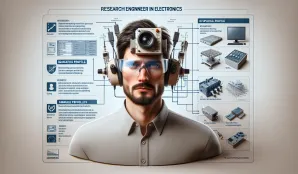
A research engineer in electronics works on developing, testing, and analyzing electronic systems, components, and products within various research projects. Tasks often include advanced measurement techniques, programming control systems, design and prototype development, and evaluation of new technologies. The role involves close collaboration with researchers, engineers, and sometimes external partners in industry. The work environment is typically laboratory-based, but work in office settings with computer simulations and documentation also occurs. High-tech research environments and access to modern equipment are typical for the profession, which requires precision, analytical ability, and a systematic approach.
Read more ->
A research engineer in construction works on developing, analyzing, and improving construction materials, structures, and technical processes within the construction sector. The work often involves advanced laboratory testing, computer simulations, and project management in close collaboration with other engineers, researchers, and sometimes contractors. The research engineer is responsible for collecting and interpreting data, evaluating new technologies, and proposing innovative solutions that can streamline construction projects or enhance sustainability. The work environment is typically varied, involving both office work and field studies, especially in larger research projects or collaborations with external partners.
Read more ->
A research assistant works closely with researchers and project managers within academia, government agencies, or industry to assist in various research projects. Daily tasks may include data collection and processing, literature searches, documenting research findings, and providing practical support during experiments and field studies. The work environment varies depending on the research area but is often located in laboratories, offices, or in the field. The role requires a high degree of precision, responsibility, and the ability to work both independently and in teams.
Read more ->
A research librarian is responsible for supporting researchers, students, and academic staff with information retrieval, source criticism, and literature management. Tasks often include acquiring and cataloging scientific publications, developing digital resources, and providing guidance in referencing and publishing strategies. Many research librarians are also involved in teaching and training in information literacy. The work environment is characterized by close collaboration with research communities, often at universities and colleges, where physical and digital library environments are combined. The profession demands high analytical skills, service orientation, and technical competence in information systems.
Read more ->
A research assistant is responsible for supporting researchers and project leaders in scientific studies, often within universities, colleges, or research-intensive companies. Tasks may include data collection, processing and analysis of research material, administration of experiments, as well as documentation and reporting of results. The role also involves literature searches, preparations for experiments, and practical work in laboratory settings or in the field, depending on the subject area. The work environment is typically academic or laboratory-oriented, where collaboration with research groups and communication with various stakeholders are central elements.
Read more ->
A researcher in zoology studies animals' biology, behavior, ecology, and evolution. Tasks may include field studies, laboratory experiments, data collection, sample analysis, and publishing research results in scientific journals. Many zoology researchers collaborate with universities, authorities, or research institutes and are often involved in projects that contribute to increased understanding of habitats and conservation of species. The work environment varies between office work, laboratories, and fieldwork, sometimes involving travel to remote locations for data collection or animal observation in their natural habitats.
Read more ->
A researcher in plant and animal biology studies biological processes in plants and animals, often focusing on ecology, genetics, or physiology. Tasks vary between fieldwork, laboratory analyses, and data processing, aiming to understand organism behavior, development, and interactions with the environment. Many professionals in this field work at universities, research institutes, or in the private sector, participating in everything from fundamental research to applied projects. The work environment often combines office work, laboratories, and field studies, requiring flexibility and precision.
Read more ->
A researcher in traffic safety works on analyzing, developing, and evaluating methods and strategies to increase traffic safety. Tasks often include both theoretical and practical elements, such as data collection, statistical analysis, simulations, and field studies. Research can cover everything from road and vehicle design to behavioral studies on traffic participants and accident causes. The work environment is typically academic or linked to research institutes, authorities, or larger companies within the transport sector. The work is often project-based and involves close collaboration with experts in technology, urban planning, and psychology.
Read more ->