News and articles
- Home
- Articles






Latest posts
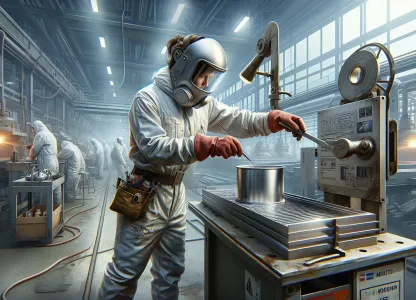
A tinplater primarily works with surface treatment of metals by applying a layer of tin to various components. This process is used to protect the metal against corrosion, improve solderability, and achieve desired technical properties. Tasks include preparing surfaces, monitoring tinning machines, and quality control of the finished result. Usually, work takes place in industrial environments where safety routines and precision are of utmost importance, and the work environment can involve noise and chemical handling.
Read more ->
A Continuing Education Secretary works with administering, planning, and coordinating training initiatives for staff within companies, organizations, or the public sector. Tasks include identifying skill needs, booking training sessions, and following up and evaluating completed activities. Responsibilities often include budget management, contact with training providers, and internal communication and career development advice. The work is mainly performed in an office environment, involving both independent tasks and close collaboration with colleagues and managers. The role requires accuracy, good organizational skills, and an interest in developing employee competencies.
Read more ->-

Opinion Polls: Kantar-Sifo shows increased support for S, decline for SD and C
Fri, 13 Feb 2026 - 01:35 -

Policy rate remains at 1.75% – Riksbank signals stability
Thu, 29 Jan 2026 - 14:02


A professional development leader is responsible for planning, organizing, and following up on skills development and training initiatives across various educational settings. The role involves assessing needs, developing training programs, and coordinating resources to ensure staff or participants acquire the necessary knowledge for their profession. The work is often in collaboration with school management, authorities, and external training providers. The work environment mainly involves office work, digital tools, and regular meetings, but may also include travel to conferences and training sessions.
Read more ->
A Continuing Education Consultant works with planning, coordinating, and implementing professional development initiatives for practitioners across various fields, often within the education sector or organizations with significant skills development needs. Tasks include needs assessments, designing training programs, recruiting speakers, and evaluating the effectiveness of training efforts. Collaborations often involve school administrators, HR departments, and external training providers. The work environment features a mix of office work, digital meetings, and in-person training sessions, demanding strong planning skills and excellent communication abilities.
Read more ->
A preschool teacher works to support and educate children in preschool class or early school years, often focusing on children needing special support in their development. Tasks include planning, implementing, and following up on educational efforts, collaborating with other school staff, and establishing action plans. Contact with guardians is central, and the work is carried out in close dialogue with both student health services and school management. The work environment is characterized by variation and switching between individual work with students, group activities, and administrative tasks, where flexibility and the ability to handle rapid changes are important qualities.
Read more ->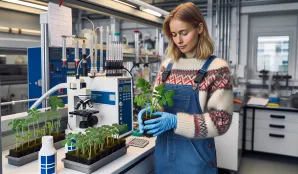
A trial technician in crop production is responsible for planning, executing, and evaluating various types of cultivation trials and experiments, often in close collaboration with agronomists, plant physiologists, and researchers. Tasks include sowing, plant care, sampling, and data collection and analysis related to growth, yield, and environmental impact. The technician works both in the field and in laboratories, where precision and documentation are central to daily work. The role also involves handling specialized equipment, following safety procedures, and reporting results to project managers or clients.
Read more ->
A trial technician in horticulture primarily works with planning, executing, and documenting various experiments in greenhouses, on open ground, or in laboratory settings. Tasks include sowing, planting, harvesting, precise data collection, sampling, and analyzing results. Calibration of equipment and following routines to ensure scientific accuracy are often required. The work environment varies between outdoor work, greenhouse work, and laboratory tasks, demanding both practical skills and analytical thinking. Collaboration with researchers, growers, and other technicians is common, making communication and teamwork important parts of the profession.
Read more ->
A forestry trial technician primarily works with planning, conducting, and documenting field experiments within forest research and development. Tasks may include collecting samples, measuring trees and soil conditions, and analyzing data in laboratory settings. The work often involves close collaboration with researchers, forest technicians, and other specialists, combining practical and administrative tasks. The work environment varies between outdoor work in different weather conditions and indoor laboratory work, requiring both physical endurance and precision in data collection and reporting.
Read more ->
A trial assistant in agriculture and horticulture mainly works with planning, executing, and evaluating various experiments related to cultivation, plant breeding, and soil science. Tasks include sampling and analyzing specimens, documenting results, and maintaining experimental fields and laboratory environments. The role often involves working outdoors in the field and indoors in laboratories or greenhouses, where precision and methodical work are crucial to ensure reliable results. Collaboration with researchers, technicians, and other specialists is common, and the work environment can vary between seasonal fieldwork and more structured laboratory tasks.
Read more ->
A Förslutare primarily works in the industry to ensure that products are properly packaged and sealed in an efficient, safe, and correct manner. The tasks involve handling machine-based and sometimes manual sealing of various types of packaging, which can include food products as well as technical components. The work often takes place on assembly lines or production lines where precision, pace, and quality control are required. The work environment is typically industrial, involving noise and physical effort, and shift work may occur depending on production needs.
Read more ->