News and articles
- Home
- Articles






Latest posts

A culture assistant specializing in archives primarily works with organizing, preserving, and making documents and cultural-historical materials accessible. Tasks often include registering and cataloging archive documents, assisting with digitization of materials, and helping researchers and the public find information. Culture assistants in archives often collaborate with librarians, archivists, and other cultural workers. The work environment is characterized by order and structure and is usually located in public institutions such as archives, museums, or cultural administrations, where independent work and teamwork are common.
Read more ->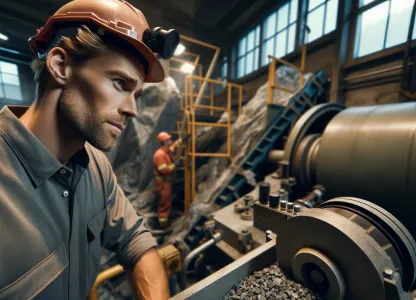
A ball mill operator in mineral processing is responsible for monitoring and controlling ball mills used to grind ore to the correct particle size for further processing. Tasks include checking machine functions, adjusting settings to optimize the grinding process, and supervising material flow through the system. Regular inspections and basic maintenance of equipment are included, as well as quickly identifying and fixing any operational disruptions. The work often involves shift work, and the environment can be noisy and dusty, demanding high safety awareness and precision.
Read more ->-

Opinion Landscape: Novus February 2026 – Social Democrats Still Largest
Thu, 19 Feb 2026 - 01:35 -

Policy rate remains at 1.75% – Riksbank signals stability
Thu, 29 Jan 2026 - 14:02

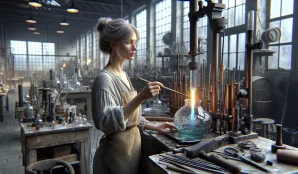
A glass blower works with shaping and refining molten glass into spheres and other round objects using traditional craftsmanship techniques. Tasks include handling molten glass, using various tools to shape and cool the material, and carefully inspecting quality and finish of each item. The work is usually performed in a glassworks environment where temperatures can be high, requiring precision and good physical endurance. Often, work steps are done in collaboration with other artisans and artists, which demands both teamwork skills and independence.
Read more ->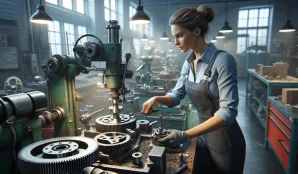
A gear grinder mainly works with grinding gears on gear wheels and other machine parts, often within the manufacturing industry. Tasks include setting up and monitoring grinding machines, checking dimensional accuracy, and performing quality control on finished products. The work requires a good understanding of drawings and technical specifications, as well as precision in every step. The working environment is usually workshop-based, which means noise, vibrations, and sometimes working with oils and coolants, but safety routines and protective equipment are always important aspects of daily work.
Read more ->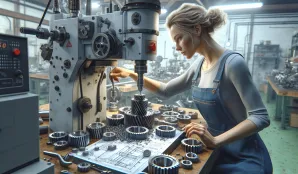
A gear shaper works within the manufacturing industry and is responsible for machining and shaping gears and other machine parts with high precision. The tasks mainly involve setting up, monitoring, and adjusting gear shaping machines, often with the help of advanced measurement technology and sometimes computer-controlled tools. The work is usually carried out in a workshop environment where accuracy and quality are crucial for the final products to meet technical requirements. Gear shapers often work in teams alongside other machine operators and technicians, and the working environment can be noisy and require protective gear.
Read more ->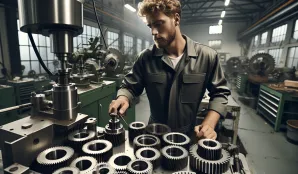
A gear cutter works with manufacturing gears and other precision parts for machines in the industry. Tasks include setting up and monitoring milling machines, reading and interpreting drawings, and ensuring the highest quality of products. The work often takes place in production environments where accuracy, technical knowledge, and an understanding of material properties are crucial. The machinery can be manual or computer-controlled (CNC), and the working environment is characterized by high safety and order requirements. Gear cutters typically work in shifts and closely collaborate with other machine operators and technicians.
Read more ->
A cryptologist within mathematics works with analyzing, developing, and implementing methods to protect information through encryption and security protocols. Tasks include advanced mathematical modeling, developing algorithms for encryption and decryption, and security analysis of digital systems. The work is often carried out in close collaboration with IT specialists, cybersecurity experts, and sometimes government agencies or defense sectors. The work environment is typically office-based and can be within the private sector – for example, IT companies and banks – as well as within public sector and research. Project work and interdisciplinary teamwork are common, but there are also independent tasks that require great precision and analytical ability.
Read more ->
Cryptologists in data security work on developing, analyzing, and implementing cryptographic solutions to protect information against unauthorized access and manipulation. The work often involves creating advanced systems for encryption, authentication, and data signing, which are crucial for both private and public sectors. Cryptologists usually work in teams alongside other IT security specialists, system developers, and analysts. The work environment is often high-tech and office-based, with flexibility and remote work possible depending on the employer and project nature.
Read more ->
Gunpowder plant workers are involved in the manufacturing and handling of gunpowder and explosive substances, often within specialized industries and defense-related production. Tasks include monitoring and controlling machinery, inspecting production processes, and carefully handling raw materials and finished products. Safety routines are central, as the work environment involves risk management and demands high precision. Work often occurs in shifts, and collaboration with colleagues and various professional roles is a natural part of daily life.
Read more ->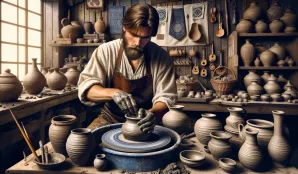
A potter creates functional ceramics and art objects from clay by wheel-throwing, shaping, and glazing either by hand or with the help of simpler machines. The profession often involves working in a personal workshop or as part of a small team, handling the entire process from raw material to finished product. A typical workday includes preparing clay, wheel-throwing, drying, firing in a kiln, as well as glazing and decorating. The work environment is characterized by creativity, craftsmanship, and a combination of physical and artistic tasks. Some potters also work with sales, exhibitions, or conduct classes and workshops.
Read more ->