- Salary statistics
- Graders salary
Graders salary
Latest available salary statistics are for 2025. Compare average pay, salary range and related job listings.
33 500 - 35 700 SEK / month
Industriell tillverkning
Related tools
Salary progression Graders
What does a gear shaper do? – Tasks and work environment
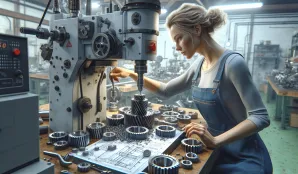
A gear shaper works within the manufacturing industry and is responsible for machining and shaping gears and other machine parts with high precision. The tasks mainly involve setting up, monitoring, and adjusting gear shaping machines, often with the help of advanced measurement technology and sometimes computer-controlled tools. The work is usually carried out in a workshop environment where accuracy and quality are crucial for the final products to meet technical requirements. Gear shapers often work in teams alongside other machine operators and technicians, and the working environment can be noisy and require protective gear.
Salary development over time
Salaries for gear shapers have shown stable and positive growth over the past three years. In 2022, the average salary was 33,100 SEK per month, increasing to 36 000 SEK in 2023. In 2024, the average salary has risen further to 35 700 SEK per month. This represents a total salary increase of approximately 8.7% over three years, indicating continued demand for the profession and that employers value the technical skills required. Factors driving the salary development include technical specialization, precision requirements, and a general shortage of experienced industrial workers in certain regions. The long-term trend suggests that gear shapers will remain an important part of Swedish industry with good prospects for competitive wages.
Gear shaper salary – comprehensive overview
- Average salary: 35 700 SEK/month
- Lowest/Highest salary: Data not specified
- Hourly wage: 216 SEK (based on 166 hours/month)
- Gender differences: Men 36 300 SEK/month, data on women is missing
- Regional differences: No detailed statistics available
Education and qualifications
To work as a gear shaper, a high school education in industrial technology or equivalent technical background is usually required. Practical skills are highly valued, and many employers prefer combining theoretical training with practical experience or apprenticeships. Further education in CNC technology and measurement technology is often advantageous, as modern gear shaping machines are often computer-controlled. Specialized courses and certifications can improve employment opportunities and career advancement.
- High school education: Industrial technology program (3 years)
- Certifications: CNC operator, measurement technology
- Practical experience: Apprenticeship or practical training during education is recommended
- Further education: Specialized vocational courses in gear shaping and mechanical engineering
- Prerequisites: Good knowledge of mathematics and technology
Gear shapers often have the opportunity to work with advanced technology and machines, making the profession particularly interesting for those who enjoy problem-solving and technology. The role also often involves close collaboration with engineers and designers in the production chain.
Common benefits and compensations
In addition to base salary, benefits such as shift and overtime allowances, wellness contributions, and opportunities for further training are often offered. In some cases, bonus programs, occupational pensions, and insurance may be included as part of the employment conditions. Access to work clothing and protective gear is standard within the industry.
Competition and challenges
Competition within the profession of gear shaper is affected by technological development and automation in the industry. The shortage of specialized workers persists in certain regions, which can make it easier to find employment for those with the right skills. Challenges often include staying updated with new technology and working with advanced machines and control systems. The work environment can be physically demanding, and high demands are placed on precision and quality in daily work. Another challenge is that the profession is not as well known as other industrial roles, which can influence interest among young people.
Tips for those who want to become a gear shaper
To succeed as a gear shaper, it is good to have an interest in technology and strong problem-solving skills. Precision is crucial, so always double-check measurements and settings to ensure high work quality. Being resilient and physically fit helps, especially during long shifts in the workshop environment. Collaboration skills are a significant asset, as the work often takes place in teams with other specialists. Flexibility and willingness to learn new machines and methods make it easier to adapt to changes in production. Taking the initiative for further education or certification in CNC and measurement technology is a tangible way to strengthen your position in the job market. Finally, being solution-oriented and detail-focused is advantageous, as small deviations can have significant consequences in the final product.
Key facts about gear shapers
- Education level: High school diploma in industrial technology recommended
- Work environment: Workshop environment with requirements for protective gear
- Demand: 1,437 available jobs within the profession group Grinder etc.
- Technical specialization: CNC and measurement technology are advantageous
Career paths and future prospects
After three to five years as a gear shaper, there are opportunities to advance to roles such as supervisor, technical specialist, or quality inspector within the industry. Some choose to further educate themselves as production technicians or mechanical engineers, which can open doors to more qualified and leadership positions. According to the Swedish Public Employment Service’s forecasts, no specific assessment is made for gear shapers due to limited data, but within the profession group Grinder etc., there is continued demand and many available positions. Future prospects are influenced by technological development, but those who stay updated with new machinery and digitalization have good chances for continued employment and career growth. Specialization in CNC or automation can further improve career opportunities.
Frequently asked questions about gear shapers
- What does a gear shaper earn?
- The average salary for a gear shaper is 35 700 SEK per month according to current statistics. - What education is required to become a gear shaper?
- High school education in industrial technology or equivalent technical background is recommended. - What is the working environment like for a gear shaper?
- The work takes place in a workshop environment and often involves noise, protective gear, and teamwork. - Are there many jobs for gear shapers?
- Within the profession group Grinder etc., there were 1,437 available jobs according to the latest data. - What development opportunities does a gear shaper have?
- Opportunities include advancing to supervisor, technical specialist, or further education as a production technician. - Are there gender differences in salary for gear shapers?
- Current statistics show that men earn 36 300 SEK/month, but data on women is missing. - What personal qualities are important for a gear shaper?
- Accuracy, technical interest, problem-solving skills, and teamwork are particularly important.

Salary distributed by age and sector
| Age | Base salary | Monthly salary | |
|---|---|---|---|
| 45-54 | 34900 kr | 37200 kr | |
| 55-64 | 37000 kr | 39200 kr | |
| Snitt | 33500 kr | 35700 kr |
| Age | Base salary | Monthly salary | |
|---|---|---|---|
| 45-54 | 34900 kr | 37200 kr | |
| 55-64 | 37000 kr | 39200 kr | |
| Snitt | 33500 kr | 35700 kr |
| Age | Base salary | Monthly salary | |
|---|---|---|---|
| 45-54 | 34900 kr | 37200 kr | |
| 55-64 | 37000 kr | 39200 kr | |
| Snitt | 33500 kr | 35700 kr |
| Age | Base salary | Monthly salary | |
|---|---|---|---|
| 45-54 | 35600 kr | 38100 kr | |
| 55-64 | 36800 kr | 38900 kr | |
| Snitt | 34000 kr | 36300 kr |
| Age | Base salary | Monthly salary | |
|---|---|---|---|
| 45-54 | 35600 kr | 38100 kr | |
| 55-64 | 36800 kr | 38900 kr | |
| Snitt | 34000 kr | 36300 kr |
| Age | Base salary | Monthly salary | |
|---|---|---|---|
| 45-54 | 35600 kr | 38100 kr | |
| 55-64 | 36800 kr | 38900 kr | |
| Snitt | 34000 kr | 36300 kr |

About the data
All information displayed on this page is based on data from the Swedish Central Bureau of Statistics (SCB), the Swedish Tax Agency and the Swedish employment agency. Learn more about our data and data sources here.
All figures are gross salaries, meaning salaries before tax. The average salary, or mean salary, is calculated by adding up the total salary for all individuals within the profession and dividing it by the number of individuals. For specific job categories, we have also considered various criteria such as experience and education.
Profession Graders has the SSYK code 7224, which we use to match against the SCB database to obtain the latest salary statistics.
-

HR Administrator / Workshop and Logistics Associate at Bahusia
Grinders etc.
Tue, 30 Jun 2026 - 09:02



Compare salary, work tasks and job outlook in adjacent occupations to find roles with similar skills or pay levels.
-
Textile printers, stencil prints salary
Average salary: 34 600 SEK/month • Industriell tillverkning
Printers
Compare with Graders
Tue, 14 Jul 2026 - 08:14 -

Average salary: 42 600 SEK/month • Industriell tillverkning
Machine operators, chemical technology and photographic products
Compare with Graders
Thu, 9 Jul 2026 - 21:13 -

Average salary: 37 800 SEK/month • Industriell tillverkning
Machine operators, cement, stone and concrete products
Compare with Graders
Tue, 14 Jul 2026 - 02:59 -

Average salary: 44 700 SEK/month • Industriell tillverkning
Process operators, pulp
Compare with Graders
Mon, 13 Jul 2026 - 04:48 -

Average salary: 34 800 SEK/month • Industriell tillverkning
Machine operators, filling, packing and labeling
Compare with Graders
Tue, 14 Jul 2026 - 08:17 -

Average salary: 38 300 SEK/month • Industriell tillverkning
Operators in sawmills, planing mills and plywood etc.
Compare with Graders
Tue, 14 Jul 2026 - 03:41


