News and articles
- Home
- Articles






Latest posts
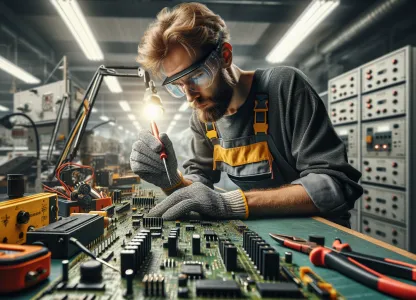
A Kretskortsprovare works with testing, analyzing, and quality assuring electronic circuit boards in the manufacturing industry. Tasks include inspecting circuit boards for faults, performing measurements with advanced testing equipment, and documenting results according to established routines. The role requires precision and technical interest, as work often takes place in production environments where accuracy is crucial to ensure that final products meet high standards. The work environment is typically laboratory or workshop-based, and shift work is common to meet production needs.
Read more ->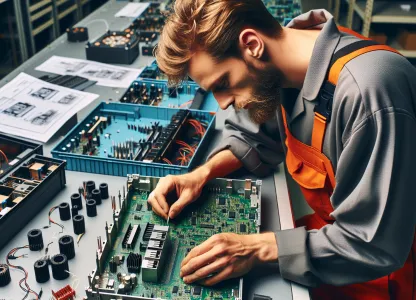
A circuit board assembler works with assembling, soldering, and inspecting electronic components on circuit boards, which form the heart of most technical products. Tasks often involve both manual and machine assembly, where precision and accuracy are crucial to ensure the circuit boards function flawlessly. The work is usually performed in production environments with high demands on quality and efficiency, with workstations designed to minimize static electricity and other disturbances. Many circuit board assemblers work in teams and collaborate closely with testers and engineers to quickly identify and fix any faults. The pace can be high, especially during large production runs, but there are also tasks that require patience and great concentration.
Read more ->-

Opinion Landscape: Novus February 2026 – Social Democrats Still Largest
Thu, 19 Feb 2026 - 01:35 -

Policy rate remains at 1.75% – Riksbank signals stability
Thu, 29 Jan 2026 - 14:02


A circuit board designer is responsible for designing and developing electronic circuit boards for everything from consumer electronics to industrial systems. The work involves creating schematics, selecting components, laying out circuit boards, and ensuring they meet technical and regulatory requirements. Collaboration often occurs in project teams with other engineers and technicians, both within and outside the company. The work environment is typically office-based with some laboratory work, and the pace can vary depending on the project phase. The role also includes documentation, testing, and sometimes direct contact with clients to tailor solutions to specific needs.
Read more ->
A Circuit Board Designer is responsible for developing and designing circuit boards – the electronic platforms that underpin everything from consumer electronics to advanced industrial control systems. Tasks include creating layout and schematic diagrams for circuit boards, selecting components, optimizing signal paths, and ensuring that the design meets technical and manufacturing requirements. The work is often carried out in close collaboration with other engineers and development teams. The work environment is typically office-based with a high technical pace, where computer-aided design (CAD) tools are central. Project work and strict deadlines are common.
Read more ->
A crematorium caretaker is responsible for the operation of crematorium facilities and handling cremations. Tasks include receiving and preparing coffins, maintaining ovens and technical equipment, and ensuring compliance with laws and ethical guidelines. The role often involves close collaboration with funeral homes and relatives, requiring both technical skills and social competence. The work environment includes physical tasks as well as administrative responsibilities, with a strong focus on accuracy, respect, and discretion.
Read more ->
A crematorium technician is responsible for managing and operating cremation facilities in connection with the deceased's cremation. Tasks include technical operation and maintenance of cremation furnaces, process monitoring, documentation, and careful handling of ashes according to current regulations and guidelines. The profession also involves contact with relatives and close cooperation with funeral staff, where respect and discretion are central. The work environment is technically oriented, often in specially adapted premises with high demands on safety, hygiene, and work routines.
Read more ->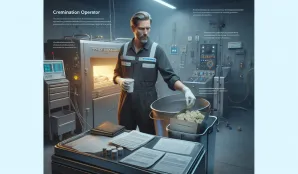
A Krematoriemästare is responsible for the practical and technical handling of the cremation process. Tasks include receiving and preparing coffins, operating and monitoring cremation furnaces, and handling and forwarding ashes to relatives or funeral homes. The work requires precision, ethics, and respect for the deceased and their relatives. The work environment is often technically oriented with elements of physical labor, typically at crematoria located near cemeteries or burial grounds. The position also involves administration, documentation, and contact with colleagues and relatives, requiring good communication skills and integrity.
Read more ->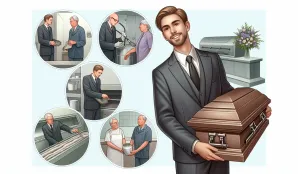
Crematorium assistants mainly work with managing the cremation process at crematoria, often within the framework of funeral services. Typical tasks include receiving coffins, preparing for cremation, monitoring ovens and processes, and handling ashes according to applicable laws and ethical guidelines. The work takes place in a calm, respectful environment where accuracy and integrity are crucial, and there is often physical work and contact with relatives. Crematorium assistants work closely with other staff in cemetery and funeral services and may work day and evening shifts depending on the schedule.
Read more ->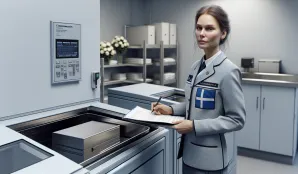
A Crematorium Assistant works with managing and performing cremation processes at crematoria, often in connection with funeral services. Tasks include receiving coffins, preparing for cremation, maintaining ovens and technical equipment, as well as documentation and administration related to the cremation process. The profession involves daily contact with both relatives and colleagues, where empathy and respect are central qualities. The work environment is technically oriented and requires precision, as handling equipment and documentation must follow strict routines and legal requirements.
Read more ->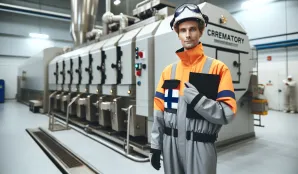
A Crematorium Worker primarily handles deceased individuals in connection with cremation. Tasks include receiving coffins, preparing for cremation, operating and monitoring cremation ovens, and documenting processes according to laws and regulations. The work also involves cleaning and maintaining technical equipment and premises, and sometimes communicating with relatives and funeral service providers. The work environment is characterized by high demands for respect, accuracy, and professionalism, as the role involves sensitive and ethically complex situations. Often, the work is performed in crematoria that are part of larger cemetery or funeral operations, with both physical and administrative responsibilities.
Read more ->